

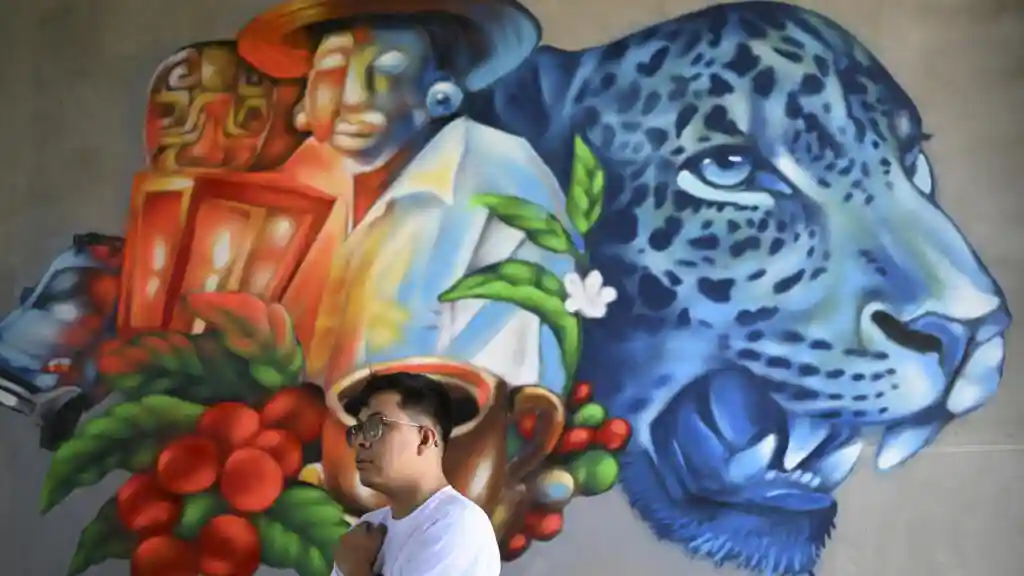
Where gang graffiti once marked territorial boundaries in El Salvador, vibrant murals of jaguars, indigenous faces, and tropical birds now adorn neighborhood walls in a striking transformation of public space. A traveling art festival has brought together dozens of muralists who are painting over a violent past, replacing symbols of fear with expressions of cultural pride across this Central American nation’s towns and cities.
Isaac Sosa, the 31 year old founder of the Pigmen Trip festival, has been organizing the event for eight years across various Salvadoran locations. He recalls when venturing into gang controlled territories to paint was a dangerous proposition fraught with harassment and the constant threat of violence. Now working in the picturesque coffee mountain town of Concepcion de Ataco, located about 65 kilometers west of San Salvador, Sosa describes a dramatically different environment. The shift follows the aggressive anti gang campaign launched by President Nayib Bukele in 2022, a crackdown that has drawn international criticism from human rights organizations citing allegations of abuses potentially amounting to crimes against humanity.

For Sosa and his fellow artists, the ce represents nothing less than a reclamation of public space. He describes the current atmosphere as more peaceful and conducive to creative freedom, calling art a “magical tool” for social transformation. More than 200 murals have been completed since the festival’s inception, featuring not only Salvadoran talent but also artists from Colombia, Mexico, Brazil, Peru, and Argentina. Each work contributes to what Sosa characterizes as the country’s rebirth, a visual narrative of hope painted over years of terror.
Darwin Flores, a 36 year old muralist, remembers the elaborate precautions required before gangs lost their grip on neighborhoods. Artists needed detailed knowledge of where they would work and who would accompany them, unable to afford any miscalculation about territorial boundaries. Flores now freely enters areas like La Campanera, a neighborhood that endured years under gang control. Working on cobblestone streets lined with clay tile roofs, he and his colleagues are literally repainting the story of communities emerging from decades of violence.
Cristian Juarez, 29, works on a mural depicting a young girl in a feathered headdress, wielding his paintbrush with a prosthesis after losing his right leg in an accident 11 years ago. He notes the stark contrast between past restrictions and present freedoms while acknowledging a somber reality. Many fellow artists fell victim to gang violence and are now among the disappeared, their creative voices silenced forever. Yet those who remain are determined to fill the visual landscape with life and color, a defiant assertion of culture over criminality.
Local residents have embraced this artistic invasion of their neighborhoods. Cristian Lara, a 50 year old merchant whose house now features a festival mural, speaks of being “blessed” by the artwork and describes “new winds of ce” sweeping through El Salvador. His sentiment reflects a broader shift in how communities experience their own streets, transitioning from spaces to avoid into places worthy of pride and celebration.
As the Pigmen Trip festival continues its journey through Salvadoran towns, it raises questions about how societies rebuild after prolonged violence and what role art plays in healing collective trauma. Whether the current security situation proves sustainable remains uncertain, particularly given international concerns about the ods employed. What seems clear is that for now, these muralists are seizing an opportunity to reshape not just walls but the very identity of their communities, one brushstroke at a time. Their work stands as both documentation of ce and investment in a future where beauty replaces fear in the public imagination.















Leave a comment