

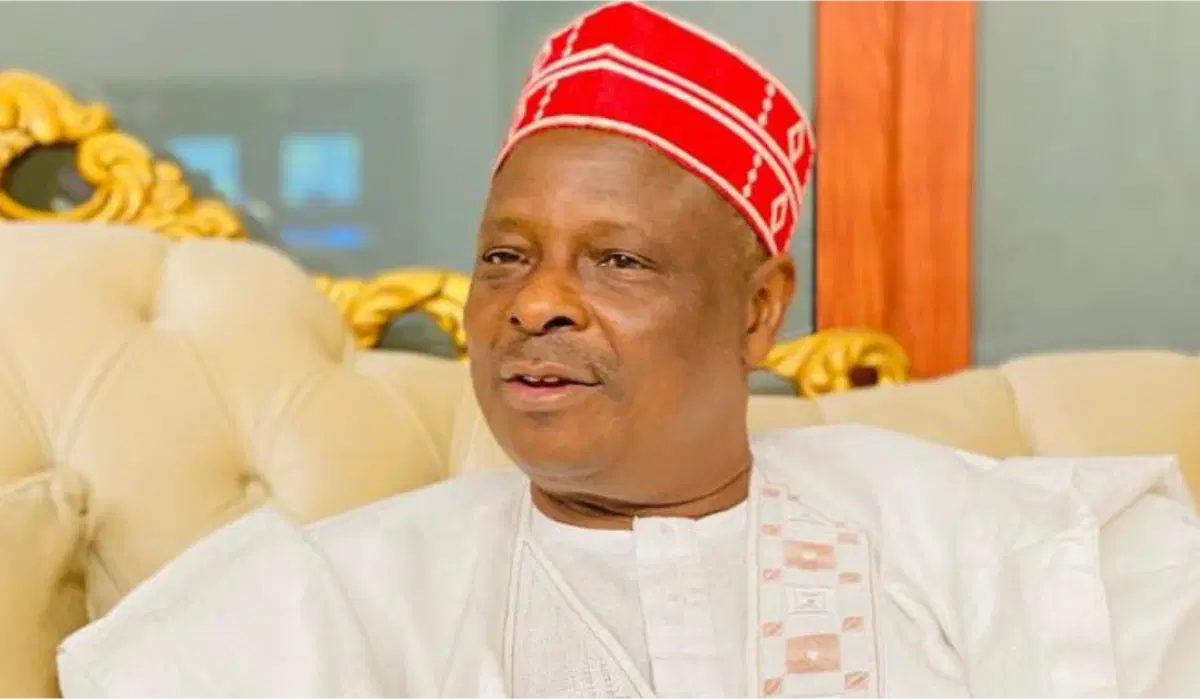
Nigerian governors banking on political machinery and incumbency advantages to secure re-election in 2027 may face a rude awakening at the polls, according to Senator Rabiu Kwankwaso, the National Democratic Congress vice-presidential candidate. Speaking during a media interview in Abuja on Sunday, Kwankwaso delivered a stark warning that voter frustration over failed governance could override traditional political calculations. His comments come as several state executives position themselves for second terms while grappling with deteriorating security and economic conditions.
Kwankwaso specifically criticized governors who have struggled to deliver basic services yet are now seeking shelter under the ruling All Progressives Congress umbrella. According to the former Kano State governor, many of these politicians mistakenly believe that aligning with the dominant party will guarantee electoral success regardless of their performance records. He argued that mounting concerns over insecurity, unemployment, poverty, and collapsing public services have created an electorate far less willing to reward incumbents simply for controlling state resources and administrative structures.
The veteran politician emphasized that Nigerian voters are developing a more sophisticated political consciousness that transcends party loyalty and patronage networks. Kwankwaso pointed to the millions of out-of-school children and the pervasive insecurity affecting communities nationwide as evidence that citizens are demanding substantive leadership rather than cosmetic politics. His assessment suggests a potential shift in electoral dynamics where performance and delivery may finally outweigh the considerable advantages typically enjoyed by sitting governors.
Drawing on his own record in office, Kwankwaso highlighted educational initiatives implemented during his tenure as Kano governor as examples of what committed leadership can achieve. His administration reportedly expanded access to education at all levels for qualified residents while tackling the persistent Almajiri system that leaves countless children without formal schooling. Infrastructure investments including student hostels and expanded facilities demonstrated, in his view, how properly directed public resources can address urgent social challenges rather than simply enriching political elites.
The migration of opposition politicians into the APC ahead of the 2027 electoral cycle drew particular scorn from Kwankwaso, who characterized many of these defections as cynical maneuvers motivated purely by electoral advantage. Rather than reflecting genuine ideological alignment or voter sentiment, these party switches represent calculated attempts to access the power and resources concentrated within the ruling party apparatus. Such movements, according to Kwankwaso, reveal the transactional nature of contemporary Nigerian politics where principles often take a backseat to proximity to power.
Whether Kwankwaso’s predictions prove accurate will depend on numerous factors including the integrity of electoral processes, the effectiveness of opposition mobilization, and the willingness of voters to overcome inducements and intimidation. Nigerian elections have historically favored incumbents who control security forces, financial resources, and administrative machinery, making genuine accountability difficult to enforce through the ballot box. Yet growing economic hardship and security challenges may be creating conditions where even these considerable advantages prove insufficient, potentially reshaping the political landscape in ways that reward competence over connections and performance over party affiliation.
You May Like













Leave a comment