

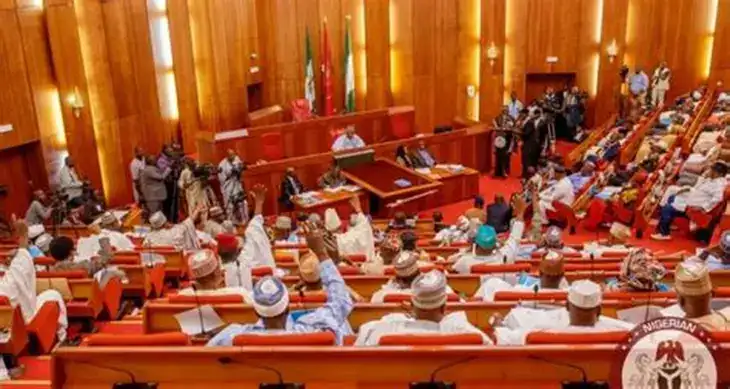
Nigeria’s Senate has approved landmark legislation allowing the country’s 36 states to elish their own police forces, marking a dramatic shift in how Africa’s most populous nation confronts an escalating security crisis that has claimed tens of thousands of lives. The constitutional amendment, which passed Wednesday with bipartisan support and backing from President Bola Ahmed Tinubu, represents the most significant restructuring of Nigerian law enforcement in decades. For years, security analysts and regional governors have argued that the country’s centralized federal police force has proven unable to protect citizens across Nigeria’s vast and diverse territory.
The legislation addresses a critical vulnerability that militant groups and criminal gangs have ruthlessly exploited. Under the current system, federal police resources are stretched impossibly thin across a country larger than Texas and California combined, leaving rural communities particularly exposed to violence. Jihadist insurgents in the north, separatist militants in the south, and criminal kidnapping syndicates operating nationwide have filled the security vacuum with devastating effect. According to United Nations estimates, these various armed groups have ed tens of thousands of Nigerians in recent years, while at least 80 schoolchildren currently remain in captivity following mass abductions in both northern and southern regions.

The proposed framework would allow each state to create a police force meeting minimum national standards while the federal police retain responsibility for counterterrorism operations, border security, organized crime investigations, and other matters of national concern. State police would work alongside federal forces rather than replacing them entirely. Supporters believe localized forces with knowledge of regional languages, customs, and terrain will prove far more effective at preventing crime and responding to emergencies than distant federal authorities.
Ikemesit Effiong, a partner at SBM Intelligence, a Lagos based risk advisory firm, pointed to recent mass kidnappings as evidence for why decentralization has become urgent. The sluggish nature of government responses to these crises stems partly from structural deficiencies inherent in centralized policing, he explained. State governors already hold the title of chief security officer for their states yet lack operational control over police forces, creating a disconnect between responsibility and authority that has hampered effective security coordination.
Critics of centralization have grown louder as violence has spread under President Tinubu’s administration. Militants who previously concentrated their activities in northern Nigeria have begun operating in southern regions, demonstrating that no part of the country remains immune from the security collapse. The failure to prevent school kidnappings, despite their high profile nature and predictable targets, has particularly eroded public confidence in federal security institutions. Parents across Nigeria now live with the fear that their children could be seized on their way to or from school, a nightmare that has become reality for dozens of families whose children remain missing.
The Senate’s approval represents just one step in a complex constitutional amendment process. The bill must still pass the House of Representatives and receive ratification from at least 24 of Nigeria’s 36 state legislatures before becoming law. Given the widespread frustration with current security arrangements and strong presidential support, observers believe the measure stands a good chance of clearing these remaining hurdles. Should it succeed, Nigeria will join countries like the United States, India, and Brazil in maintaining both state and federal police agencies, potentially offering a template for other African nations struggling with similar security challenges. Whether state police forces can genuinely reverse Nigeria’s security decline or simply add another layer of complexity to an already troubled system remains the critical question facing a nation desperate for solutions.




















Leave a comment