

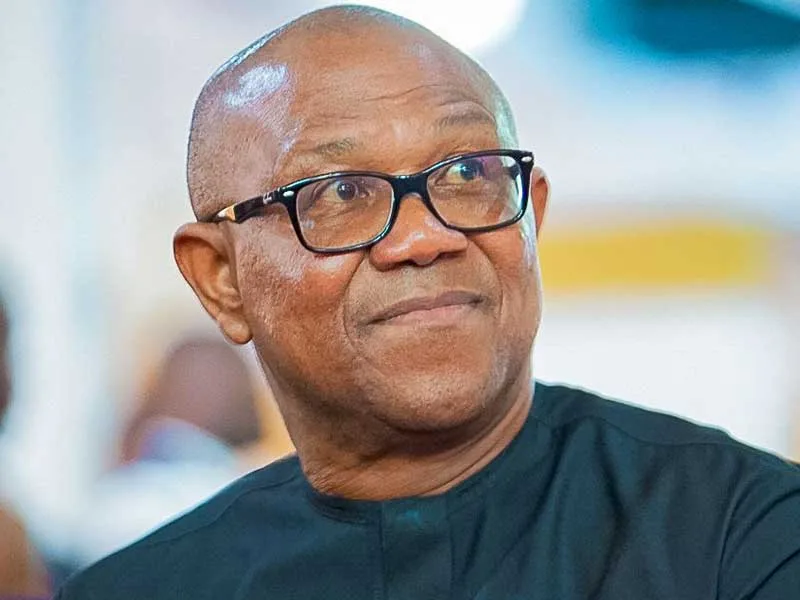
Presidential candidate Peter Obi has issued a stark warning to Nigerian youth, characterizing the nation’s political class as a towering Goliath that must be defeated by a new generation of courageous leaders. Speaking at a youth empowerment conference in Abuja organized by Reverend Father John Chinenye Oluoma of the Abuja Archdiocese, the former Labour Party standard bearer and current Nigerian Democratic Congress candidate used biblical allegory to frame what he described as an existential struggle for the nation’s future. His message was unambiguous: politicians who prioritize personal enrichment over national development represent the greatest obstacle to Nigeria’s progress.
Obi, widely regarded as a frontrunner in the 2027 presidential race, did not mince words when identifying the root causes of Nigeria’s developmental challenges. According to him, the Goliaths within the political landscape are those who systematically divert public funds meant for critical national needs into private coffers. He told the assembled young people that these politicians refuse to prioritize the country’s interests, creating a system where personal gain trumps collective prosperity. The comment reflects a continuation of his populist messaging that resonated with millions of young Nigerians during the contentious 2023 presidential election.
During the David and Goliath Conference, youth delegates pressed Obi with difficult questions about how to overcome the multiple crises facing their generation. From their inquiries, he identified what he considers the four pillars of national failure: security, education, healthcare, and unemployment. Each sector, he argued, suffers from chronic underinvestment and mismanagement stemming directly from leadership corruption. Power supply remains epileptic, schools lack basic resources, hospitals turn away patients who cannot pay, and graduates flood an already saturated job market with little hope of formal employment.
Rather than simply diagnosing problems, Obi challenged the youth to begin their own transformation as a prerequisite for national renewal. He urged them to embrace realism in their pursuits, live within their means, and reject the artificial lifestyles promoted by social media and celebrity culture. By conquering these personal Goliaths, he suggested, young Nigerians would be better positioned to confront the larger systemic challenges that plague the country. His call for personal responsibility alongside political accountability represents an attempt to balance individual agency with structural critique.
Obi’s appearance at the conference comes amid intensifying political positioning ahead of the 2027 general elections. Having left the Labour Party to join the Nigerian Democratic Congress, he faces the challenge of maintaining the momentum that made him a household name in 2023 while building a new political vehicle. Critics have questioned his party hopping, with some political observers suggesting he should have remained within elished structures. Yet his supporters argue that his message transcends party labels and speaks to a broader hunger for transformational leadership.
As Nigeria grapples with its worst economic crisis in a generation, characterized by soaring inflation, currency devaluation, and widespread insecurity, Obi’s David versus Goliath framing may resonate with an electorate exhausted by unfulfilled promises. Whether his rhetoric can translate into electoral victory in 2027 remains uncertain, but his continued prominence in national discourse suggests that the appetite for alternative leadership persists. Young Nigerians, who constitute the majority of the population, will ultimately decide whether they can produce the David capable of slaying the political Goliaths that have dominated their country for decades.
You May Like










Leave a comment