

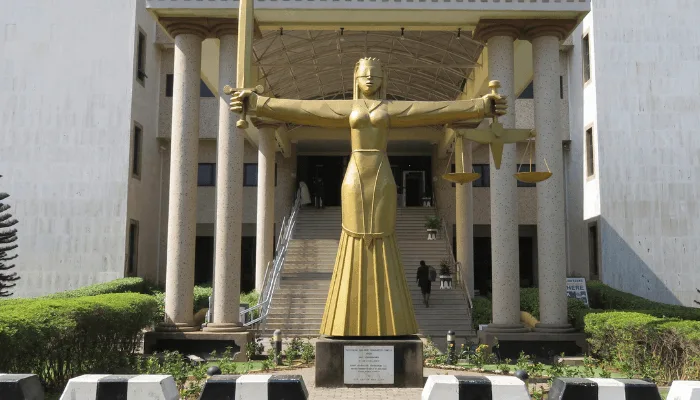
A Federal High Court in Abuja has delivered a potentially explosive ruling that threatens to reshape Nigeria’s political landscape just months before crucial elections. Justice Peter Lifu ordered the Independent National Electoral Commission to deregister five political parties, including the African Democratic Congress and Accord, for failing to meet constitutional requirements for continued registration. Among the high-profile casualties of this decision are presidential hopeful Atiku Abubakar and Osun State Governor Ademola Adeleke, both of whom face automatic disqualification if the ruling is immediately enforced.
Justice Lifu handed down the verdict on Monday, finding that the affected parties had breached Section 225 of the Nigerian Constitution. That provision empowers INEC to strike off political parties that fail to win any elective position at federal, state, or local government levels in the previous round of elections. Besides ADC and Accord, the court also ordered the deregistration of Action Alliance, Action Peoples Party, and Zenith Labour Party. Legal observers suggest the ruling could trigger a cascade of candidate disqualifications for both the 2027 general elections and the upcoming off-cycle governorship polls scheduled for June and August in Ekiti and Osun states.

National Forum of Former Legislators brought the suit against INEC, the Attorney General of the Federation, and the affected opposition parties. Plaintiffs argued that these parties no longer satisfied the constitutional threshold for continued existence as registered political organizations. They relied on Section 225(a) of the Constitution and provisions of the Electoral Act, contending that the parties had failed to secure elective seats or meet minimum requirements in recent elections. Beyond mere deregistration, they sought a court order compelling INEC to remove the parties from its register and bar them from participating in future electoral contests.
Significantly, the Attorney General of the Federation, Lateef bemi, aligned his office with the plaintiffs’ position despite being named as a defendant. His support lends considerable governmental weight to the legal challenge and suggests a broader institutional commitment to enforcing constitutional compliance among political parties. Constitutional law experts note that Section 225 was designed to prevent the proliferation of inactive or moribund parties that clutter the ballot without genuine grassroots support. However, critics of such deregistration efforts argue they can be weaponized to eliminate political competition and consolidate power among elished parties.
For Atiku Abubakar, who recently emerged as the ADC’s presidential candidate, the timing could scarcely be worse. His political fortunes now on whether INEC moves swiftly to implement the court order or whether the affected parties can secure a stay of execution pending appeal. Governor Ademola Adeleke of Osun State faces similarly precarious circumstances as he seeks a second term on the Accord platform in August. Both men represent major contenders in their respective races, and their potential disqualification would dramatically alter the competitive dynamics. Political analysts suggest the ruling may trigger frantic behind-the-scenes negotiations and almost certainly will prompt immediate appeals to higher courts.
Looking ahead, the coming weeks will prove critical as affected parties scramble to challenge the verdict and INEC determines its enforcement timeline. Legal precedent suggests appellate courts may grant interim relief to preserve the status quo while appeals proceed, particularly given the proximity of upcoming elections and the magnitude of political disruption at stake. Whether this ruling ultimately stands or falls, it has already reignited debate about the constitutional architecture governing party registration in Nigeria and whether the current framework serves democratic competition or stifles it. For millions of Nigerian voters, the uncertainty clouds an already complex electoral picture and raises fundamental questions about who will appear on their ballots when they head to the polls.





















Leave a comment