

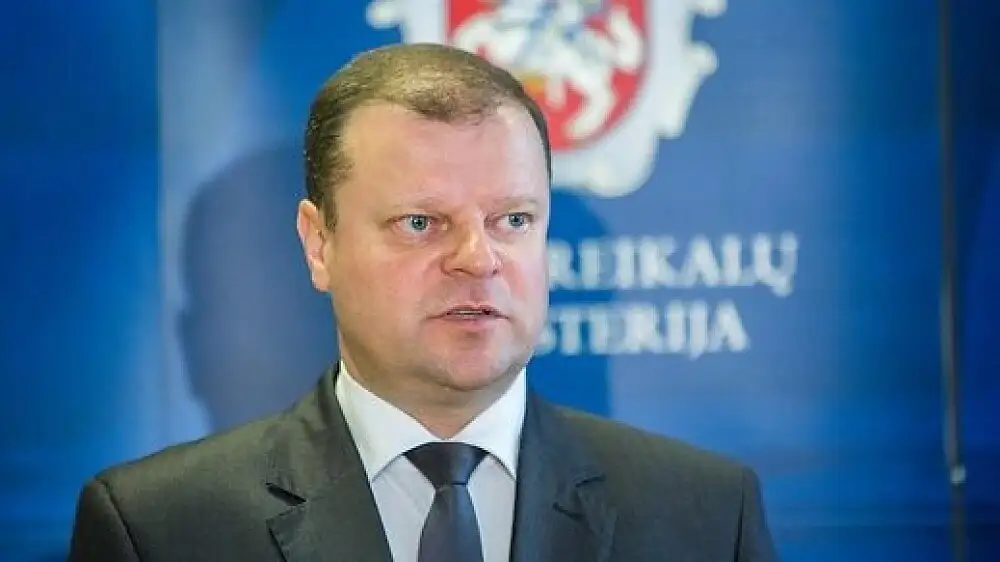
Saulius Skvernelis, the former leader of Lithuania’s Democratic Union Vardan Lietuvos, has announced his intention to appeal to the European Court of Human Rights over what he characterizes as political interference in his ongoing corruption case. Speaking to media outlets, the embattled Member of the Seimas took direct aim at President Gitanas Nausėda and other senior officials, accusing them of exerting improper pressure on law enforcement and the judiciary through their public statements. The dramatic escalation marks a new chapter in a case that has gripped Lithuanian politics and raises fundamental questions about the separation of powers in the Baltic nation.
At the heart of Skvernelis’s complaint are comments made by President Nausėda following searches of the politician’s home and office in February. According to Skvernelis, the president not only commented on the investigation but claimed to have been briefed on operational intelligence, a disclosure that should be legally impossible. Skvernelis argued that the president stated bringing charges against someone of his stature required courage and civic mindedness, when in reality it should require only one thing: evidence. The former Democratic Union leader contends that such statements amount to unacceptable interference, potentially prejudicing both public opinion and judicial proceedings before any trial has taken place.
Skvernelis insists he is not claiming the prosecution is entirely political in nature, but rather that political elements have contaminated what should be a purely legal process. He emphasized that under Lithuanian law, no head of state, including the president, the speaker of the Seimas, or the prime minister, should have access to criminal intelligence or operational information in any form. The fact that President Nausėda allegedly claimed to have seen such material represents, in Skvernelis’s view, a fundamental breach of legal protocol. These alleged violations will form the basis of his application to the Strasbourg court, where he hopes to demonstrate that his rights under the European Convention on Human Rights have been violated.
The charges against Skvernelis stem from a sprawling investigation into corruption at the Plant Production Service that resulted in searches of his premises in February and formal bribery charges in April. By late July, the Kaunas Regional Court had ruled that requiring him to wear an electronic monitoring tag was both lawful and justified, citing his failure to comply with less stringent pretrial measures. Specifically, judges noted that Skvernelis had communicated with another suspect in the case, Agnė Silickienė, in apparent violation of his bail conditions. Skvernelis has defended these contacts as purely emotional support between two people facing enormous public scrutiny and psychological pressure, describing them as meetings based on personal grounds rather than any attempt to obstruct justice.
The case has its roots in a December investigation into large scale corruption allegations at the Plant Production Service, which initially led to the detention of 13 individuals. That number has since grown as investigators have widened their net. Skvernelis maintains that both he and Silickienė are being unfairly portrayed as central figures in a massive corruption scandal, subjected to trial by media before any court has rendered judgment. He noted that while he has colleagues at work to confide in, Silickienė faces isolation and lacks a similar support network, making their mutual support all the more necessary during what he describes as an extraordinarily difficult period.
Looking ahead, Skvernelis’s threatened appeal to the European Court of Human Rights could take years to resolve, potentially extending his legal battles well beyond any domestic proceedings. Whether the Strasbourg court will find merit in his complaints about presidential statements remains uncertain, as the threshold for proving political interference in judicial matters is notably high. What is clear is that the case has already become deeply politicized, with implications that extend far beyond one politician’s fate. How Lithuania’s institutions navigate the tension between public accountability and the presumption of innocence may well define the country’s democratic credibility for years to come. Before his corruption allegations emerged, Skvernelis maintained what he describes as an excellent relationship with President Nausėda, making the current conflict all the more striking and signaling just how far this case has fractured Lithuania’s political elishment.
You May Like














Leave a comment