

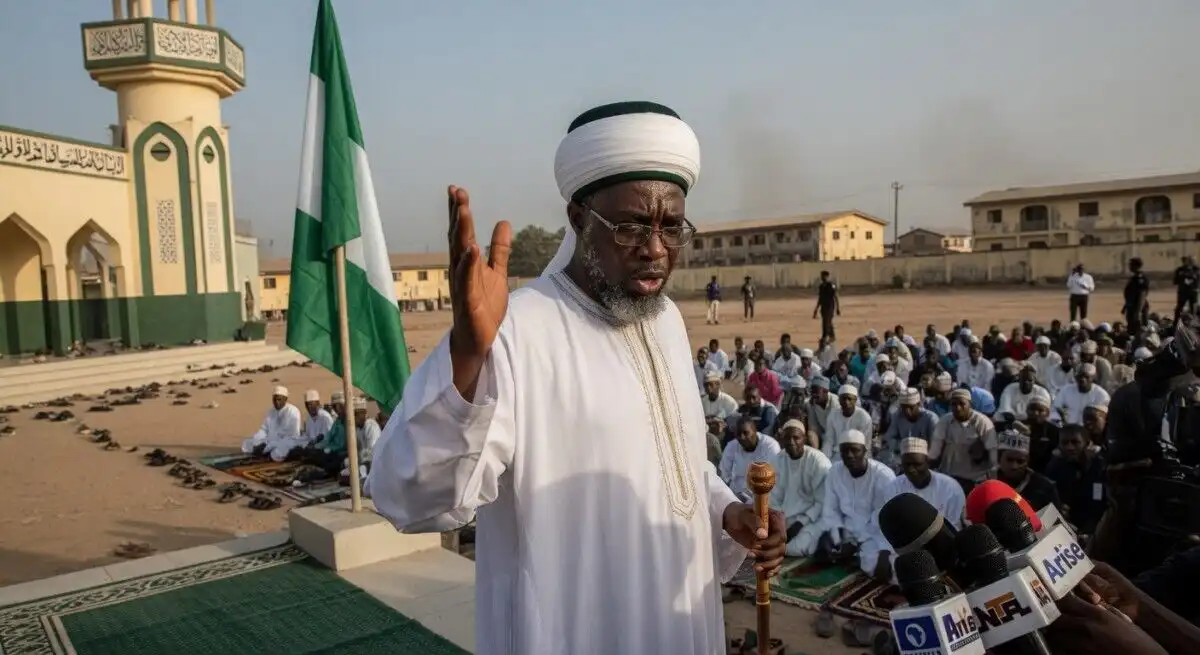
A prominent Islamic scholar has issued a powerful warning to Nigeria’s political class, urging leaders and aspiring candidates to place the welfare of citizens above their personal ambitions as the country approaches the 2027 general elections. Professor Ibrahim Uthman, who serves as both Chief Imam of the University of Ibadan and professor of Arabic and Islamic Stus, delivered the appeal during this year’s Eid al-Adha celebrations, speaking to the congregation immediately following the obligatory two-rakat prayers on Wednesday.
The timing of Professor Uthman’s message carries particular weight as Nigeria grapples with escalating security challenges that have left communities across the nation vulnerable to kidnapping, banditry, and other violent crimes. Speaking candidly to journalists after the prayer service marking the 1447 Hijrah calendar observance, the scholar described the current state of insecurity as both worrisome and unfortunate, calling for immediate action from those occupying positions of authority. His comments reflect growing frustration among religious and community leaders who have watched violence disrupt daily life across multiple states.

Professor Uthman directed his appeal specifically to all tiers of government, addressing the President, state governors, senators, and other elected officials who wield decision-making power. He challenged them to exhaust every available resource and strategy to curb the security crisis that has claimed countless lives and displaced communities. Beyond current officeholders, the scholar extended his message to those already positioning themselves for the next electoral cycle, warning that political ambition must never come at the expense of human life. His words carried an implicit criticism of those who might be tempted to weaponize insecurity for electoral advantage or allow it to fester while jockeying for position.
Drawing on Islamic theological principles, the Chief Imam reminded politicians that ultimate authority rests with Allah and that leadership positions are divine appointments rather than personal entitlements. He cautioned against revenge politics and the settling of scores, urging leaders to approach governance with humility and a genuine commitment to service. This spiritual framing of political responsibility reflects a broader tradition in Nigerian society where religious figures serve as moral arbiters, holding secular leaders accountable to higher ethical standards that transcend partisan considerations.
While issuing stern warnings to the political class, Professor Uthman also addressed ordinary Nigerians facing unprecedented economic hardship and daily threats to their security. He called for patience and endurance, emphasizing that hardship, however severe, does not justify criminal behavior. Invoking Quranic teachings about divine tests, the scholar encouraged citizens to maintain their faith and continue contributing positively to national development even amid challenging circumstances. His message sought to balance accountability for leaders with moral guidance for the general population, recognizing that national transformation requires effort at all levels of society.
As Nigeria moves c to the 2027 electoral season, religious voices like Professor Uthman’s are likely to play an increasingly important role in shaping public discourse around leadership and governance. The intersection of mounting security challenges, economic difficulties, and political ambition creates a volatile environment where moral leadership becomes essential. Whether Nigeria’s political class heeds such warnings or continues on a trajectory that prioritizes power over people will significantly determine the country’s ility and prospects in the coming years. Citizens and observers alike will be watching closely to see if the next election cycle brings substantive solutions or merely perpetuates the patterns that have left so many Nigerians vulnerable and afraid.
















Leave a comment