

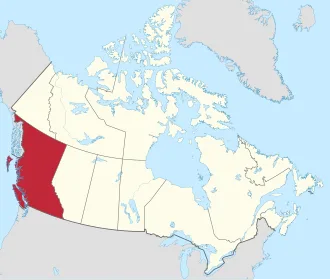
British Columbia taxpayers are footing a bill exceeding $150,000 to maintain a single room occupancy building on Granville Street for just one resident, as the provincial government struggles to complete a promised closure that was supposed to happen by the end of June. The 110 unit Luugat facility has remained fully operational at enormous public expense since July 1, with only Ryan Donnelly remaining as its sole occupant while the province searches for suitable alternative housing.
Donnelly was unavailable for comment on Monday, but he explained his situation last month when he outlined his specific medical needs. He suffers from a seizure disorder that requires both a large living space and a building equipped with an elevator. Provincial officials have reportedly offered him new housing options, but apparently none have met his medical requirements. Housing Minister Christine Boyle acknowledged last week that the situation is not ideal, though she suggested that a resolution might be near as officials work to find an appropriate option for the remaining tenant.

Clinical psychologist Julian Somers described British Columbia’s single room occupancy model as a fundamental failure, pointing to international examples where similar challenges have been addressed more effectively. He noted that no European country or city that has successfully tackled severe addiction problems has simply grouped vulnerable people together with minimal supports and considered the job done. According to Somers, the province refuses to ce its approach despite clear evidence that the current model does not work. Any meaningful reform in British Columbia would need to fundamentally rethink how housing and support services are delivered to those struggling with addiction and homelessness.
Local residents have expressed frustration with what they see as wasteful spending and a lack of fiscal accountability. Granville Street resident Lorne Caron bluntly stated that the situation represents a waste of taxpayer money, directing his criticism at what he described as the NDP government’s lack of financial responsibility. His sentiments appear to reflect broader public concern, with recent polling suggesting deep distrust of the provincial government’s policies on addiction and homelessness. Those concerns come at a time when insolvencies in British Columbia have reached a 16 year high, adding economic pressure to an already tense political environment.

Provincial officials have provided no clear timeline for when they expect to finally close the Luugat facility. Minister Boyle’s comments suggest ongoing negotiations and housing searches, but the lack of concrete deadlines leaves the expensive status quo in place indefinitely. Each day that passes adds to the mounting costs borne by taxpayers, with the meter now running well into six figures for what amounts to providing services designed for more than a hundred people to a single individual.
This case highlights the complex intersection of individual rights, medical needs, fiscal responsibility, and systemic housing policy failures. While Donnelly’s health requirements deserve consideration and accommodation, the broader questions about how British Columbia manages its housing crisis and supports vulnerable populations remain unresolved. Whether this expensive standoff ultimately prompts meaningful policy reform or simply becomes another cautionary tale in the province’s ongoing struggle with homelessness and addiction remains to be seen. What is certain is that taxpayers will continue paying premium prices for a building serving just one person until provincial officials find a solution that meets both medical necessity and fiscal prudence.

















Leave a comment