

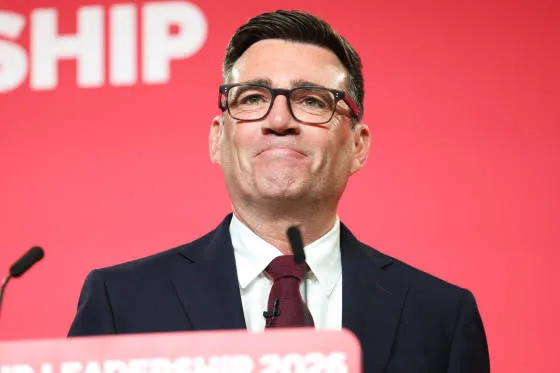
Andy Burnham made a telling choice for his first act as prime minister. Hours before crossing the threshold of 10 Downing Street on Monday, he visited The Passage, a Catholic charity in Westminster dedicated to helping rough sleepers. His inaugural pledge from office followed naturally: ending homelessness on Britain’s streets. For those watching closely, the symbolism revealed everything about how this prime minister’s faith will shape his politics.
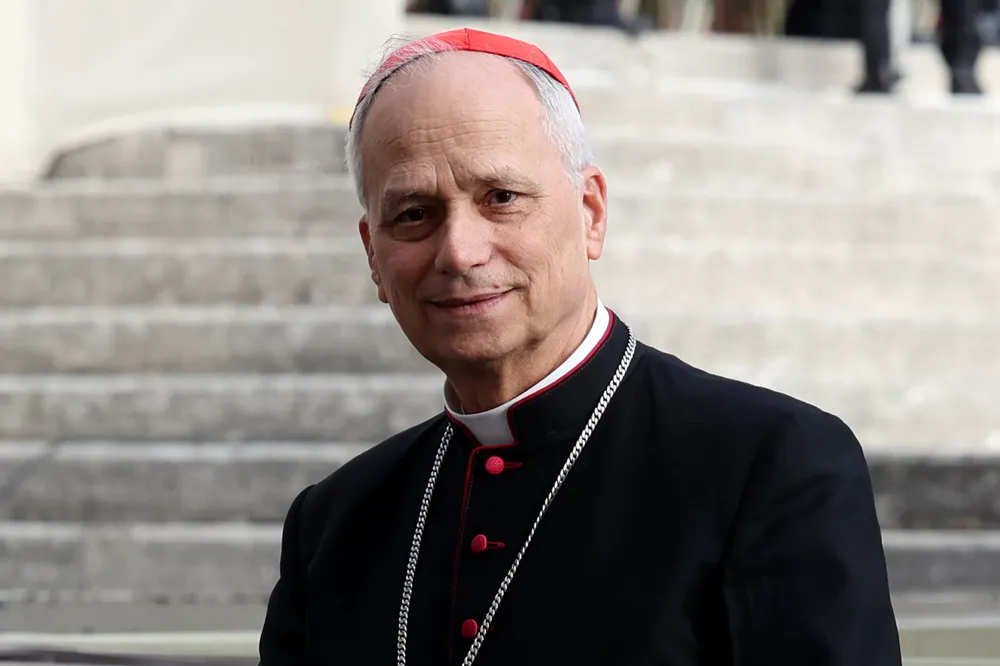
Britain now has its first lifelong Roman Catholic prime minister at a moment when Catholicism occupies prominent political positions on both sides of the Atlantic. Yet the versions of the faith animating politics in Washington and Westminster could scarcely be more different. While Donald Trump’s administration, particularly through Catholic convert Vice President JD Vance, has weaponized the faith in America’s bitter culture wars and clashed repeatedly with the Vatican over hardline social stances, Burnham represents a distinctly British Catholic tradition with altogether different priorities. Pope Leo, like Pope Francis before him, faces regular denunciation from the American Christian right as excessively progressive for defending migrants and the vulnerable. Burnham, by contrast, journeyed to Rome as Greater Manchester’s mayor in 2023 to present Francis with a signed Manchester United shirt, later praising the pontiff’s dedication to equality and compassion.
Hannah Rich, director of Christians on the Left, a Labour affiliate, draws the distinction plainly. British Christianity operates in a fundamentally different cultural context than its American counterpart, she explains. The hot button issues that dominate American religious politics simply do not galvanize British believers in the same way, despite Christians here holding strong views across the spectrum. Those divisive topics fail to serve as the unifying political force in Britain that they have become in America’s increasingly polarized landscape.
Burnham himself has long identified three formative institutions: Everton Football Club, the Catholic Church, and the Labour Party. For him, church and party became inseparable during his youth in 1980s Liverpool, where he served as an altar boy under Archbishop Derek Worlock. Worlock emerged as one of Margaret Thatcher’s most vocal critics, recording messages on cassette tapes distributed to every parish urging Catholics to combat poverty and inequality. Professor Francis Davis, an expert on religion and public policy, paints the scene vividly: young Burnham standing at the altar, pressing the button to play those recordings to 800 congregants. Those formative experiences embedded a particular vision of Catholic witness focused relentlessly on economic justice rather than ual politics.
After winning the Leigh constituency for Labour, Burnham formed a close relationship with Catholic minister Paul Goggins, who reinforced those early lessons. Goggins counseled the younger politician to ignore distractions about ual morality and focus instead on Catholic social thought’s core imperative: putting the poor first. Mike Kane, the Labour MP who founded Catholics for Labour, sees those principles of dignity and solidarity reflected throughout Burnham’s political style. His approach eschews the vicious personal s common in modern politics, Kane observes, instead embracing an ultimately hopeful and optimistic vision.
Nick Spencer, a senior fellow at the Theos think tank, identifies structural reasons for the divergent expressions of Christian politics across the Atlantic. Culture war politics thrives on narratives of exclusion and embattlement, he argues, dynamics that resonate differently in varied national contexts. British political culture, despite recent polarization, maintains institutional features and social norms that resist the total ideological warfare increasingly defining American public life. Whether Burnham’s faith tradition can offer an alternative model for religiously informed politics in an age of division remains an open question, but his early choices suggest he intends to try. As Britain confronts mounting challenges from homelessness to inequality, the nation will soon discover whether Catholic social teaching focused on the vulnerable can translate into effective governance or remains merely aspirational rhetoric.
You May Like

















Leave a comment