

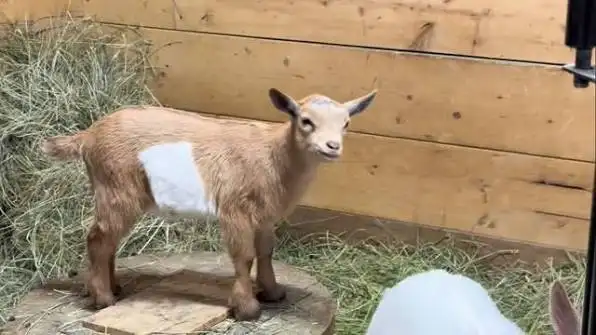
A British Columbia farm owner became an unlikely hero when she threw herself into a life or death struggle with a cougar to save one of her beloved Nigerian dwarf goats. The dramatic confrontation, which unfolded on her rural property, ended with the woman successfully driving off the large predator and rescuing her small livestock animal from certain death.
Nigerian dwarf goats, a miniature breed popular among hobby farmers and homesteaders, typically weigh between 60 and 80 pounds, making them vulnerable targets for large predators like cougars. The woman’s quick thinking and fearless response likely saved the goat’s life, though the incident serves as a stark reminder of the dangers faced by those living in areas where human settlements increasingly overlap with wildlife territories. Cougars, also known as mountain lions or pumas, are apex predators that can weigh up to 220 pounds and possess the strength to take down prey much larger than themselves.
Wildlife experts have long warned that encounters between humans and cougars are becoming more frequent in British Columbia as residential development pushes deeper into traditional cougar habitat. The province is home to an estimated 3,500 to 4,000 cougars, one of the largest populations in North America. While s on humans remain relatively rare, livestock predation is a persistent concern for rural property owners, particularly those who keep smaller animals like goats, sheep, and chickens.
Conservation officers typically advise against directly confronting large predators, recommending instead that people make themselves appear large, make loud noises, and back away slowly. However, in situations where beloved pets or livestock are under immediate , many animal owners instinctively intervene despite the obvious personal danger. Cougar s on humans, while uncommon, can be fatal, and wildlife authorities generally caution that the risks of physical confrontation are substantial.
The incident adds to a growing collection of stories from across western North America documenting the complex and sometimes perilous relationship between rural residents and the wildlife with which they share the landscape. As urban sprawl continues to fragment natural habitats, both cougars and humans find themselves navigating territories that were once clearly delineated but now increasingly overlap. Property owners in affected areas often face difficult decisions about how to protect their animals while coexisting responsibly with native predator populations.
Moving forward, wildlife management officials will likely use incidents like this to reinforce public education efforts about cougar behavior and prevention strategies. Recommendations typically include securing livestock in sturdy enclosures at night, installing motion activated lighting, and removing attractants that might draw prey animals and consequently predators onto properties. For this particular farm owner and her rescued goat, the terrifying encounter ended without serious injury to either human or livestock, a fortunate outcome that wildlife experts acknowledge is far from guaranteed when humans choose to confront one of nature’s most formidable predators.


















Leave a comment