

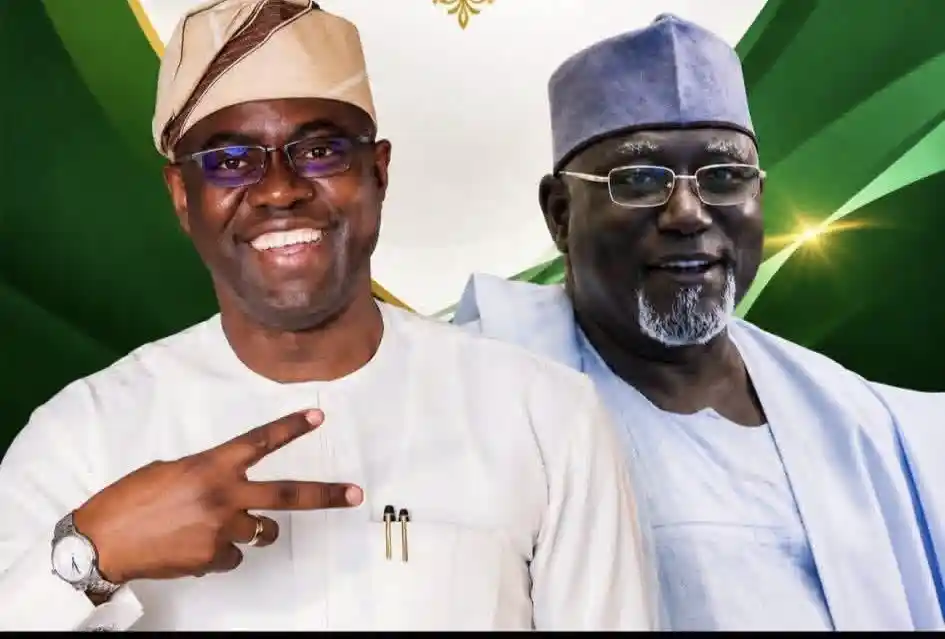

Oyo State Governor Seyi Makinde has made a strategic political move by selecting former Director General of the Department of State Services, Lawal Musa Daura, as his running mate for the 2027 presidential election. Makinde, who is the presidential candidate of the Allied Peoples Movement, made the announcement during the party’s elective National Convention in Bauchi on Thursday, signaling a potentially significant realignment in opposition politics ahead of the crucial polls.
Daura’s selection represents a notable shift in the presidential ticket’s composition. The former security chief recently joined the Allied Peoples Movement after resigning from the African Democratic Congress, where he had maintained membership until just days ago. He replaces Ibrahim Adamu Bala, who was previously announced as Makinde’s running mate but was understood to be serving as a placeholder until a permanent candidate could be secured. The choice of a seasoned security operative with decades of intelligence experience could be interpreted as an attempt to bolster the ticket’s credentials on national security matters, a perennial concern for Nigerian voters.
In his address to party delegates, Makinde framed the upcoming electoral contest in existential terms, arguing that the opposition faces a responsibility that transcends mere political ambition. According to the governor, the fundamental challenge confronting opposition parties is not simply defeating the incumbent administration but rather providing Nigerian citizens with a meaningful alternative that can address the country’s mounting challenges. His remarks suggest a campaign strategy focused on substantive policy proposals rather than personality driven politics.
Makinde cautioned party faithful and the broader electorate to maintain a critical perspective as the campaign season intensifies. While acknowledging that the coming months will inevitably bring a flood of political slogans, promises, and declarations from candidates across the political spectrum, he urged Nigerians to demand concrete plans and demonstrated competence from those seeking leadership positions. His comments reflect growing public frustration with political rhetoric that fails to translate into tangible improvements in governance and quality of life.
The governor’s emphasis on offering voters a genuine choice speaks to broader concerns about the state of democratic competition in Africa’s most populous nation. With economic challenges mounting, security concerns persisting across multiple regions, and public confidence in political institutions remaining fragile, opposition parties face the dual challenge of differentiating themselves from the ruling party while also presenting a unified front capable of winning power. Makinde’s selection of Daura, a figure with significant experience in the security apparatus, may be calculated to address voter anxieties about safety and ility while also appealing to northern constituencies where Daura’s name carries recognition.
As the 2027 election cycle accelerates, Makinde’s ticket will face intense scrutiny from both political rivals and an increasingly skeptical electorate. Whether the pairing of a sitting southwestern governor with a former security chief can generate the momentum needed to mount a serious challenge to the ruling party remains an open question. What appears certain is that Nigerian voters, battered by years of economic hardship and security challenges, will demand more than promises from candidates seeking their support. The success or failure of Makinde’s presidential ambition may ultimately hinge on his ability to convert his call for substantive politics into a campaign that resonates with citizens hungry for transformative leadership.





Leave a comment