

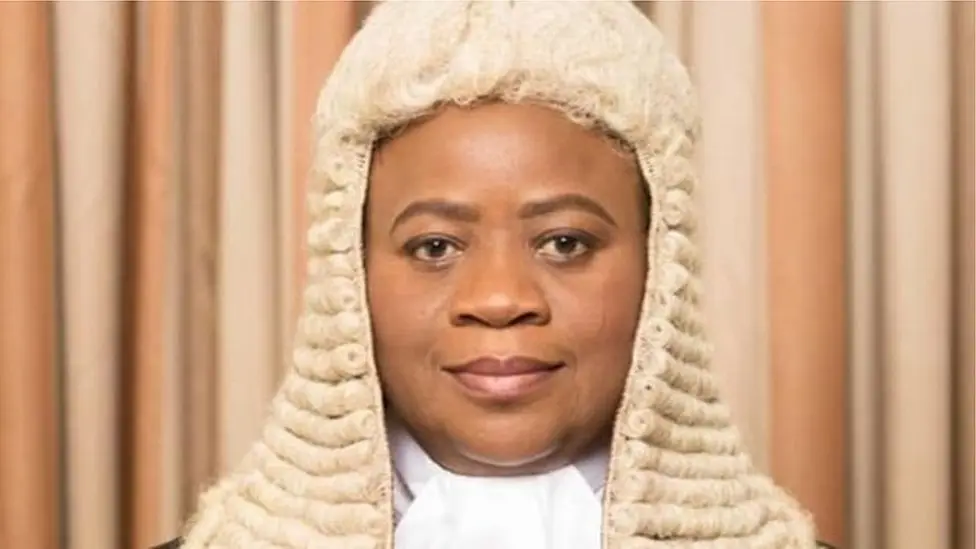
Africa’s democratic future s in the balance, and only resilient institutions coupled with unwavering judicial independence can secure it. Speaking at the 2026 Goodluck Jonathan Foundation Democracy Dialogue in Bauchi, the President of the Court of Appeal, Justice Monica Dongban-Mensem, delivered a stark warning that the continent’s governance systems must be fortified against mounting political and socio-economic pressures. Her message came at a critical juncture when many African nations face unprecedented challenges to constitutional order and democratic norms.
Addressing delegates at the International Conference Centre on Tuesday, Justice Dongban-Mensem outlined a vision for democratic consolidation that places institutional strength at its core. The event, which brought together political leaders, judicial officers and civil society representatives, carried the theme “Beyond Elections: Can Political Parties and the Judiciary Save African Democracy?” Represented by Justice Mistura Bolaji, the Appeal Court President described the gathering as both timely and necessary given the political, technological and economic headwinds buffeting the continent. Former President Goodluck Jonathan and Bauchi State Governor Bala Mohammed jointly hosted the high-level dialogue.

At the heart of Justice Dongban-Mensem’s address was an emphatic assertion about the foundations of democratic governance. She argued that strength in any democratic system is anchored in robust institutions, dedicated adherence to constitutionalism, respect for the rule of law, and an enduring commitment to justice, accountability and peaceful dispute resolution. Without these pillars firmly in place, she suggested, electoral processes alone cannot sustain democratic legitimacy. Her remarks reflected growing concern among Africa’s judicial leadership that democratic gains of recent decades could be reversed without deliberate institutional reinforcement.
The judiciary’s role received particular emphasis in her remarks. Justice Dongban-Mensem characterized the courts as occupying a unique constitutional position, serving simultaneously as impartial interpreters of the law, guardians of constitutional order and protectors of citizen rights and freedoms. This tripartite responsibility, she noted, places enormous expectations on judicial officers across the continent. Political parties, meanwhile, were described as the foundation of democratic participation and leadership development, essential vehicles through which citizens engage with governance structures. Both institutions, she stressed, carry distinct but complementary mandates that converge in preserving democratic legitimacy and sustaining public confidence.
Growing recognition of the intricate relationship between political institutions and the judiciary has prompted deeper engagement across African capitals. Justice Dongban-Mensem highlighted this institutional interdependence as crucial to democratic advancement, noting that meaningful dialogue on how these bos interact and support one another has become increasingly important. Courts frequently find themselves adjudicating disputes arising from political competition, while political parties must respect judicial pronouncements even when unfavorable. Managing this delicate balance requires mutual respect, institutional maturity and a shared commitment to constitutional principles above partisan interests.
As African nations navigate complex transitions and face pressures from technological disruption, economic inequality and shifting geopolitical alignments, the resilience of democratic institutions will likely determine the continent’s trajectory. Justice Dongban-Mensem’s call for strengthened institutions and protected judicial independence speaks to fundamental questions about governance sustainability. Whether African leaders heed this advice and invest in the institutional infrastructure necessary for democratic consolidation may well shape the political landscape for generations to come. Future democracy dialogues and reform initiatives will test whether the commitment to these principles extends beyond rhetoric into concrete action that safeguards constitutional governance across the continent.






















Leave a comment