

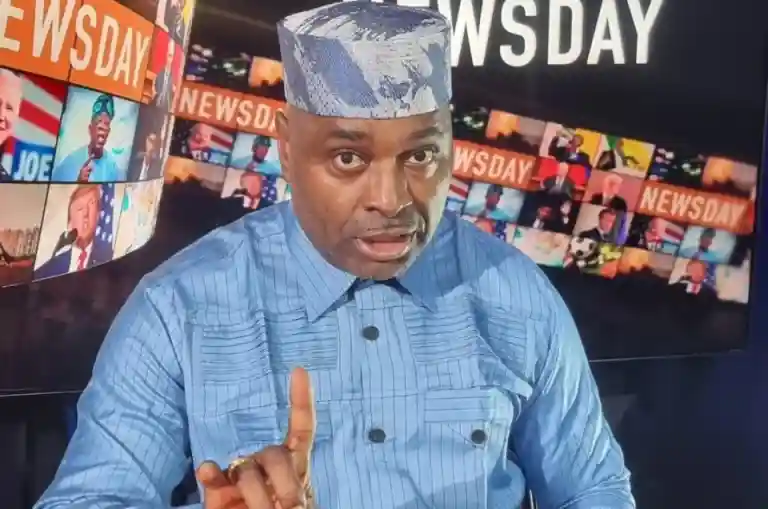
Kenneth Okonkwo, a prominent member of the African Democratic Congress, has firmly rejected allegations that he requested rent money from former presidential candidate Peter Obi. Speaking during a television interview on Symfoni TV, the Nollywood veteran turned politician addressed claims made by Peoples Democratic Party member Katch Ononuju, describing them as baseless and unfounded. His response comes amid growing tensions within opposition political circles as various factions vie for influence and credibility ahead of future electoral contests.
Okonkwo emphasized that he had already elished significant personal wealth and property ownership before joining active politics, a deliberate strategy to maintain his independence and integrity. According to the former actor, financial autonomy was crucial to ensuring he could voice honest opinions without fear of reprisal or financial pressure from political benefactors. He detailed his property acquisition timeline, noting that by 1994 he had moved into his own duplex in Lagos, where he resided for 14 years, long before his political association with Obi began.
During the interview, Okonkwo articulated a political philosophy centered on allegiance to national interests rather than individual politicians or party machinery. He stated that from the outset of his political journey, he made clear that his primary loyalty was to Nigeria, the Nigerian people, the Constitution, his personal conscience, and his religious convictions. This declaration appears designed to position himself as an independent voice within a political landscape often criticized for patronage networks and transactional relationships between political figures and their supporters.
The politician went further to describe his living arrangements throughout his life, tracing a narrative of steady upward mobility and self sufficiency. He explained that after living in his father’s house and completing his university education, he moved into his own residence in Lagos. By the mid 1990s, well before his political awakening, he had already acquired substantial property. This timeline, Okonkwo suggests, demonstrates that he entered politics from a position of financial security rather than seeking material gain through political connections.
Allegations of financial impropriety or dependency have become increasingly common in Nigerian political discourse, often used to undermine the credibility of opposition figures. Okonkwo’s emphatic denial reflects broader concerns within political movements about maintaining public trust and demonstrating independence from wealthy backers. For politicians associated with Peter Obi, who built his reputation partly on anticorruption messaging and fiscal responsibility, such accusations carry particular weight and require swift, comprehensive rebuttals to preserve electoral viability.
As Nigeria’s political landscape continues to evolve ahead of future elections, questions of financial independence and ideological authenticity will likely remain at the forefront of public debate. Okonkwo’s detailed accounting of his property ownership and financial history represents an attempt to preempt further allegations while reinforcing his credentials as an independent political voice. Whether this public denial will satisfy critics or fuel additional scrutiny remains to be seen, but it underscores the intensifying competition within opposition ranks as various factions position themselves for leadership roles in the years ahead.
You May Like












Leave a comment