

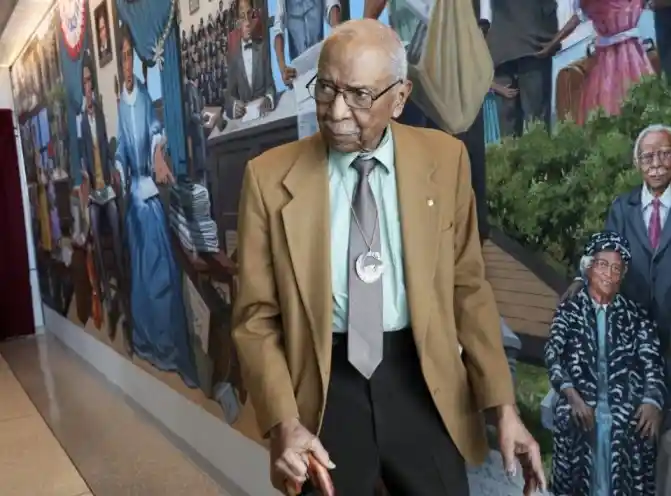
Rochester has lost one of its most distinguished voices in education and civil rights with the passing of Dr. David Anderson, a renowned Frederick Douglass scholar whose decades of work profoundly shaped how generations understood the legacy of the great abolitionist. His death marks the end of an era for a city still grappling with its complex racial history and the ongoing struggle for equality that Douglass himself championed more than a century ago.
Rochester City Council President Miguel Meléndez Jr. described the loss as devastating news for the entire community, particularly for those who benefited from Anderson’s tireless advocacy on behalf of the African American community. Anderson’s influence extended far beyond the classroom, touching countless lives through his scholarly work, community engagement, and unwavering commitment to social justice. His ability to connect the historical struggles of Frederick Douglass to contemporary issues of race and inequality made him an indispensable figure in Rochester’s civic life.

As an educator, Anderson dedicated his career to ensuring that the contributions of African Americans to American history received the recognition they deserved. His expertise on Frederick Douglass, who made Rochester his home for 25 years and published his abolitionist newspaper The North Star from the city, brought national attention to the region’s pivotal role in the antislavery movement. Colleagues and former students remember Anderson not only for his encyclopedic knowledge but for his passionate teaching style that made history come alive in ways that textbooks never could.
Anderson’s scholarship went beyond academic circles, influencing public discourse and policy discussions about race, education, and historical memory in Rochester and beyond. He frequently served as a consultant for museums, documentary filmmakers, and civic organizations seeking to tell more complete and honest stories about American history. His work helped elish Rochester as a center for Douglass stus, attracting researchers and visitors from around the world to explore the connections between past struggles and present challenges.
Throughout his career, Anderson remained deeply engaged with Rochester’s African American community, mentoring young scholars, supporting educational initiatives, and speaking out on issues affecting marginalized populations. He understood that studying history was not merely an academic exercise but a tool for understanding and addressing contemporary injustices. His approach to scholarship was always grounded in the belief that knowing the past could illuminate pathways toward a more equitable future.
Anderson’s passing leaves a significant void in both academic and civic spheres at a moment when his voice and wisdom are needed more than ever. As communities across America continue to debate how to teach and commemorate their histories, particularly regarding slavery and racism, scholars like Anderson who could bridge divides and speak uncomfortable truths with grace and authority become increasingly rare. His legacy will endure through the students he taught, the scholarship he produced, and the example he set of a life devoted to truth, justice, and the ongoing work of making freedom real for all people.






















Leave a comment