

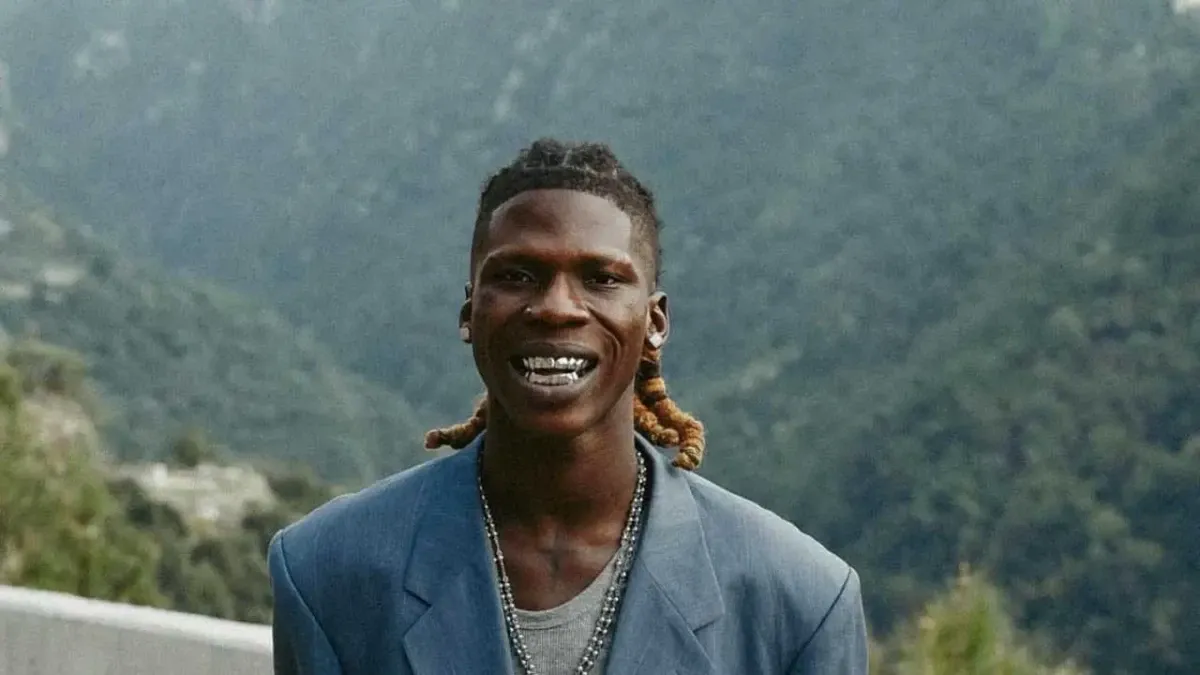
Nigerian rapper Zlatan Ibile has issued a public apology to fellow artist Seyi Vibez following a heated online exce that erupted over perceived disrespect in a musical collaboration.”,
Nigerian rapper Zlatan Ibile has taken the unusual step of publicly apologizing to rising star Seyi Vibez after a bitter dispute between the two musicians spilled onto social media this week, marking yet another chapter in the increasingly volatile landscape of Nigerian music industry relationships. The feud, which captivated fans and sparked fierce debate across social platforms, centers on allegations of professional disrespect and artistic mockery that threatened to escalate into a full blown industry rift.

The controversy ignited on May 26 when Seyi Vibez accused Zlatan of deliberately undermining his Fuji Moto project through what he perceived as mocking ad libs featured on Adekunle Gold’s track, Life of the Faaji. For Seyi Vibez, an artist who has spent years cultivating his unique sound and building his brand, the perceived slight represented more than just artistic criticism.
It touched on deeper issues of respect and recognition within an industry where collaboration can quickly turn contentious. His response came swiftly and sharply, as he reportedly labeled Zlatan a backup artiste and took aim at the rapper’s fashion ventures, escalating what might have been a private disagreement into a public spectacle.
Zlatan’s apology, posted via his social media channels on Thursday, struck a notably conciliatory tone that contrasts sharply with the initial hostility. Addressing Seyi Vibez directly, the rapper wrote that it genuinely pained him to learn his colleague believed he would intentionally disrespect him.
He characterized the entire incident as a fundamental misunderstanding rather than a calculated , extending an olive branch by inviting dialogue whenever Seyi Vibez felt ready to discuss the matter. The message concluded with terms of endearment, referring to the younger artist as his brother and using the phrase “4L ABURO MI,” which translates to forever my younger brother in Yoruba.
As of Thursday evening, Seyi Vibez had not publicly responded to the apology, leaving fans and industry observers to speculate about whether the attempted reconciliation will succeed. Music industry analysts suggest that such public feuds, while generating considerable attention and engagement online, often mask deeper tensions around artistic credit, commercial success, and generational shifts in Nigerian music.
While beef between artists has long been a feature of hip hop culture globally, the Nigerian music scene has seen an uptick in public disputes that play out almost entirely through social media channels, where grievances are aired instantly and emotions run high.
The incident highlights broader questions about collaboration etiquette and artistic interpretation within Nigeria’s booming entertainment sector. When multiple artists contribute to a single track, the lines between homage, collaboration, and mockery can become blurred, particularly when communication breaks down.
Ad libs, once considered minor embellishments, have increasingly become points of contention as artists seek to protect their creative innovations and signature styles. For younger musicians like Seyi Vibez, who are still elishing their place in a competitive market, perceived slights from more elished figures can feel particularly threatening to hard won credibility.
Whether this apology marks the end of hostilities or simply a pause in ongoing tensions remains to be seen. Fans of both artists will be watching closely for any sign of reconciliation or further conflict. Beyond the personal dynamics, the incident serves as a reminder of how quickly misunderstandings can spiral in an era of instant digital communication, and how public reputations can be shaped or damaged by a single social media post.
As Nigerian music continues its global ascent, how its artists navigate internal conflicts while maintaining professional relationships may prove just as important as the music they create. For now, the ball remains firmly in Seyi Vibez’s court, with the industry waiting to see whether he will accept the extended hand or let the grievance simmer.
You May Like


















Leave a comment