

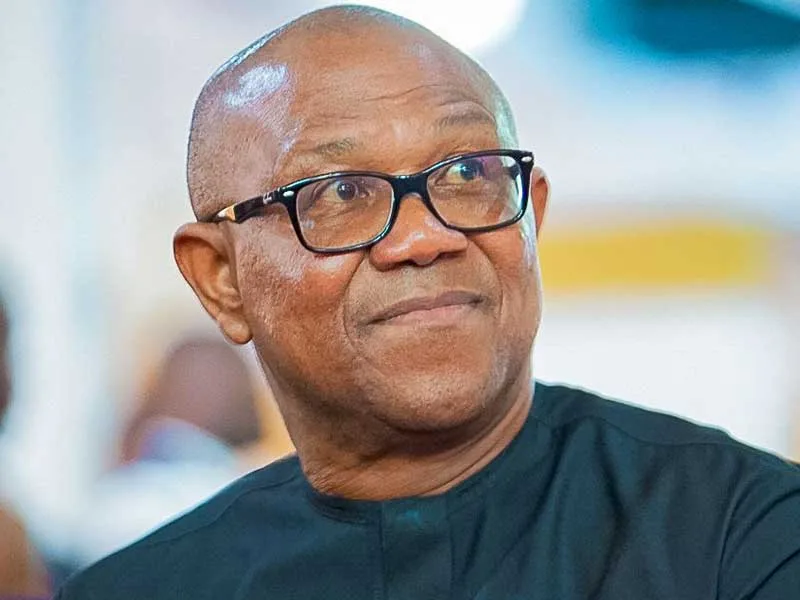
Presidential candidate Peter Obi has issued a direct challenge to Nigerian voters, urging them to use the ballot box as their weapon against politicians who violate electoral peace agreements. Speaking at the National Peace Accord signing ceremony in Abuja on Tuesday, the Nigeria Democratic Congress standard bearer declared that the ultimate sanction for political leaders who break their promises should be electoral defeat. His remarks come as the country prepares for what many observers expect to be a highly contested 2027 general election cycle, raising questions about whether voters will heed his call for accountability at the polls.
The former Anambra State governor minced no words in his address at the event, which was organized by the National Peace Committee in partnership with The Kukah Centre. Obi emphasized that politicians who fail to uphold their commitments to peaceful conduct must face consequences. The punishment, he insisted, should come directly from the electorate rather than from regulatory bos or international observers. His focus on voter agency reflects a broader frustration with the cycle of political violence that has marked Nigerian elections for decades, despite repeated signings of peace accords that often prove toothless in practice.

Beyond calling for electoral accountability, Obi made an impassioned plea for campaigns centered on substantive issues rather than inflammatory rhetoric or ethnic appeals. He challenged political parties and candidates to conduct peaceful, issue driven campaigns that address the concrete problems facing ordinary Nigerians. The economy, insecurity, unemployment, and the rising cost of living should dominate political discourse, he argued, rather than the personal s and divisive messaging that have characterized previous election cycles. His vision of democracy is one where no Nigerian should lose their life because of an election, a principle he urged politicians to embrace voluntarily rather than only when compelled to sign formal agreements.
In a sobering moment, Obi drew attention to the recent casualties from the Osun State governorship election, calling on political leaders to visit and support the families of those who d during the electoral process. His remarks served as a stark reminder that electoral violence in Nigeria is not merely theoretical but carries real human costs. He urged political actors to conduct themselves in ways that honor democratic values and protect human life, emphasizing that the office being sought demands behavior that reflects its dignity and responsibility. Democracy should strengthen communities, not leave them mourning preventable deaths.
Addressing concerns about his continued participation in what many Nigerians view as a flawed electoral system, Obi offered a philosophical justification for remaining engaged. He stated that his belief in the electoral process stems from his desire to transform it. Ce, he argued, requires working within existing structures even when those structures are imperfect. His primary concern ahead of 2027, he said, is ensuring that Nigerians can freely choose their leaders and have their votes accurately counted. This vision of electoral integrity, though basic in elished democracies, remains aspirational in a country where vote buying, ballot stuffing, and result manipulation have undermined public confidence in successive election cycles.
As Nigeria moves c to the 2027 general elections, Obi’s call for voter vigilance and political accountability sets an important marker for the campaign ahead. Whether his message resonates with an electorate that has grown cynical about promises of reform remains to be seen. What is clear, however, is that the credibility of the electoral process itself will be on trial alongside the candidates. If voters follow Obi’s advice and genuinely punish those who violate peace commitments, it could mark a turning point in Nigerian political culture. If not, the country may face another cycle where peace accords serve as mere photo opportunities rather than binding commitments, perpetuating a pattern that has cost too many lives and undermined democratic progress for far too long.
You May Like



















Leave a comment