

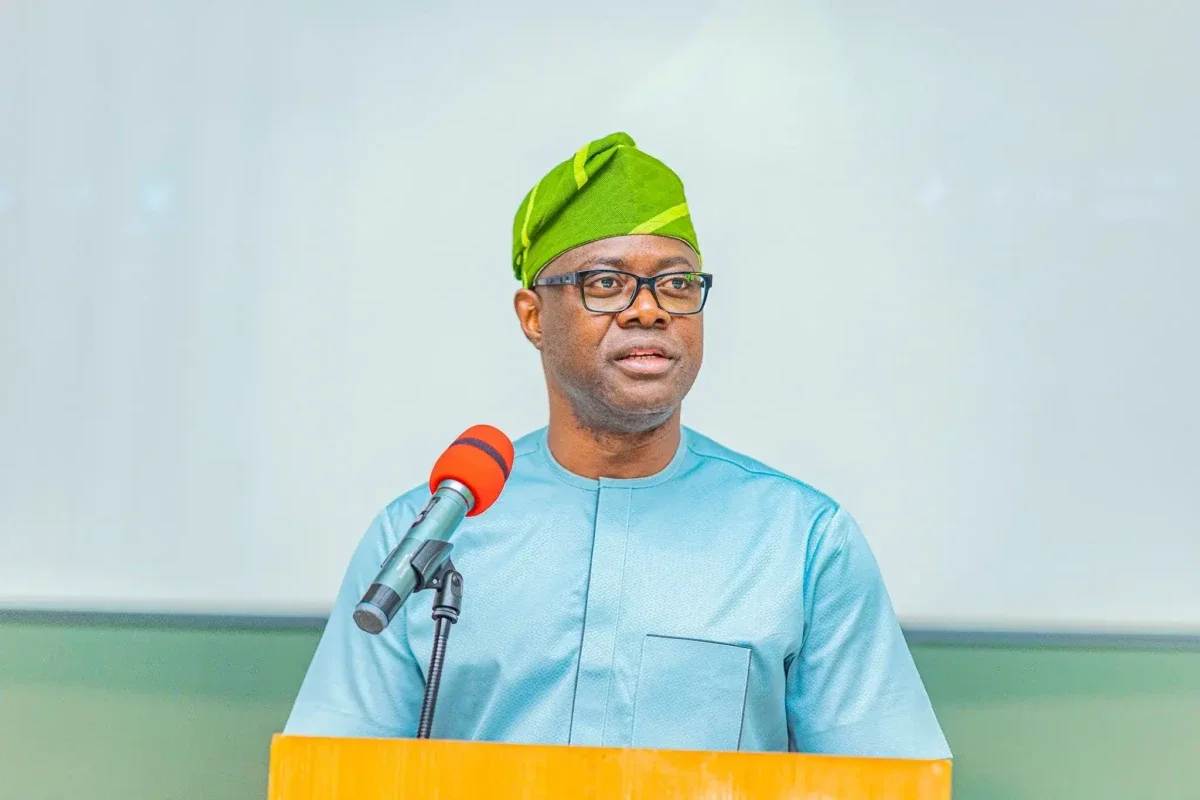
Governor Seyi Makinde of Oyo State has issued a stern warning against turning the state’s escalating security crisis into a political battleground, declaring that the recent mass abduction of students and teachers demands a unified national response rather than partisan finger pointing. Speaking on Tuesday to leaders and members of the Nigeria Labour Congress, the Nigeria Union of Teachers, and the National Association of Nigerian Students who had gathered in peaceful protest, Makinde characterized the kidnapping as a national tragedy that transcends regional or political boundaries.
The demonstration at the State Secretariat was sparked by the abduction of 39 students and seven teachers from communities in Oriire Local Government Area, an incident that has sent shockwaves through the state and reignited national conversations about Nigeria’s deteriorating security landscape. Protesters demanded immediate action and accountability from government authorities, reflecting growing public frustration over the frequency and boldness of kidnapping operations across the country. Makinde’s response acknowledged both the gravity of the situation and the limitations facing state governments in addressing security challenges that increasingly appear coordinated and sophisticated.

In his address to the assembled union leaders and members, Makinde made an emotional appeal for patience and trust, describing his personal distress over the incident. He questioned the humanity of perpetrators capable of such violence, suggesting that conventional approaches to security may prove inadequate when dealing with individuals who demonstrate complete disregard for human life. His remarks painted a picture of adversaries who operate beyond the bounds of normal criminal behavior, raising implicit questions about the resources and strategies required to combat them effectively.
The governor’s call for collective action comes amid growing criticism from opposition parties who have sought to link the kidnappings to perceived failures in state security management. Political tensions in Oyo State have been simmering, with allegations and counter allegations flying between various factions over who bears responsibility for the deteriorating security situation. Makinde’s appeal to set aside political considerations reflects an awareness that partisan warfare could undermine the coordinated response needed to address what he described as challenges that go far beyond politics.
Makinde stressed that effective solutions require cooperation among all levels of government, from local authorities to the federal administration. His emphasis on collaborative governance speaks to the complex constitutional and operational realities of security management in Nigeria, where state governors lack direct control over police and military forces. This structural limitation has been a recurring source of frustration for state executives who find themselves accountable to citizens for security outcomes while possessing limited operational authority over the security apparatus.
As families of the abducted students and teachers continue their agonizing wait for news, the incident underscores the urgent need for comprehensive security sector reform and improved intelligence sharing across Nigeria’s federal system. Whether political leaders at various levels can truly set aside partisan interests to forge the united front Makinde advocates for remains an open question, one that will likely shape not only the immediate response to this crisis but also the broader trajectory of Nigeria’s struggle against kidnapping and insecurity. The coming days will test whether calls for unity can translate into concrete action that brings the victims home safely and prevents future trages.



















Leave a comment