

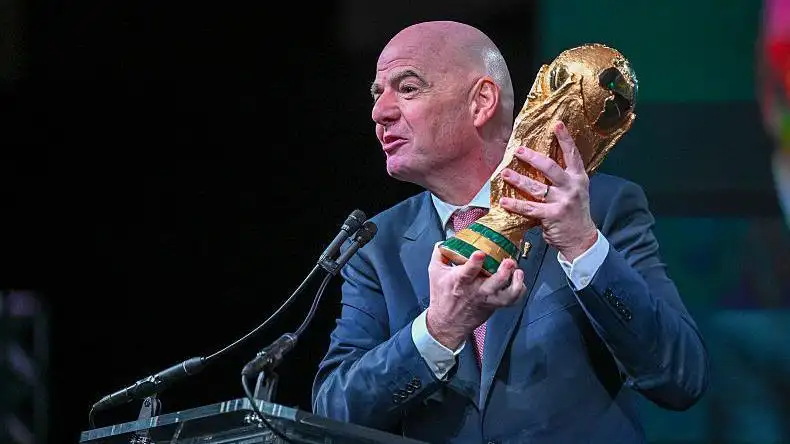
The future of world soccer’s most powerful administrator s in the balance following one of the most dramatic institutional revolts in the sport’s history. Gianni Infantino, president of FIFA since 2016, watched his ambitious plan to restructure the organization’s commercial operations crumble within days after facing coordinated opposition from confederations representing more than two thirds of FIFA’s membership. The proposal, which would have created a $20 billion entity called FIFA Forward Enterprise to manage World Cup operations with private investors, collapsed so spectacularly that European soccer’s governing body threatened to boycott the tournament entirely.
UEFA fired the opening salvo, characterizing the plan as an unacceptable privatization of the sport’s crown jewel. What followed was a cascade of institutional resistance rarely seen in international soccer governance. CONCACAF, representing North and Central America and the Caribbean with 35 member nations, issued its own formal rejection, citing concerns over transparency and the embedding of private investors in core commercial decisions. When the Asian Football Confederation added its 46 votes to the opposition, including Australia’s voice, the mathematics became insurmountable. Together, these confederations commanded 136 votes, far exceeding the 106 needed to block any proposal at FIFA’s congress.
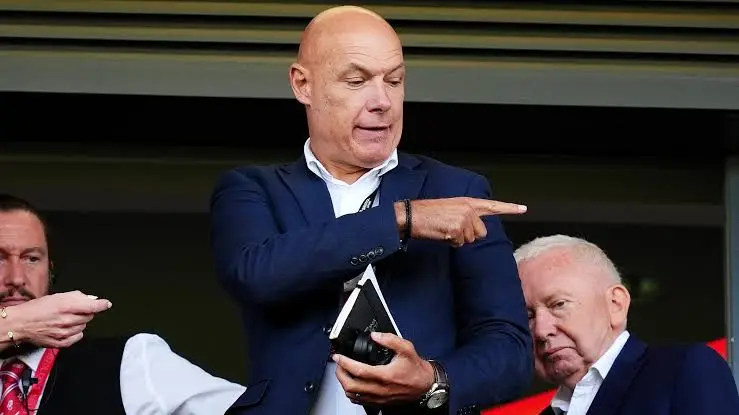
Even as the walls closed in, FIFA initially maintained that nobody was selling football, attempting to downplay the severity of internal dissent. That position became untenable when Carlos Cordeiro, Infantino’s senior adviser on global strategy and governance, resigned in protest. Cordeiro’s departure statement pulled no punches, describing the proposal as a bad deal for football that would mortgage the sport’s future. FIFA’s chief operating officer Kevin Lamour went further, suggesting the administration had been deceived. Only when defeat became inevitable did Infantino acknowledge the proposal had created divisions no longer serving its stated objectives.
The episode has reframed fundamental questions about what FIFA represents and who it serves. In principle, FIFA operates as a public interest organization, with soccer itself understood as a global public good accessible to all. Its legitimacy rests on collective governance, equitable access and stewardship of the game rather than financial engineering or investor returns. The attempt to embed private capital at the heart of FIFA’s commercial operations, despite internal warnings and external opposition, suggests a strategic orientation driven by consolidation of authority rather than protection of the sport’s public mission. Member associations increasingly view the failed initiative not as an isolated misstep but as evidence of deeper structural problems within the presidency.
Attention has now shifted to potential alternative leadership as Infantino’s next presidential election looms in 2027. Aleksander Čeferin, UEFA’s president, emerged from the confrontation with enhanced stature, having positioned his organization as the principal institutional counterweight to FIFA’s commercial ambitions. His willingness to threaten a World Cup boycott demonstrated both political courage and strategic acumen, qualities that have not gone unnoticed among FIFA’s member associations seeking stronger checks on presidential power. Other figures within the global soccer hierarchy are also being discussed in private conversations, though none have yet emerged publicly as challengers.
Whether Infantino can recover from this debacle remains an open question with profound implications for global soccer governance. His presidency, once characterized by expansion and increased revenue distribution, now faces scrutiny over its decision making processes and responsiveness to member concerns. The coming months will reveal whether confederations press their advantage by demanding structural reforms or whether the crisis fades as attention shifts to upcoming tournaments. What seems certain is that the era of unchallenged presidential authority at FIFA has ended, replaced by a more contested and unpredictable political landscape where power must be negotiated rather than assumed.
You May Like





Leave a comment