

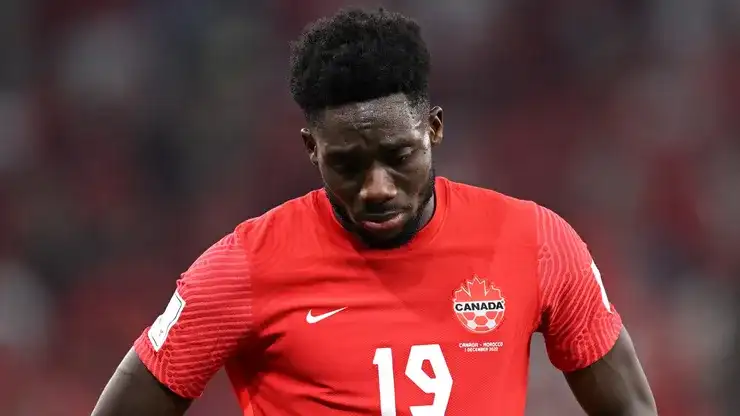
Captain Alphonso Davies will almost certainly miss Canada’s opening World Cup match on June 12, but head coach Jesse Marsch remains optimistic the star defender will recover in time to play a role in the tournament. Speaking to reporters Monday, Marsch acknowledged the precarious situation surrounding his most influential player while announcing a 32 player training camp roster heavily weighted toward defensive reinforcements. “I think Alphonso will play in the World Cup,” Marsch said. “I don’t think he’ll be ready for June 12, referring to Canada’s opening game against Bosnia and Herzegovina in Toronto, but we’ll see.”
The uncertainty around Davies has forced Marsch into defensive contingency planning on an unprecedented scale. A dozen defenders have been called to this week’s training camp in Charlotte, North Carolina, including familiar names like Moise ito, Derek Cornelius, Alistair Johnston, Richie Laryea, and Niko Sigur. Davies has been plagued by three separate muscle and hamstring injuries since returning from ACL surgery in December and has not played club soccer for Bayern Munich since May 6. More troubling still, he has not featured for the Canadian national team in more than a year, leaving substantial questions about his match fitness even if he recovers from his latest setback.

Marsch faces the unenviable task of cutting six players from the Charlotte camp before the final 26 player squad flies to Edmonton on Saturday to continue preparations. Some players never made it that far. Junior Hoilett, James Pantemis, Kamal Miller, and Theo Bair were not invited to camp, their World Cup dreams extinguished before the final selection process even began. Hoilett’s absence at age 35 represents perhaps the most surprising omission, as the veteran could have provided creative depth and tactical flexibility precisely in the areas where Davies’s potential absence leaves Canada most vulnerable.
The goalkeeper position appears settled despite ongoing uncertainty about who will start. Marsch named only three keepers to camp and thus to the final roster: Maxime Crépeau, Dayne St. Clair, and Owen Goodman. Pantemis, who seemed to be building a case for consideration, was left out entirely. Marsch’s reluctance to expand the goalkeeper group may reflect his hesitation to complicate an already difficult decision, though it also signals confidence in his top three choices regardless of who ultimately gets the nod for the opener in Toronto.
Despite the selection headaches and injury concerns, Marsch projected confidence about the quality of the squad Canada will field. “We’re going to have a really good squad, the best squad Canada’s ever had,” he said Monday. “We’re going to be younger, we’re going to be more dynamic, we’re going to have more players playing at a higher level, we’re going to be athletic and strong.” Those words offer reassurance to a fanbase anxious about both Davies’s fitness and the broader depth of a team preparing for its most important tournament in a generation.
Canada now faces a compressed timeline to finalize preparations and integrate players who may be called upon to fill roles they never anticipated. Marsch will announce his final 26 player roster on Friday, giving the coaching staff just four days in Charlotte to evaluate form, fitness, and tactical cohesion. How Canada navigates the Davies situation, manages its defensive depth, and maintains squad morale through difficult cuts will largely determine whether this World Cup represents a celebration of Canadian soccer’s rise or a cautionary tale about the cruel timing of injury. The tournament of a lifetime for 26 players begins Saturday in Edmonton. For six others, the dream ends this week in North Carolina.
You May Like











Leave a comment