

Long after the last shot is fired and peace agreements are signed, the weapons of war continue their deadly journeys. Firearms looted from battlefields cross international borders, fuel organized crime, and reignite violence in communities struggling to rebuild. Now, emerging technologies including 3D printing and untraceable ghost guns are compounding an already grave threat to global security, creating challenges that traditional regulatory frameworks were never designed to address.
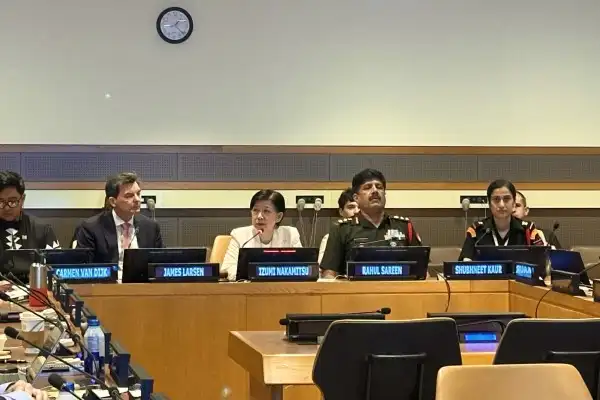
The issue has taken center stage at the United Nations this week as delegates from around the world gather to confront the proliferation of illicit firearms. At the heart of their discussions lies a troubling reality: conflicts may fade from headlines, but their weaponry does not. Izumi Nakamitsu, the UN’s top disarmament official, put it bluntly when speaking about the aftermath of armed conflicts. Wars end, she explained, but unfortunately the weapons used in those conflicts are often not brought under full control. They continue to circulate, sometimes hidden, sometimes smuggled across borders, always dangerous.
Among the fastest growing concerns are so called ghost guns, firearms assembled from kits or individual parts that lack serial numbers and are virtually impossible for law enforcement to trace. Advances in 3D printing technology have amplified these worries considerably. Components and in some cases entire operational firearms can now be manufactured outside traditional production channels and beyond the reach of regulatory oversight. The technology’s increasing availability and plummeting costs have governments worldwide worried that illicit weapons may soon become easier to produce and exponentially harder to control. When weapon parts are disassembled and trafficked separately, tracing them becomes even more difficult, Nakamitsu warned.
Libya offers a stark illustration of how weapons outlive the wars that spawned them. Following the 2011 conflict that toppled Muammar Gaddafi, vast arsenals were looted or diverted from government stockpiles. Those firearms subsequently surfaced across the Sahel region, appearing in Niger, Burkina Faso, and Nigeria. Many ended up in the hands of extremist groups, demonstrating how arms from a single conflict can deilize neighboring countries for years or even decades afterward. Small arms including pistols, revolvers, and assault rifles are particularly problematic because they are relatively inexpensive, remarkably durable, and simple to operate. Light weapons such as grenade launchers and portable anti-tank systems add another layer of danger. All can remain in circulation for generations, especially when ammunition remains accessible.
The regional variations in impact underscore how pervasive this challenge has become. In Latin America and the Caribbean, illicit firearms are inextricably linked to organized crime and some of the world’s highest homicide rates. UN estimates indicate that firearms account for between 70 and 80 percent of violent deaths in parts of that region. Across sub-Saharan Africa, the proliferation of small arms actively undermines peacebuilding efforts long after formal hostilities cease. Weapons retained by armed groups, militias, or even communities seeking self-protection frequently contribute to renewed cycles of violence and chronic inility. The presence of these weapons transforms localized disputes into lethal confrontations and makes fragile peace agreements even more precarious.
Beyond the immediate security threats, illicit weapons enable a cascade of human suffering that extends far beyond battlefields. They facilitate human rights abuses, enable terrorism, and are directly linked to ual and gender based violence in conflict and post conflict settings. As delegates work through potential solutions at UN headquarters, the stakes could hardly be higher. Addressing this crisis will require not just better border controls and trafficking interdiction, but innovative approaches to emerging manufacturing technologies that were science fiction just a decade ago. Whether the international community can forge effective responses to both legacy weapons and future threats will determine the safety of communities worldwide for years to come.
















Leave a comment