


Football’s global leadership gathers in Vancouver as the FIFA holds its 76th Congress, a high stakes meeting unfolding just weeks before the 2026 World Cup kicks off across Canada, Mexico, and the United States.
The summit brings together around 1,600 delegates from more than 200 member associations, with major political and sporting issues dominating the agenda, including the Iran crisis, tournament logistics, and the unresolved suspension of Russia from international football.
Tensions have already escalated after officials from the Iran Football Federation abruptly left Canada following an incident at Toronto airport. Reports indicate that the delegation withdrew from the Congress trip after being denied smooth entry procedures, amid Canada’s strict policy on individuals linked to the Islamic Revolutionary Guard Corps, which it designated a terrorist organization in 2024.
The situation has raised fresh questions about Iran’s participation in the upcoming World Cup, which is already under scrutiny due to broader geopolitical tensions following the outbreak of conflict involving Iran, the United States, and Israel earlier this year.
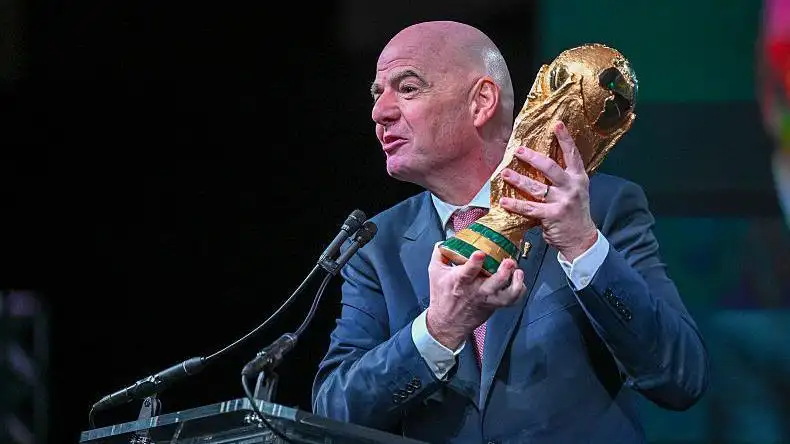
Despite speculation, FIFA president Gianni Infantino has insisted that Iran will remain in the tournament according to the original draw, rejecting proposals to relocate their group matches.
Meanwhile, US officials, including Secretary of State Marco Rubio, have said Iranian players will be allowed entry, although concerns remain over potential restrictions on officials linked to the IRGC.
Beyond Iran, the Congress is also expected to revisit the suspension of Russia from international football, a ban imposed after its 2022 invasion of Ukraine. Infantino has previously suggested that FIFA should consider readmitting Russia, arguing that continued exclusion has not contributed to resolution.
The FIFA president is also under growing scrutiny over rising World Cup costs, ticket pricing, and close political associations, particularly with US President Donald Trump. Critics have called for greater transparency on security guarantees for fans and journalists attending the tournament.
Human rights groups, including Amnesty International, have urged FIFA to address concerns about immigration enforcement and potential political risks affecting World Cup visitors in host countries.
In addition, debate continues over FIFA’s newly introduced Peace Prize, which has drawn criticism from several football associations who argue it falls outside the organization’s mandate.
As the Vancouver Congress continues, football’s governing body finds itself at the intersection of sport, politics, and global diplomacy, with decisions expected to shape not only the 2026 World Cup but the broader future of international football governance.
You May Like














Leave a comment