

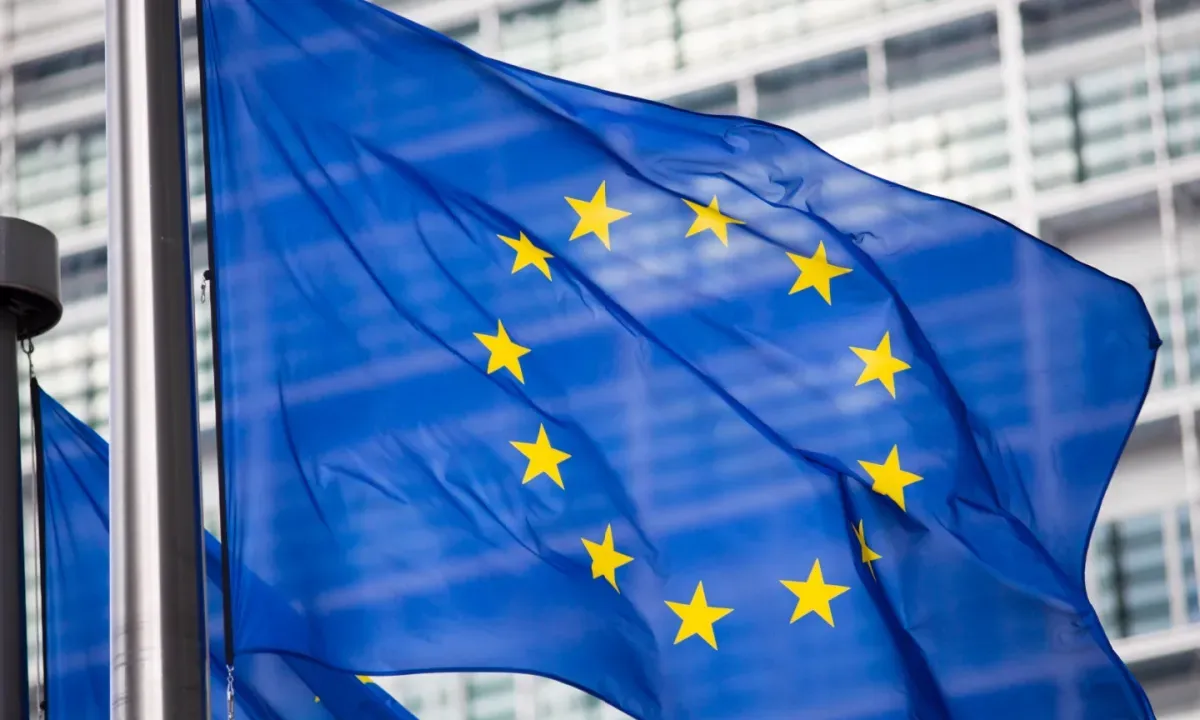
The European Commission announced last week across all 14 of its social media platforms that it was joining a new one: W Social. Beyond the obvious attempt at branding cleverness (W comes before X in the alphabet), the decision to embrace a new European platform might initially appear unremarkable or even commendable. Yet a c examination of how the technology actually works, who owns it, and what incentives drive it reveals a puzzling contradiction at the heart of EU digital policy.
To understand why technology observers find the commission’s choice problematic, some background is necessary. Back in 2019, writer Mike Masnick published an influential essay for Columbia’s Knight First Amendment Institute titled “Protocols, Not Platforms.” His argument, stated simply, was that social media keeps failing us because we built it as platforms in the first place, with a handful of private companies owning the entire infrastructure and making every decision about speech, ranking, and moderation from a centralized position. Masnick’s proposed solution was to push control back to open protocols and to the edges of the network, the way email and the early web functioned, so that no single company sits at the gate and anyone can build on top. In technology circles, the essay inspired Jack Dorsey, founder of Twitter (which later became X), to launch what is now the Bluesky project and the protocol powering it.
The difference between traditional social networks and protocol based alternatives is fundamental. On a conventional social network, your account lives inside the company. Your posts, your followers, and your identity all sit on Facebook’s servers or X’s servers, and joining means renting a room in someone else’s building. The AT Protocol, the technology underneath Bluesky, takes that structure apart. Your account and your data live on soing called a Personal Data Server, or PDS, which holds your posts, your follows, your profile, and crucially, your identity and your signing keys. Everything you actually scroll through (the app, the search, the ranking, and the moderation) is layered on top and can be run by completely different people.
The entire point, and the reason anyone in Brussels should find the technology interesting in the first place, is that you can host your own PDS and still communicate with everyone else on the network. For abundant clarity, in the protocol world it means you could log into X, see all your Facebook followers and posts there, and if you post there, it also goes out on Facebook (if you choose). The app you use to see content is just a window into the universe of other people’s PDS systems, much like how you can use a different email client to access the same emails. A PDS (your user handle and all the associated data) can be hosted or stored wherever you want: on a service like Bluesky or Eurosky or W, or if you’re more technically advanced, you can host it yourself.
What got lost in much of the coverage of the commission joining W Social is that the commission did not simply make an account on W. It moved its PDS onto W. Services that index such movements show that the servers for the European Commission, Ursula von der Leyen, the European Central Bank, and Christine Lagarde all now point to W’s infrastructure. In other words, the commission has chosen to house its digital identity and content not on its own servers (which it easily could do) but on those of a private, for profit company. For an institution that regularly champions digital sovereignty, open source technology, and reducing dependence on tech giants, the decision appears contradictory at best.
The implications extend beyond mere symbolism. Brussels has spent years articulating a vision of technological independence, pouring resources into initiatives meant to reduce European reliance on American or Chinese tech platforms. Yet when presented with an opportunity to practice what it preaches by hosting its own infrastructure on an open protocol designed precisely for institutional independence, the commission instead opted to trust a private startup. Whether W Social will prove a reliable long term partner or simply another platform subject to the usual pressures of venture capital and growth metrics remains an open question. What seems certain is that the commission has missed a chance to demonstrate genuine commitment to the digital sovereignty it claims to value, choosing convenience over principle at a moment when leadership by example matters most.
You May Like





















Leave a comment