

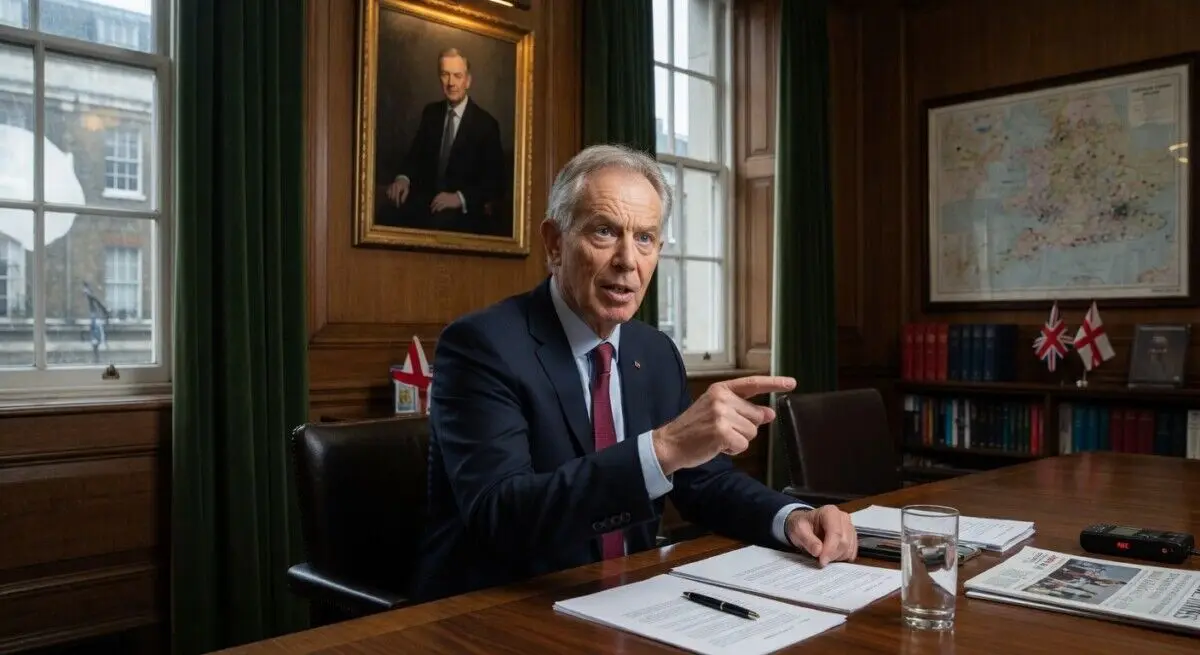
Tony Blair has warned the Labour Party against rushing into a leadership election without first elishing a clear policy direction, while simultaneously criticizing recent comments made by Andy Burnham that dismissed 40 years of British governance as failed politics. Speaking in a radio interview, the former Prime Minister urged party members to demand detailed policy positions from all leadership candidates before casting their votes.
Blair’s intervention comes as the party faces a critical decision between potential leadership contenders Andy Burnham and Wes Streeting. Rather than endorsing either candidate directly, the former leader emphasized process over personalities. He told party members that Labour must force candidates to set out in detail what the current government has got right, what it has got wrong, and what the party should do differently. The message reflects growing concern among party veterans that Labour risks repeating past mistakes by focusing on personalities rather than policy substance.

While Blair expressed support for Burnham’s parliamentary ambitions, praising him as “a great guy” and expressing hope he wins the Makerfield seat, he took issue with a recent speech in which the Greater Manchester mayor suggested four decades of governance had let voters down. Blair questioned whether anything good happened during the Thatcher years with the business community or during the New Labour period. He suggested Burnham didn’t really mean such a sweeping dismissal but warned that vague critiques of the past would not serve the party well going forward.
The former Prime Minister drew on Labour’s recent history to illustrate his concerns about inadequate policy explanation. Blair acknowledged that while it was obvious Jeremy Corbyn was an election , the party failed to adequately explain why the entire Corbyn agenda was fundamentally wrong. Speaking frankly about Keir Starmer, whom he described as someone he likes and wishes well, Blair suggested this failure of explanation created lasting problems for party coherence and direction.
Blair’s comments reveal deeper tensions within Labour about how to position itself going forward. Party figures are grappling with whether to embrace continuity or radical ce, and how to acknowledge past achievements while addressing voter concerns about economic inequality and regional decline. Burnham’s critique of recent decades appears designed to distance Labour from both Conservative governance and previous Labour governments, but Blair’s pushback suggests such wholesale rejection may alienate centrist voters and party moderates.
As Labour prepares for what could be a pivotal leadership contest, Blair’s warning about process and substance may resonate with members who remember the party’s wilderness years. Whether candidates heed his call for detailed policy platforms before votes are cast remains to be seen, but his intervention ensures that questions about Labour’s direction and its relationship to its own governing record will dominate the coming debate. How the party reconciles its past with its future vision may well determine not just who leads Labour, but whether it can mount a credible challenge for power.

















Leave a comment