

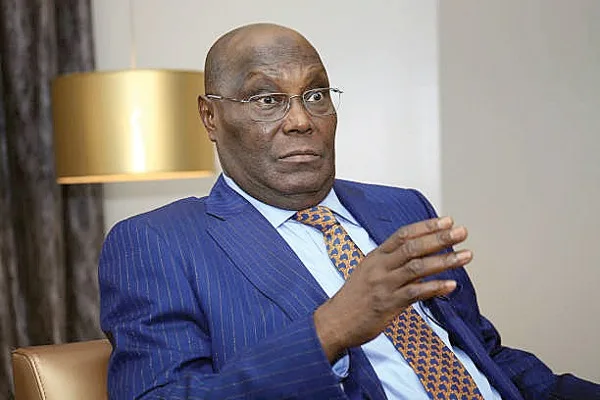
Former Vice President Atiku Abubakar has launched a scathing counter against the Tinubu administration, accusing the Presidency of deliberately choosing diversion over disclosure and resorting to personal insults rather than addressing legitimate questions about public accountability. In a strongly worded statement released through his Senior Special Assistant on Public Communication, Phrank Shaibu, the former presidential candidate condemned what he described as a sustained campaign of deflection by an administration unwilling to confront inconvenient truths about its leader’s past.
Atiku’s rebuke comes amid an intensifying political confrontation between the opposition and the current government over questions surrounding President Bola Tinubu’s historical public records. According to the former Vice President, the Presidency devoted considerable energy to launching personal s against him rather than providing straightforward answers to questions that continue to generate widespread public interest. When governments abandon facts for insults and substitute evidence with abuse, Atiku argued, they unwittingly admit that they have run out of convincing answers. Nigerians expected clarification from their elected leaders. Instead, what they received was a barrage of name calling and political invective that does nothing to address the substantive issues at hand.

Pushing back against accusations that his queries constitute an on national sovereignty, Atiku insisted that raising questions about matters contained in publicly available records should never be misconstrued as unpatriotic behavior. No one has reported Nigeria to anyone, he emphasized, and Nigeria itself is not on trial. Rather, the issue concerns legitimate questions arising from public documents relating to the occupant of the nation’s highest office. Those records were not created by the opposition or any political actor, Atiku noted, and attempting to silence legitimate public inquiry by wrapping oneself in the national flag does not answer the fundamental questions before the country. Democratic societies thrive on transparency, not on the suppression of inconvenient questions.
Particularly troubling to the former Vice President was the Presidency’s decision to resurrect old political allegations against him rather than responding directly to the specific concerns raised about President Tinubu’s background. Nigerians, Atiku asserted, are sufficiently discerning to distinguish between political mudslinging and factual responses to legitimate queries. Personal s do not erase public records, nor do they substitute for the kind of transparency that citizens have every right to demand from their elected officials. Atiku also highlighted what he characterized as a glaring contradiction in the administration’s approach to international engagement. An administration that actively seeks foreign investment, foreign loans, favorable international ratings, and global endorsements cannot credibly portray international scrutiny as an assault on Nigeria’s independence when such attention becomes uncomfortable. Accountability is not foreign interference, he insisted, but rather a fundamental democratic obligation.
Dismissing the notion that electoral victory automatically settles every question concerning public accountability, Atiku reminded the administration that elections confer political authority but do not extinguish the public’s right to ask questions. A democratic mandate, he argued, is not a substitute for transparency, nor does it exempt any public official from the obligation to account to the people who elected them. Confident governments throughout history have responded to scrutiny with openness rather than hostility, and the Tinubu administration should follow this elished precedent. If the government believes that the public record has been misunderstood or misrepresented, the appropriate response is to present the facts clearly and without embellishment. Abuse cannot replace evidence, and propaganda cannot replace truth in a functioning democracy.
As this confrontation continues to dominate political discourse in Nigeria, the stakes extend far beyond the personal reputations of the individuals involved. At its core, this dispute raises fundamental questions about governmental transparency, the rights of citizens to scrutinize their leaders, and the standards of accountability that should apply to those who occupy the highest offices in the land. Whether the Tinubu administration will ultimately pivot from its combative posture and provide the factual responses that Atiku and many Nigerians are demanding remains to be seen. Until substantive answers are provided about the specific allegations concerning President Tinubu’s past, including questions about whether he forfeited money to the United States Government in connection with alleged offenses, no amount of outrage or personal s will silence what Atiku characterizes as legitimate public inquiry. The coming weeks will reveal whether Nigeria’s leaders choose the path of transparency or continue down the road of deflection and recrimination.













Leave a comment