

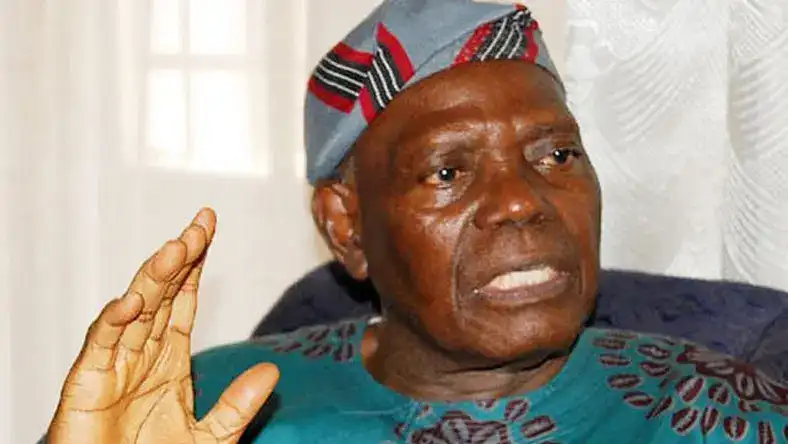
Chief Bola Ige, popularly known as the Cicero of Esa Oke, remains one of Nigeria’s most respected legal and political icons whose democratic ideals continue to shape political discussions decades after his death.
A Senior Advocate of Nigeria and prominent Awoist, Bola Ige played major roles in both the First and Second Republics. Known for his courage, eloquence and unwavering commitment to justice, he endured imprisonment during military rule but remained steadfast in his belief in democracy, fairness and social equality.

Following the collapse of the Second Republic after the military takeover of December 31, 1983, Ige refused to participate in the transition programmes introduced by military rulers. Instead, he adopted what later became known as the “Siddon Look” philosophy, a political strategy that encouraged tactical withdrawal and observation during what he considered flawed democratic processes.
During the regime of General Sani Abacha in the 1990s, Bola Ige openly rejected participation in the military’s transition agenda, arguing that the process lacked sincerity and was designed to perpetuate military control. He famously described the five political parties of the era as the “five fingers of a leprous hand,” insisting that participation would only legitimize an undemocratic system.
The strategy eventually proved effective after the sudden death of Abacha in 1998, paving the way for the return to democratic rule. Ige later emerged as a key figure in the formation of the Alliance for Democracy and served as Attorney General of the Federation before his assassination in Ibadan on December 23, 2001.
The article also revisits the prophetic reflections of Chief Obafemi Awolowo during the final convention of the Unity Party of Nigeria in 1983. Awolowo warned about the dangers of corruption, poor leadership, electoral malpractice and economic decline, predicting that Nigeria would continue to face inility unless leaders embraced integrity and social justice.
Many political observers believe the concerns raised by Awolowo and Bola Ige decades ago still resonate strongly in Nigeria’s current political environment, where debates over leadership, democracy and accountability remain central national issues.
You May Like














Leave a comment