

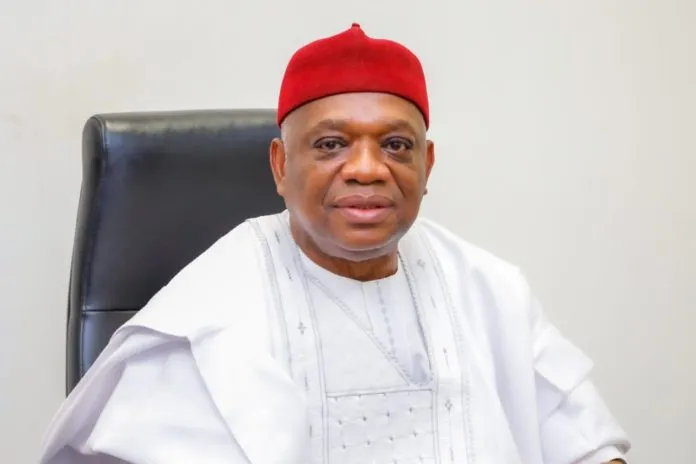
Illegal arms trafficking from troubled West African nations is emerging as the single greatest threat to Nigeria’s economic revival, according to a senior lawmaker who says weapons flowing across porous land borders are undermining an otherwise successful reform agenda. Senator Orji Uzor Kalu of Abia North has identified the movement of small arms from Mali, Libya and Burkina Faso as a critical security challenge that threatens to derail recent economic gains achieved through controversial but necessary policy ces.
Speaking to members of the All Progressives Congress and his support groups at his country home in Igbere on Friday, the former Abia State governor drew a direct line between regional inility and domestic economic performance. Kalu argued that President Bola Ahmed Tinubu’s reforms, particularly the removal of fuel subsis and foreign exce liberalization, have already begun attracting international investment. However, these positive developments risk being overshadowed by persistent insecurity linked to weapons entering the country from neighboring states experiencing political upheaval.

The senator’s assessment highlights a complex challenge facing Nigeria as it attempts to balance economic transformation with security imperatives. While fuel subsidy removal and currency reforms have been praised by international financial institutions as necessary steps toward fiscal sustainability, they have also created domestic hardship that critics say could be exploited by armed groups. Kalu acknowledged this delicate balance, stating that the manufacturing sector in particular remains unable to reach its full potential because investors remain wary of security conditions in various regions.
Regional context provides important background to the senator’s concerns. Mali, Libya and Burkina Faso have all experienced significant political inility in recent years, with military coups and armed insurgencies creating ungoverned spaces where weapons proliferate. Libya in particular has become a major source of military hardware since the 2011 collapse of the Gaddafi regime, with vast stockpiles entering black markets across the Sahel and West Africa. Burkina Faso and Mali have both seen military takeovers and withdrawals from regional security arrangements, further complicating cross border cooperation on arms control.
Beyond security concerns, Kalu used the occasion to address anxieties surrounding recently passed legislation on state policing. Many Nigerians have expressed fears that decentralized law enforcement could be weaponized by governors against political opponents, particularly given the country’s history of executive overreach at state level. The senator sought to allay these concerns, promising that additional legislation would elish clear regulatory frameworks governing both federal and state police operations. He insisted that safeguards would be built into the final statute to prevent abuse, though he did not provide specific details about what those protections might entail.
Looking ahead, the success of Nigeria’s economic reforms may ultimately depend less on policy design than on the government’s ability to secure its borders and restore ility to affected regions. Senator Kalu called on party faithful to rally behind President Tinubu and APC candidates in the 2027 elections, framing the upcoming contest as critical to maintaining reform momentum. Whether foreign investors will commit substantial capital before seeing measurable improvements in security conditions remains an open question, one that could determine whether the country’s economic transformation proves sustainable or stalls amid continuing violence and uncertainty.

















Leave a comment