
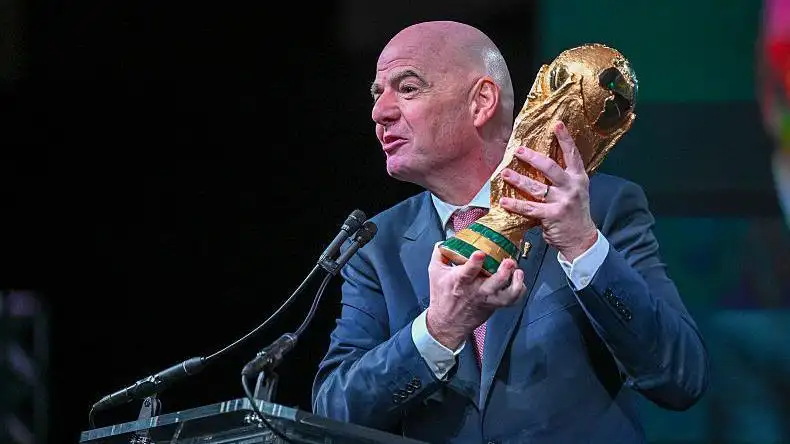
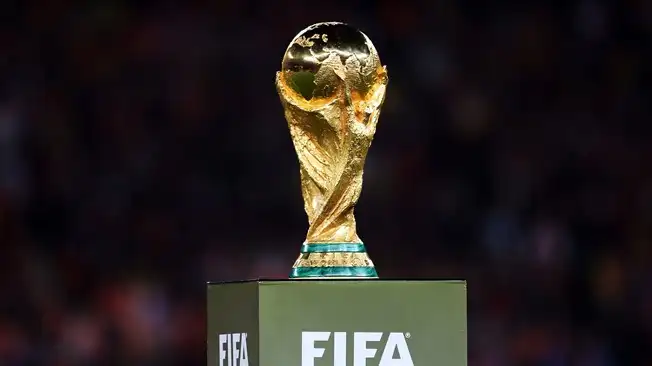
FIFA president Gianni Infantino confronted a deepening leadership crisis Wednesday as the association of European soccer leagues publicly demanded sweeping governance reforms, marking the latest blow to his authority following a spectacularly failed attempt to commercialize the World Cup. The call from European Leagues, representing premier competitions including the English Premier League, Spain’s La Liga, and Italy’s Serie A, came as Infantino reportedly convened an emergency meeting with senior staff in Rabat, Morocco, to address the fallout from one of the most turbulent weeks in his presidency.

European Leagues characterized Infantino’s proposal to sell stakes in World Cup profits through a commercial subsidiary called FIFA Forward Enterprise as “dangerous,” warning that the scheme exposed fundamental flaws in how world soccer’s governing body operates. In a strongly worded statement, the organization declared the controversy raised “serious questions about FIFA’s governance, internal culture and decision making.” The rebuke represents a significant escalation from some of the most powerful entities in global soccer, organizations that have historically maintained diplomatic relations with FIFA despite periodic tensions over fixture congestion and financial distributions.
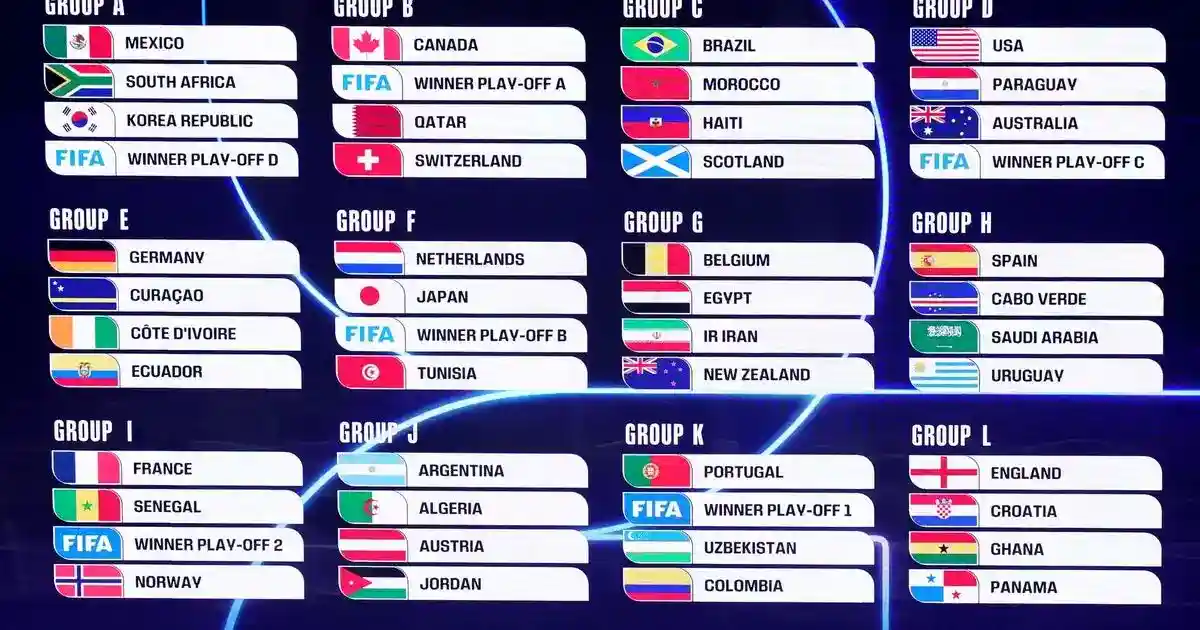
The European leagues did not limit their criticism to the failed commercialization plan alone. They explicitly rejected any potential expansion of the World Cup to 64 teams, a possibility that has circulated within FIFA circles as Infantino seeks to further grow the tournament beyond its current 48 team format. “FIFA must not be allowed to continue taking unilaterally disruptive decisions,” the statement declared, insisting that until meaningful reforms take place, member leagues would oppose “the expansion or creation” of FIFA competitions. Such unambiguous language signals a fundamental breakdown in trust between continental leagues and the global governing body.
UEFA, European soccer’s governing body, has applied even more intense pressure by voting to boycott future World Cups if Infantino pursued the controversial commercialization scheme. Even after Infantino abandoned the plan under mounting opposition, UEFA issued an extraordinary statement declaring it had lost confidence in FIFA’s leadership, language widely interpreted as opening the door to a potential challenge against Infantino’s presidency when elections take place in March. CONCACAF, the governing body for North and Central American and Caribbean soccer, also joined the chorus of criticism, stating that FIFA leadership had overstepped its authority.
Infantino’s proposal centered on creating a separate commercial entity that would manage FIFA tournaments and potentially sell equity stakes to outside investors, a model that drew immediate comparisons to failed breakaway schemes like the European Super League. Proponents within FIFA argued the structure would generate billions in additional revenue that could be distributed to member federations, particularly in developing soccer markets. Critics, however, saw the plan as a dangerous precedent that would dilute FIFA’s accountability, concentrate power in unelected commercial operators, and prioritize short term financial gains over the sport’s long term health and integrity.
What happens next could reshape international soccer governance for decades. With Infantino facing a confidence crisis less than seven months before FIFA’s presidential election, potential challengers may emerge from confederations that have grown increasingly frustrated with what they perceive as autocratic decision making. Reform advocates argue FIFA requires structural ces that give leagues, players’ unions, and supporter groups formal consultation rights on major decisions affecting the global game. Whether Infantino can rebuild sufficient support among FIFA’s 211 member associations remains uncertain, but the coordinated pushback from European competitions and continental confederations suggests his authority has been substantially weakened, potentially making him vulnerable to electoral challenge for the first time since taking office in 2016.




Leave a comment