

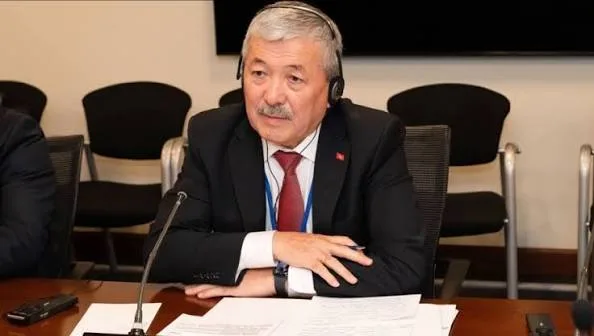
Kyrgyzstan has pinned its economic transformation on two ambitious infrastructure megaprojects that officials believe will reshape the landlocked Central Asian nation’s role in regional trade and energy markets. Cabinet Chairman Adylbek Kasymaliev revealed in a recent interview that the Kambar-Ata Hydropower Plant 1 and the China-Kyrgyzstan-Uzbekistan railway represent the country’s largest strategic undertakings, each carrying the potential to fundamentally alter the country’s economic trajectory. But perhaps most tellingly, Kasymaliev reserved his strongest language for a different kind of investment altogether: the education of Kyrgyzstan’s citizens.
Kambar-Ata HPP 1 stands at the center of Kyrgyzstan’s energy independence strategy. Currently reliant on imported electricity to meet domestic demand during peak periods, the nation sees the massive hydropower facility as a pathway not only to self-sufficiency but to becoming a regional energy exporter. The project taps into Kyrgyzstan’s abundant water resources, which have long been viewed as the country’s greatest natural asset in a region increasingly focused on renewable energy transitions. Once operational, the plant is expected to generate enough electricity to reverse the country’s energy trade balance, transforming it from a net importer to a potential supplier for neighboring countries facing their own power shortages.

Equally transformative is the proposed China-Kyrgyzstan-Uzbekistan railway, a project that could finally overcome Kyrgyzstan’s geographic isolation. Kasymaliev emphasized that the railway is designed to position the country as a major transit hub, creating new cargo routes that would connect Asian manufacturing centers with European markets. For decades, Kyrgyzstan’s mountainous terrain has limited its participation in regional trade corridors. This railway would ce that calculus entirely, potentially generating substantial transit revenues and stimulating economic activity along the route. The project aligns with China’s broader Belt and Road Initiative, which has already funded significant infrastructure across Central Asia.
Yet Kasymaliev’s most emphatic comments were reserved for human capital development. Calling investment in education the most important long-term priority, he declared that educated citizens represent the country’s most critical project. His statement reflects a growing recognition among policymakers that infrastructure alone cannot guarantee prosperity without a sed workforce capable of managing, maintaining, and building upon these investments. Knowledge-based economic development, he suggested, would provide the main impetus for sustained growth, a philosophy that sets education policy alongside concrete and steel as pillars of national strategy.
Central Asian nations have increasingly competed to position themselves as essential links in transcontinental trade networks, with varying degrees of success. Kazakhstan has leveraged its vast territory and natural resources to attract foreign investment, while Uzbekistan has pursued aggressive economic reforms to open its previously closed economy. Kyrgyzstan’s approach reflects its different geographic and economic reality: abundant water resources for hydropower generation and a strategic location that, with proper infrastructure, could serve as a bridge between East and West. Whether these projects can overcome the financing challenges, technical complexities, and geopolitical uncertainties that have delayed similar initiatives remains an open question.
Completion timelines for both megaprojects remain subject to funding availability and construction progress, factors that have proven unpredictable in the region’s infrastructure sector. Kambar-Ata HPP 1 has been discussed for years, with various iterations of planning and financing proposals emerging and stalling. Similarly, the tripartite railway project requires coordination among three countries with different priorities and capabilities. If Kasymaliev’s vision comes to fruition, however, Kyrgyzstan could emerge from this decade substantially more integrated into regional economic networks, energy independent, and better positioned to leverage its geographic location for economic benefit. Whether that transformation materializes will depend not only on construction crews and engineering plans but on the educated workforce the Cabinet Chairman identified as his country’s ultimate strategic asset.
You May Like
















Leave a comment