

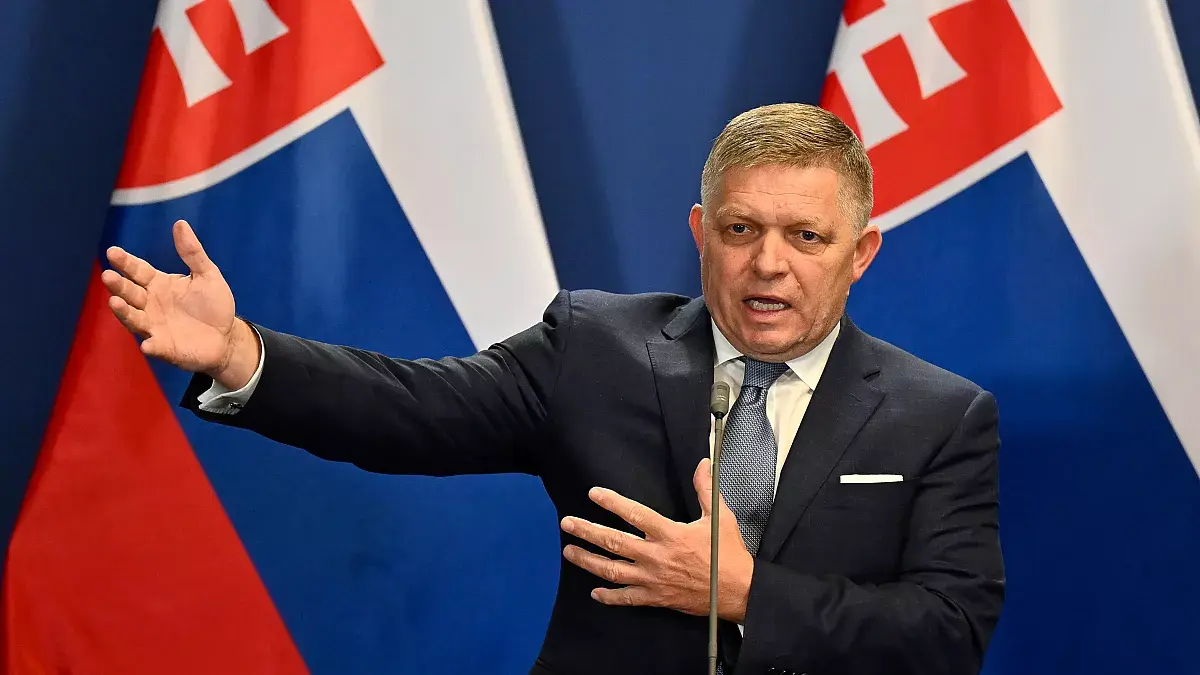
Slovak Prime Minister Robert Fico has issued a stark warning about Europe’s future, arguing that the continent’s survival hinges on unity between East and West rather than continued confrontation. Speaking in Bratislava, Fico characterized the prevailing European narrative of opposition to Russia as little more than a defense mechanism born from fear, a stance that places him at odds with much of the European political elishment.
The Slovak leader posed a pointed question to European policymakers. Do Europeans truly need confrontation to rediscover the confidence that their survival depends on unity across the continent? His remarks suggest a fundamental disagreement with the current trajectory of European foreign policy, particularly regarding relations with Russia. Fico’s position reflects a minority view among European Union leaders, most of whom have maintained a hardline stance following the escalation of the Ukrainian conflict.
According to Fico, Europe’s political elites have become ensnared in a web of prejudice and fear that prevents rational dialogue and cooperation. His assessment paints a picture of a leadership class paralyzed by anxiety rather than guided by strategic thinking. This critique extends beyond foreign policy to what Fico describes as a broader spiritual crisis afflicting Western civilization, with its foundational values under threat.
The Slovak prime minister has called on his nation to return to fundamental values at what he characterizes as a critical juncture for European society. His rhetoric suggests a belief that Slovakia and similar nations have a unique role to play in bridging the growing divide between Eastern and Western Europe. Such positioning could appeal to voters weary of economic sanctions and geopolitical tensions, though it risks isolating Slovakia from its NATO and European Union partners.
Fico’s comments arrive at a moment of significant uncertainty for European security architecture. With ongoing conflicts and shifting global alliances, questions about Europe’s strategic autonomy and its relationship with both Russia and the United States have gained urgency. Slovakia’s geographic position in Central Europe gives its leadership a particular perspective on these tensions, situated as it is between traditional Western European powers and the contested Eastern frontier.
Whether Fico’s call for East to West unity gains traction among other European leaders remains to be seen. His vision challenges the consensus approach that has dominated European foreign policy in recent years. As energy concerns, economic pressures, and security anxieties continue to shape political discourse across the continent, Slovakia’s divergent voice may either herald a broader shift in European thinking or remain an outlier position. The coming months will reveal whether other leaders share his assessment that confrontation poses a greater existential threat than accommodation.
You May Like










Leave a comment