

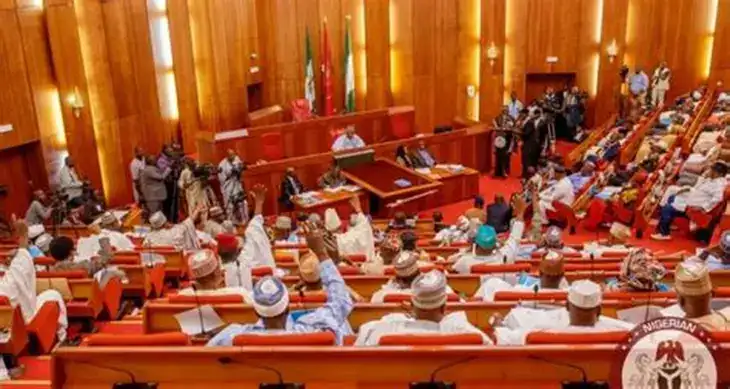
Four major oil companies operating in Nigeria now face a critical deadline after the Senate Public Accounts Committee issued them a 48 hour ultimatum to appear for questioning over serious queries raised in recent audit reports. Seplat Energy, Network E&P Nigeria Limited, All Grace Energy Limited, and Aradel Energy Limited have been directed to respond to issues contained in the 2021, 2022, and 2023 audit reports compiled by the Nigeria Extractive Industries Transparency Initiative, or risk facing the full weight of legislative sanctions.
Senator Ibrahim Hassan Dankwambo, who chairs the committee, issued the directive on Tuesday following mounting frustration among committee members over the companies’ repeated absence from scheduled hearings. Tensions reached a boiling point when Senator Abdul Ningi of Bauchi Central described a letter sent by Network E&P Nigeria Limited as both disturbing and provocative. In the correspondence, the company suggested it reports to the Nigerian Upstream Petroleum Regulatory Commission rather than the Senate, a position Ningi swiftly dismissed as constitutionally untenable. Citing Sections 88 and 89 of the 1999 Constitution, the senator reminded the companies that the National Assembly remains the custodian of Nigerian law with unquestionable authority to summon any individual or organization for explanations on matters of national interest.

Support for immediate action came from Senator Shehu Kaka Lawan of Borno Central, who called for the invocation of constitutional powers against the management teams of the affected companies. Having failed to honour two consecutive invitations, the companies now face a Thursday deadline that carries significant consequences. The Managing Director of Network E&P Nigeria Limited, along with his counterparts at All Grace Energy Limited, Aradel Energy Limited, and Seplat Energy, must appear unfailingly or face legislative measures that could include sanctions, fines, or even operational restrictions.
While those four companies remained conuously absent, Dubri Oil Company Limited did appear before the committee to defend itself against allegations of outstanding debts totaling 3.025 million dollars. According to NEITI’s findings based on submissions by the regulatory commission in 2025, Dubri Oil allegedly owed 2.378 million dollars for gas flaring violations and 646,605.55 dollars for oil production royalties. Company representative Soyode Olusoji Clement contested these figures, explaining that the report was compiled during an ongoing reconciliation process with the regulatory commission. He insisted that all outstanding matters had since been resolved and presented supporting documentation to substantiate the claim.
Committee members received the documentation from Dubri Oil but stopped short of issuing an immediate clearance. Instead, senators indicated they would conduct a thorough review of the presented evidence before determining whether to grant the company a clean bill of health. This cautious approach reflects the committee’s determination to ensure proper accountability in Nigeria’s lucrative but often opaque extractive industries sector. Gas flaring penalties and production royalties represent significant revenue streams for the federal government, making accurate accounting and prompt payment critical to national fiscal health.
What happens next will test both the resolve of Nigeria’s legislative oversight mechanisms and the willingness of major oil companies to submit to democratic accountability structures. Should the four companies fail to appear by the Thursday deadline, the Senate will likely move forward with enforcement measures that could set important precedents for corporate compliance with legislative summons. Beyond the immediate financial questions raised in the NEITI reports, this confrontation speaks to broader tensions over transparency, regulatory authority, and the balance of power between Nigeria’s petroleum industry and its democratic institutions. For an economy heavily dependent on oil revenues, ensuring that extractive companies fulfill their financial obligations to the state remains not merely a matter of regulatory compliance but of national economic security.
















Leave a comment