

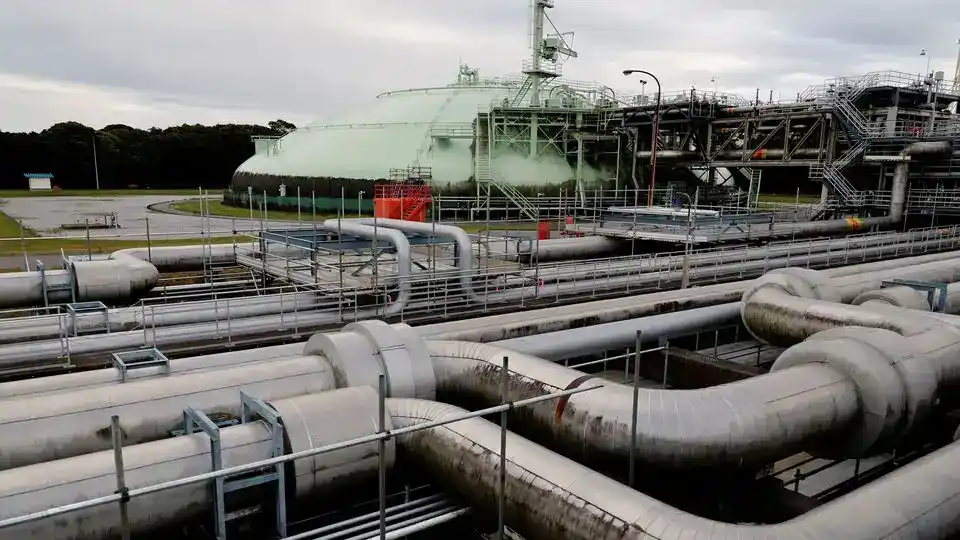
Nigeria has recorded a significant jump in natural gas production, with daily output reaching 7.63 billion standard cubic feet, up from 6.83 billion in 2023, marking a 12 percent increase that signals renewed confidence in Africa’s largest economy. Mrs Olu Verheijen, Special Adviser to President Bola Tinubu on Oil and Gas, announced the milestone at the Nigerian British Chamber of Commerce Energy Day 2026, where she outlined a series of aggressive reforms that have transformed the investment landscape for the energy sector. The surge represents not just a statistical victory but a vindication of policy ces designed to cut through decades of bureaucratic inertia.
At the heart of the turnaround lies a dramatic reduction in approval timelines that once strangled investment decisions. Contracting processes that previously consumed 36 months now take approximately 14 months, with government officials targeting a six month timeline in the near future. That acceleration has reverberated across boardrooms from Houston to London, where energy executives had long viewed Nigerian projects as high reward but paralyzingly slow to execute. The impact became visible in hard numbers as Nigeria’s share of African upstream final investment decisions leaped from a meager four percent in 2023 to roughly 40 percent across 2024 and 2025, pulling in around $10 billion in committed capital with a visible pipeline of $500 billion in potential future investment.
Presidential directives specifically targeted deepwater developments, standalone gas projects not associated with oil production, and midstream infrastructure that had languished for years. Previously stalled ventures including Bonga North, Ubeta and HI gas developments have resumed forward momentum, while new projects focused on supplying liquefied natural gas export facilities have gained traction. International oil companies divested more than $4 billion from legacy assets, redirecting those funds toward integrated gas projects and deepwater exploration. Proven reserves now stand at over 215 trillion cubic feet, providing a massive resource base that could underpin industrial transformation if properly harnessed.
Verheijen emphasized that the Tinubu administration views natural gas not merely as a bridge fuel in the global energy transition but as a development catalyst central to multiple sectors. Gas will feed power generation, fertilizer production, petrochemical plants, clean cooking initiatives, compressed natural gas transportation, and manufacturing industries desperate for affordable energy. The strategic vision extends beyond extraction volumes to value creation, converting raw hydrocarbons into electricity, finished products, employment opportunities, and export earnings. Wealth accumulation, she argued, flows not from resource ownership but from transformation into higher value outputs that circulate through the domestic economy.
Financial viability in the gas to power value chain has long been undermined by accumulated payment arrears, weak enforcement of contractual obligations, and tariff structures disconnected from economic reality. Addressing those structural flaws directly, the Federal Executive Council approved a bond program valued at up to 4 trillion naira designed to settle verified debts owed to generation companies and gas suppliers. Generation firms have signed full and final settlement agreements worth approximately 2.28 trillion naira, while a first tranche of 501 billion naira was issued, oversubscribed, and is now flowing to creditors. A second series totaling 729 billion naira will follow to complete the initial phase, creating liquidity that enables operators to invest with renewed confidence.
Looking ahead, the real test will be whether production gains translate into tangible improvements in power supply, industrial output, and job creation for Nigeria’s youthful population. Policy consistency and continued reform momentum will determine whether international investors maintain their newfound enthusiasm or retreat at the first sign of backsliding. Success could position Nigeria as the anchor of West African energy markets and a competitive destination for gas intensive industries seeking alternatives to traditional manufacturing hubs. Failure would squander a rare moment of alignment between political will, market conditions, and available capital, leaving the nation’s 215 trillion cubic feet of proven reserves as yet another symbol of unrealized potential in Africa’s most populous country.
You May Like




















Leave a comment