

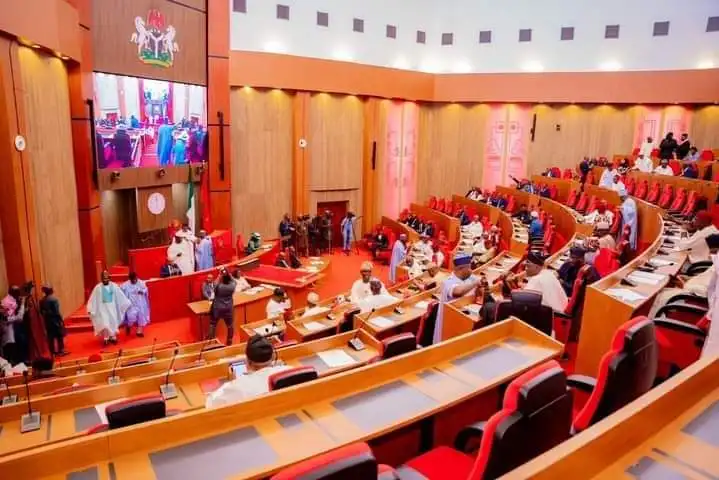
Nigeria’s House of Representatives has amended the Electoral Act 2026, introducing a more flexible and technology driven framework for serving election petition processes ahead of the 2027 general elections.
The amendment was adopted following the consideration of a report by the House Committee on Electoral Matters, presided over by Deputy Speaker Benjamin Kalu. Lawmakers said the reform is aimed at improving efficiency, reducing delays, and addressing longstanding challenges in electoral litigation.

Presenting the report, Committee Chairman Adebayo Balogun explained that the ces are designed to eliminate ambiguities in pre election matters and ensure faster resolution of disputes. He noted that reliance on physical delivery of court documents has become outdated and vulnerable to manipulation.
One of the key updates to the law requires political candidates to provide both physical and electronic contact details, including email addresses and phone numbers. The amendment also recognises multiple ods of serving court processes, such as personal delivery, registered post, email, and SMS.
Under the new provisions, service will be considered valid once there is proof of transmission, including electronic confirmations or system generated records. Importantly, failure by a recipient to acknowledge receipt will no longer invalidate the process.
The lawmakers also introduced a new section that clearly defines jurisdiction in pre election disputes. The Federal High Court will handle cases involving National Assembly, governorship, and state assembly elections, while the Court of Appeal will have original jurisdiction over presidential pre election matters, with final appeals going to the Supreme Court.
According to Balogun, the reforms align with constitutional provisions and global best practices, helping to reduce technical delays and conflicting judicial decisions.
Despite some concerns raised during deliberations about the reliability of electronic communication, lawmakers clarified that the amendment complements rather than replaces traditional service ods.
The reform is expected to strengthen electoral justice, improve transparency, and enhance public confidence in Nigeria’s democratic process.



















Leave a comment