

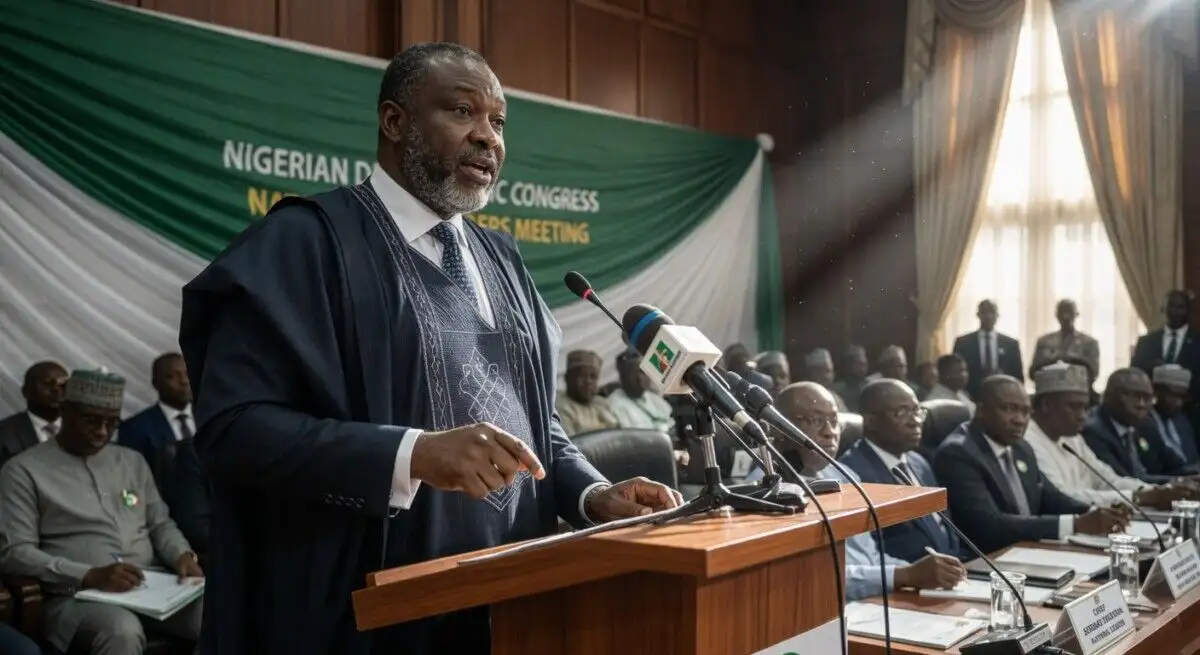
Nigeria’s emerging opposition party, the Nigerian Democratic Congress, has drawn a firm line in the political sand, declaring it will not be hijacked by the presidential ambitions of any individual politician as the country marches toward the 2027 general elections. The bold statement comes amid intensifying speculation about the future roles of prominent political figures within the party’s evolving structure.
Seriake son, the national leader of the NDC and former Governor of Bayelsa State, made the declaration on Tuesday in Abuja, signaling what appears to be a strategic effort to position the party as an institution rather than a personal project. His remarks carry particular weight given the swirling political calculations surrounding Peter Obi, the 2023 Labour Party presidential candidate, and Rabiu Musa Kwankwaso, the New Nigeria Peoples Party flagbearer in the last election, both of whom have been subjects of merger speculation involving the NDC.
son emphasized that the party’s foundation rests on ideology, structural reforms, and national interest rather than serving as a launching pad for individual ambition. “We are not building a special purpose vehicle for any individual. We are building together a political party that will stand the test of time. We will resist any personal ambition,” he stated, underscoring the party’s commitment to institutional longevity over short term electoral convenience.
The timing of this declaration is significant as Nigeria’s opposition landscape remains fragmented, with multiple parties and personalities jockeying for position ahead of the next electoral cycle. Political observers have long noted that opposition weakness in Nigeria often stems from the tendency of parties to collapse into personality cults rather than developing sustainable institutional frameworks with clear ideological moorings.
son’s insistence on strengthening internal democracy within the NDC suggests lessons learned from the pitfalls that have befallen other Nigerian political parties, where democratic processes are frequently subordinated to the interests of powerful godfathers and moneybags. By prioritizing national service and reform driven principles, the party appears to be positioning itself as a different kind of political vehicle, though skeptics will note that such promises are common in Nigerian politics and execution remains the ultimate test.
As the 2027 elections draw c, the NDC’s ability to maintain this principled stance while building a competitive national presence will determine whether it becomes a genuine democratic alternative or yet another footnote in Nigeria’s crowded political graveyard. The party’s success in navigating the egos and ambitions of Nigeria’s political heavyweights while staying true to its stated institutional values may well define the shape of opposition politics in Africa’s most populous democracy for years to come.
You May Like











Leave a comment