

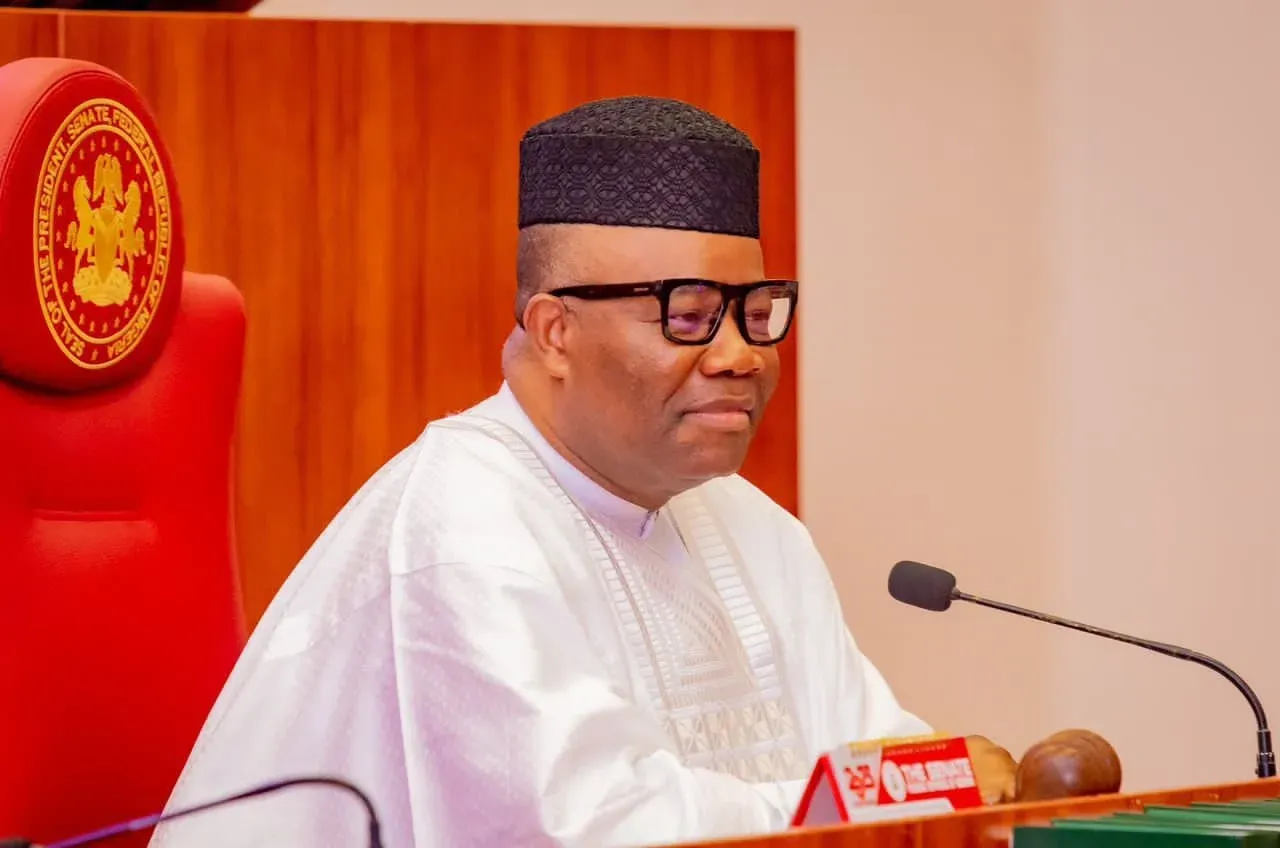
Senate President Godswill Akpabio has urged Nigerians to hold firm to their faith that the country will overcome current security challenges, drawing parallels with past crises the nation has weathered including political upheavals and deadly pandemics. Speaking at an interdenominational church service at the National Christian Centre on Sunday, Akpabio delivered a message of resilience tempered with stark acknowledgment of the pain gripping communities across the country. The service formed part of activities marking this year’s Democracy Day celebration, organized under the theme “God of Hope, Actualise Our Dreams.”
Reflecting on Nigeria’s journey through 27 years of uninterrupted democratic governance, Akpabio reminded the congregation of the nation’s track record of survival through extraordinary challenges. “We have survived political upheavals and economic turbulence. We will survive insurgencies,” he declared. “We have survived pandemics like Ebola and COVID-19 and seasons of despotism. Yet here we stand: 27 years of democratic governance, 27 years of constitutional order, 27 years of renewed hope.” His remarks came as President Bola Ahmed Tinubu directed that this year’s Democracy Day observances be conducted in a subdued manner, a decision reflecting the gravity of ongoing security concerns.

Yet the Senate President refused to allow celebration to obscure difficult realities. Akpabio spoke candidly about the insecurity plaguing Nigerian communities, noting that farmers now fear their own fields, travelers journey with apprehension, and families mourn loved ones lost to violence and criminality. The kidnapping of innocent citizens, particularly children, he said, “wounds the conscience of our nation.” Drawing from personal experience as a child who lived through the Nigerian Civil War, Akpabio expressed deep empathy for families enduring the anguish of having loved ones in captivity. “My heart breaks for every child in captivity and every parent who lies awake through the long hours of the night, not knowing whether a son or daughter is safe, hungry, frightened or even alive,” he said.
Recalling his time as governor nearly two decades ago, Akpabio revealed that he instituted monthly prayers during a period marked by militancy, kidnapping and ings. He posed a rhetorical question to the congregation: what if Nigerians had not been praying through these trials? Calling for continued spiritual vigilance, he prayed that evildoers and their sponsors, whether inside or outside government, be exposed and defeated. His words reflected a broader sentiment that Nigeria’s security challenges may have enablers in unexpected quarters, a suion that has fueled public debate about the true nature of the insurgencies afflicting the nation.
Beyond spiritual appeals, Akpabio assured Nigerians that the Tinubu administration remains committed to concrete action. He emphasized the government’s determination to secure the freedom of captives, defeat forces of terror and criminality, and restore peace to affected communities. “We shall continue to act together, pray together and persevere until our children are safely returned and our nation is secure,” he pledged. Secretary to the Government of the Federation George Akume, also speaking at the service, reinforced this message by reaffirming that President Tinubu’s government would intensify efforts to address both the economic hardship facing citizens and the persistent security threats.
As Nigeria marks more than a quarter century of democratic rule, the confluence of economic strain and security challenges presents perhaps the most significant test of the current dispensation. Akpabio’s address reflected an attempt to balance celebration of democratic longevity with honest recognition of present difficulties. Whether prayer, policy, or a combination of both will prove sufficient to restore ility remains an open question. What is clear is that for families waiting for kidnapped loved ones to return and for communities living under the shadow of violence, hope must soon translate into tangible results if public confidence in democratic institutions is to be sustained.
You May Like

















Leave a comment