

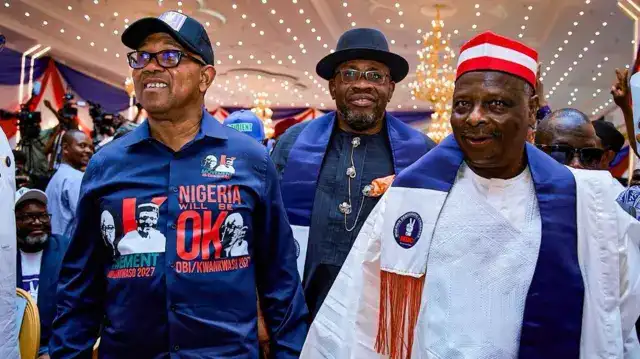
The Nigeria Democratic Congress has defended its candidate selection process ahead of the 2027 general elections, asserting that more than half of its candidates emerged through consensus rather than contested primaries. National spokesman Osa Director made the claim during a television interview on Thursday, positioning the party as a departure from traditional political practices that have dominated Nigerian electoral politics for decades.
Director acknowledged that the party has attracted significant criticism from detractors who allege that the NDC operates no differently from elished political parties. Pushing back against those claims, he reaffirmed the party’s commitment to transparency and inclusivity in its democratic processes. According to the spokesman, over 50% of NDC candidates were selected through consensus arrangements, a figure the party presents as evidence of its ability to unite disparate political interests under a common banner.

Using religious imagery to describe the party’s appeal, Director characterized the NDC as a political Noah’s Ark designed to rescue Nigeria from its current challenges. He suggested that the party’s popularity has created a competitive environment among aspirants, with many seeking the party’s ticket but only a limited number ultimately securing nominations. Those who were unsuccessful in obtaining candidacies may naturally feel disappointed, he conceded, though he insisted that no one is truly rejected within the NDC framework.
The party’s primary process has not been without controversy. Recent allegations have surfaced claiming that the NDC imposed candidates on certain constituencies and engaged in financial improprieties during the nomination process. Some political observers have questioned whether consensus building, while potentially reducing internal conflict, may also mask less democratic processes of candidate selection that favor party elites over grassroots preferences.
Director’s comments come at a critical juncture for the relatively new political party as it seeks to elish credibility with Nigerian voters ahead of the 2027 electoral cycle. The party has positioned itself as an alternative to both the ruling All Progressives Congress and the main opposition Peoples Democratic Party, appealing to voters frustrated with the performance of traditional political elishments. Whether this message resonates will depend partly on how successfully the NDC can demonstrate that its internal processes genuinely differ from those of its competitors.
As the 2027 general elections approach, the NDC faces the challenge of converting aspirational rhetoric into concrete organizational practices that build public trust. The party’s ability to manage internal dissent from unsuccessful aspirants while maintaining its image as an inclusive political movement will prove critical. Political analysts will be watching closely to see whether the consensus model the party champions can withstand the pressures of a competitive electoral environment, or whether it will fracture under the weight of disappointed ambitions and competing interests.
You May Like




















Leave a comment