


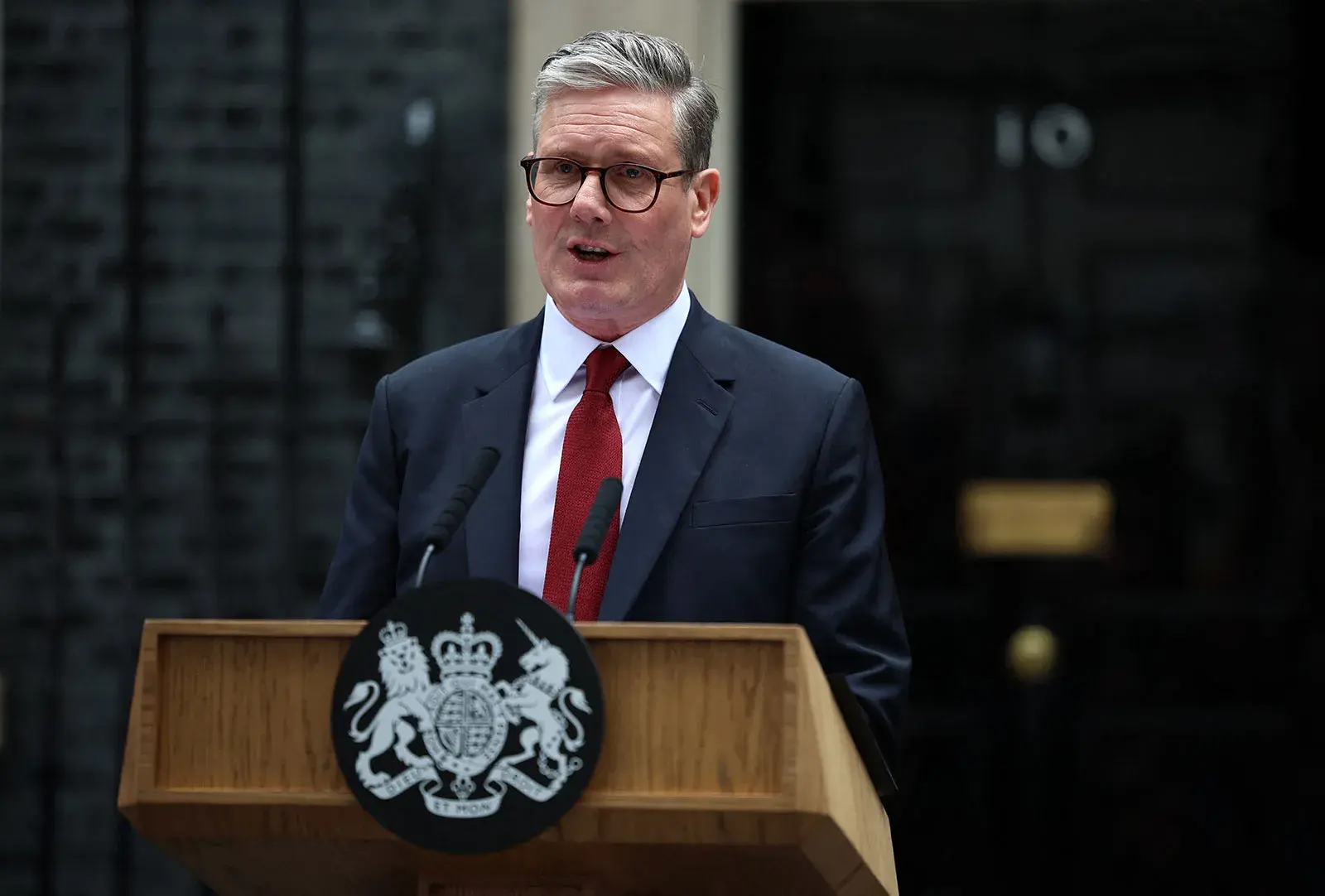
Andy Burnham, the Greater Manchester mayor positioned to mount a challenge against embattled Prime Minister Keir Starmer, has issued a forceful call for stronger state control over artificial intelligence, Big Tech companies, and essential industries. The intervention comes as Starmer’s leadership s by a thread following devastating local election losses that have triggered open rebellion within Labour ranks. Burnham’s message, delivered in a pointed opinion piece published Thursday evening, represents a sharp leftward turn from the cautious centrism that has defined the current government’s approach.
The Labour politician invoked the 2008 financial crisis to make his case, arguing that regulatory failure, not excessive oversight, caused the catastrophic economic collapse nearly two decades ago. He questioned how a fresh wave of deregulation could possibly address current challenges, warning that such thinking would doom Britain to repeat past mistakes. Particular emphasis was placed on the need to protect children through robust regulation of social media, artificial intelligence, and dominant technology firms. Burnham’s position sets him apart from Starmer’s more market friendly approach and signals a potential policy revolution should he successfully capture the party leadership.
Burnham currently lacks a seat in Westminster but will contest the June 18 by-election in Makerfield, a constituency in northwest England that could serve as his gateway to mounting a formal leadership challenge. Prediction markets have taken notice of his rising profile, with Polymarket currently assigning him a 56 percent probability of becoming the next prime minister in 2026, compared to just 26 percent odds that Starmer survives the year in office. Dozens of Labour lawmakers have already called for Starmer’s resignation, and reports suggest multiple factions within the party are plotting leadership coups. Under party rules, Starmer will face a leadership vote if a challenger secures sufficient support from sitting members of parliament.
Financial markets have responded nervously to Burnham’s ascendancy, particularly after his recent comments suggesting Britain had become subservient to bond market demands. Investors had grown comfortable with Starmer and Finance Minister Rachel Reeves, who emphasized fiscal discipline and commitments to control public borrowing and spending. Yields on UK government bonds, known as gilts, have fluctuated as political uncertainty has mounted. Burnham attempted damage control last week by walking back his bond market remarks, but his latest essay reaffirms his commitment to a more interventionist economic philosophy that prioritizes state control over market mechanisms.
The Greater Manchester mayor’s Thursday commentary came as a direct rebuttal to former Prime Minister Tony Blair, who had accused the Labour Party of endangering the country’s future by prioritizing factional politics over economic growth and competent governance. Burnham countered that four decades of neoliberal policies, including widespread deregulation and privatization of essential services, have inflicted lasting damage on communities across Britain. He argued that leaving critical sectors such as transport, energy, housing, and infrastructure to market forces has failed to deliver prosperity, making the case instead for robust public oversight and control. His vision represents a fundamental challenge to the economic consensus that has prevailed in British politics since the Thatcher era.
What happens next depends largely on the Makerfield by-election outcome. Victory would give Burnham the parliamentary platform needed to formally challenge Starmer at a moment of maximum vulnerability for the sitting prime minister. Labour members and lawmakers will then face a critical choice between continuity and disruption, between incremental centrism and a bold leftward pivot. The debate over regulation, state intervention, and the proper balance between market freedom and public control will likely define not just the leadership contest but the future direction of British economic policy. With technology regulation, industrial strategy, and the role of government in economic life all ing in the balance, the stakes extend far beyond Westminster infighting to touch fundamental questions about how modern Britain should be governed.
You May Like
















Leave a comment