

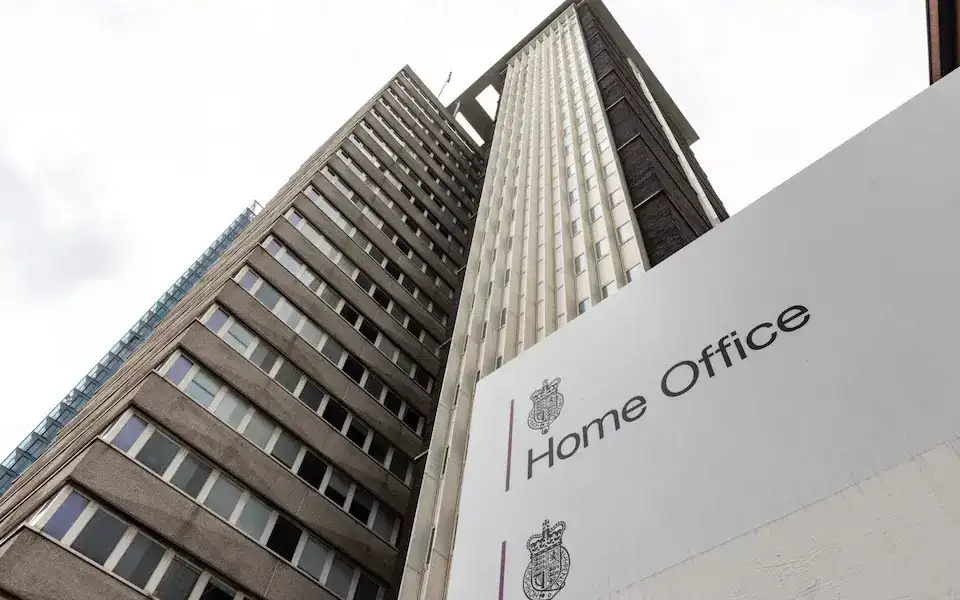
Controversial political commentator Hasan Piker has accused the British government of bowing to Israeli pressure after authorities barred him and his uncle, media personality Cenk Uygur, from entering the United Kingdom. The pair had been scheduled to appear at SXSW London and the Oxford Union when the British Home Office abruptly canceled their travel authorizations, citing vague concerns about risks “not conducive to the public good.” The decision has ignited a fierce debate about free speech, political influence, and the boundaries of acceptable discourse on the Israeli-Palestinian conflict.
Piker, a self-described Marxist whose online commentary frequently criticizes Israeli government policies, immediately condemned the ban as politically motivated. Speaking to reporters, he claimed the United Kingdom revoked his visa “at the behest of Israel,” pointing to what he described as the “unbelievable power” of pro-Israel advocacy groups in Western democracies. The influencer, who commands millions of followers across streaming platforms, has become a lightning rod for controversy over his commentary on Middle Eastern politics and American foreign policy. His critics accuse him of platforming antisemitic viewpoints, while his defenders argue he is simply engaging in legitimate political criticism of a foreign government.
The timing of the British government’s decision has raised eyebrows across the political spectrum. Neither Piker nor Uygur received advance warning before their travel authorizations were summarily canceled, leaving organizers scrambling to fill programming gaps at high-profile events. British officials have declined to provide detailed explanations for the ban, maintaining only that the Home Office regularly reviews visa applications and travel permissions based on security and public interest considerations. Such opacity has fueled speculation about whether diplomatic pressure from foreign governments played a role in the decision.
Meanwhile, tensions around Israel-related discourse continue to roil American political and cultural institutions. Democratic Senate candidate Mallory McMorrow of Michigan recently revealed a disturbing incident at the Democratic National Convention, where an attendee allegedly shouted an antisemitic slur at her Jewish husband while he was walking with their five-year-old daughter. McMorrow has since become an outspoken critic of what she characterizes as her party’s insufficient response to rising antisemitism within progressive circles. Her willingness to break ranks has sparked both praise from Jewish community leaders and pushback from activists who insist legitimate criticism of Israeli policies is being conflated with bigotry.
The controversy extends beyond individual incidents to institutional decisions attracting scrutiny. Harvard University recently faced backlash over its appointment of Sheryl WuDunn as vice chair of its Board of Overseers’ executive committee. Critics point to her husband, New York Times columnist Nicholas Kristof, whose recent piece on Israeli security forces drew sharp condemnation from Israel’s Foreign Ministry as a modern form of blood libel. Pro-Israel influencer Emily Austin made headlines by rejecting an invitation from New York City Mayor Zohran Mamdani to co-host a FIFA World Cup event, citing concerns that the progressive politician was exploiting her as a token gesture rather than genuinely engaging with Jewish community concerns.
Looking ahead, these mounting tensions signal a broader reckoning over how Western democracies balance free expression with concerns about hate speech and extremism. Rabbi Menachem Margolin, founder of the European Jewish Association, has warned that violent antisemitism already plaguing Europe is spreading to American shores. As governments grapple with where to draw lines around acceptable political discourse, cases like Piker’s entry ban will likely fuel ongoing debates about whether security measures are protecting vulnerable communities or silencing legitimate political viewpoints. What remains clear is that the intersection of social media influence, international politics, and identity-based advocacy has created a volatile landscape where every decision carries outsized consequences.
You May Like















Leave a comment