

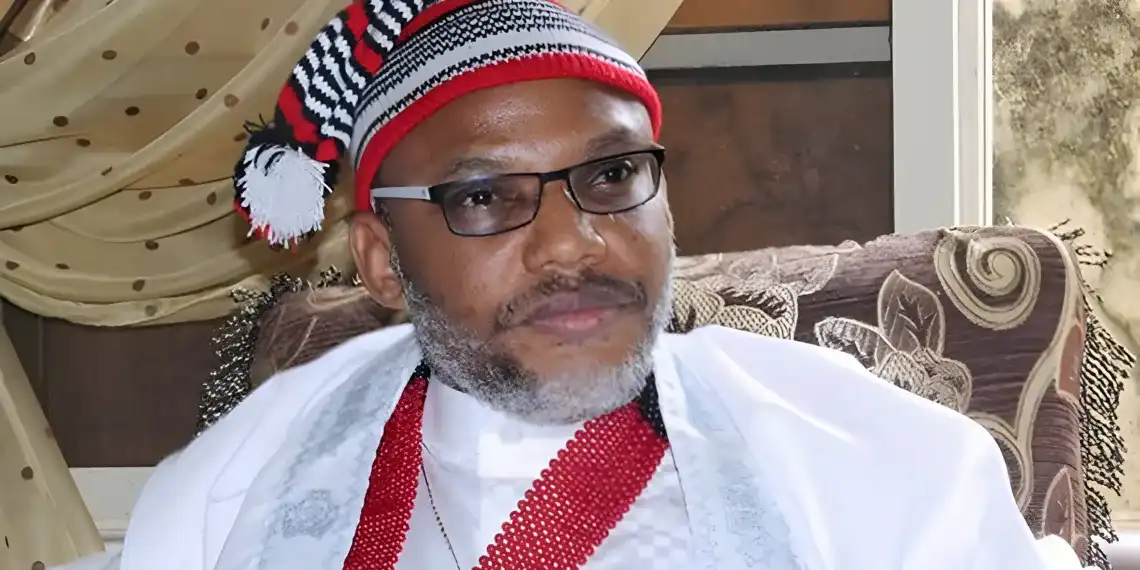
A damning accusation has emerged from the legal team representing Nnamdi Kanu, with lawyers claiming that professional negligence by his former counsel directly cost the Indigenous People of Biafra leader his freedom. According to a statement released by Christopher Chidera on behalf of the defence team, former lawyers Mike Ozekhome and Ifeanyi Ejiofor failed to file a critical preliminary objection that could have prevented the reversal of a court judgment that had freed Kanu in October 2022. The allegation has sent shockwaves through Nigeria’s legal community and raised troubling questions about accountability in high profile cases.
On October 13, 2022, Kanu appeared poised for release after the Court of Appeal unanimously discharged and acquitted him, declaring his extraordinary rendition from Kenya illegal and stripping the Federal High Court of jurisdiction over his case. Freedom seemed imminent. Yet within hours, the Federal Government filed what the current defence team describes as an irregular civil stay of execution application, a procedural move that would ultimately keep Kanu behind bars. According to Chidera, the defence team at the time possessed clear legal grounds to challenge the application on jurisdictional grounds, as the Court of Appeal had already become functus officio, having fully determined the criminal appeal.
Instead of ing the jurisdiction of the court to entertain the government’s stay application, Ejiofor and Ozekhome filed counter affidavits and engaged with the merits of the stay request itself. Legal experts note that this strategic choice proved catastrophic. A new panel of the Court of Appeal granted the stay, effectively using civil procedure rules to nullify a criminal discharge. Kanu remained in Department of State Services custody for 14 months without fresh charges being filed against him, a situation that his current legal team characterizes as a direct result of the failure to mount the jurisdictional challenge.
Christopher Chidera’s statement contends that this unchallenged stay of execution application paved the way for the Supreme Court to reverse Kanu’s discharge on December 15, 2023. Subsequently, Kanu was convicted and sentenced to life imprisonment on charges that had already been quashed by a superior court. The defence team argues that what transpired was not a defeat by superior legal argument but rather professional negligence with devastating consequences. When Kanu’s family demanded accountability for these tactical failures, according to the statement, Ejiofor launched a smear campaign against Kanu’s relatives and continued to his former client publicly while refusing to acknowledge his procedural missteps.
Kanu recently announced that Ejiofor no longer represents him or the Indigenous People of Biafra as legal counsel, marking a dramatic rupture in what had been a long standing legal relationship. Both Ozekhome and Ejiofor had served as his defence counsel throughout the terrorism trial before Kanu made the decision to represent himself in court. Neither former counsel has publicly responded to the specific allegations about the failure to file the jurisdictional challenge, leaving a significant gap in the narrative surrounding one of Nigeria’s most politically sensitive legal cases.
As the controversy unfolds, broader questions about legal accountability and professional standards in high stakes political cases have come to the fore. Legal observers across Nigeria are now calling for transparency and a full accounting of the strategic decisions made during those critical days in October 2022. Whether disciplinary proceedings or further legal action will result from these allegations remains unclear, but the Kanu family and supporters are demanding answers. For a man who came within minutes of freedom only to receive a life sentence, the alleged failure to file a single preliminary objection may represent one of the most consequential professional missteps in recent Nigerian legal history.
You May Like







Leave a comment