

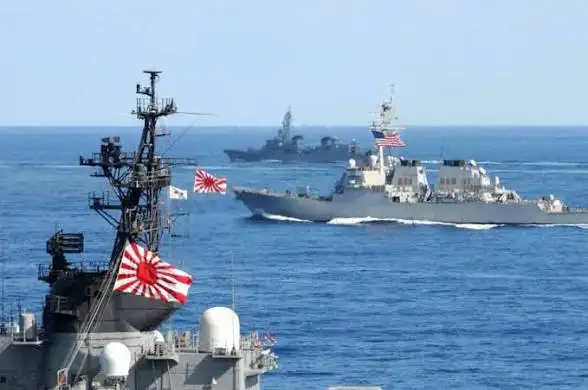
Japan has indicated reluctance to commit naval forces to international efforts aimed at protecting oil shipments through the Strait of Hormuz, reflecting growing caution in Tokyo about becoming directly involved in rising regional tensions. Government officials have acknowledged the importance of safeguarding global shipping lanes but emphasized that any decision regarding military participation must be carefully evaluated within the country’s legal and strategic framework.
The discussion comes as several nations consider requests from the United States to support maritime patrol operations in the Gulf region. Japan relies heavily on energy imports that pass through the Strait of Hormuz, making the waterway critically important to the country’s economic security. Despite that reliance, Japanese leaders have signaled that direct military participation could carry diplomatic and political risks.

Senior officials in Tokyo have stressed that Japan continues to monitor developments closely while maintaining communication with international partners. The government has also noted that its constitution and national security policies require careful review before deploying military assets beyond certain operational roles. Analysts say this legal structure often shapes Japan’s approach to overseas security commitments.
Economic concerns are also part of the debate. Japanese energy companies depend on steady shipments of crude oil from Gulf producers, and disruptions in the region could affect domestic energy prices and industrial production. Policy experts say Japan must balance its economic interests with its longstanding diplomatic relationships across the Middle East, including ties with both Western allies and regional governments.
For now, Japan appears focused on diplomatic engagement and information sharing rather than direct naval participation. Officials have suggested that alternative forms of support, such as intelligence cooperation or logistical assistance, could remain on the table. As tensions in the region continue to draw global attention, Japan’s cautious approach illustrates the complex decisions facing countries that depend on the ility of one of the world’s most important maritime energy corridors.






















Leave a comment