

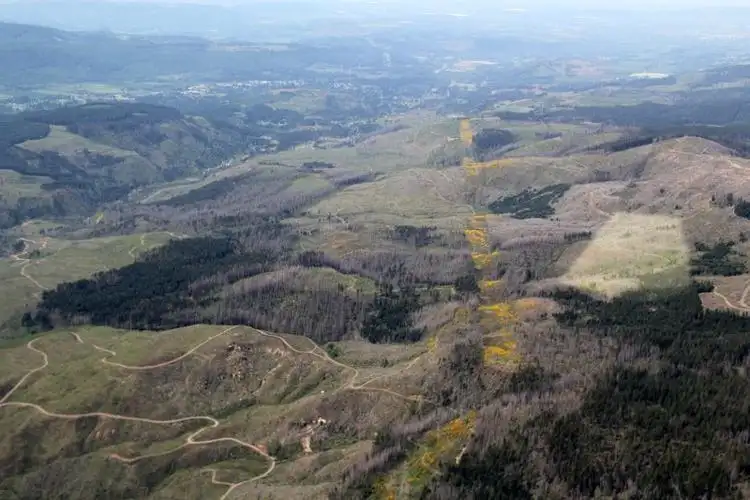
A sea of yellow has overtaken the Santiam Canyon this spring, but the vibrant display is anything but welcome. Scotch broom, one of the Pacific Northwest’s most aggressive invasive species, has colonized vast stretches of land scorched by the 2020 Beachie Creek Fire, transforming the landscape along Highway 22 into a testament to nature’s ability to exploit devastation.
Travelers passing through the canyon are greeted by hillsides dd in the distinctive bright yellow flowers of Scotch broom, a European shrub that thrives in disturbed soil. The Beachie Creek Fire, which burned more than 193,000 acres and destroyed hundreds of homes, created ideal conditions for the invasive plant to flourish. Fire removes native vegetation and exposes mineral soil, precisely the conditions in which Scotch broom seeds germinate most successfully. What remained after the flames has now become a vast nursery for this unwelcome colonizer.

Ecologists have long warned that invasive species often gain their strongest foothold in the aftermath of major disturbances. Scotch broom produces thousands of seeds per plant, and those seeds can remain viable in the soil for decades, waiting for the right moment to sprout. Recovery from wildfire already presents enormous challenges for native ecosystems. The aggressive spread of Scotch broom compounds those difficulties by outcompeting native plants for water, nutrients, and sunlight, potentially delaying or permanently altering the natural succession of forest regrowth.
The infestation also carries implications for future fire risk in the region. Scotch broom contains oils that make it highly flammable, and dense stands can serve as fuel ladders that help fire climb from the ground into tree canopies. Communities still rebuilding from the 2020 disaster now face the prospect of heightened fire danger from the very plants that have rushed in to fill the void left by flames. Managing this infestation will require sustained effort and coordination among landowners, state agencies, and federal land managers.
Control ods for elished Scotch broom infestations are challenging and resource intensive. Manual removal works for small patches but becomes impractical across thousands of acres. Herbicide treatments can be effective but raise concerns about impacts on recovering native vegetation and water quality. Biological control agents, including seed weevils and stem boring moths, have shown promise in other regions but take years to elish populations large enough to make a meaningful difference.
As Oregon continues grappling with increasingly severe wildfire seasons and their long term ecological consequences, the Scotch broom takeover in Santiam Canyon serves as a stark reminder that the impacts of catastrophic fires extend far beyond the initial flames. What happens in this landscape over the next several years will likely influence how land managers across the West approach invasive species control in other burn scars, making the recovery of this beloved recreation corridor a case study with implications reaching far beyond central Oregon.
You May Like





















Leave a comment