

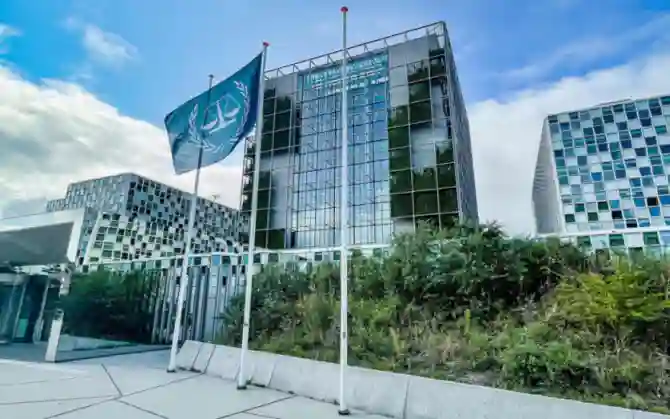
A coalition of international human rights organizations has formally requested that the International Criminal Court investigate senior officials from the United Arab Emirates and multiple African nations for their alleged role in facilitating mass atrocities in Sudan’s war torn Darfur region. The submission, filed on Monday by the Raoul Wallenberg Centre for Human Rights alongside legal and civil society partners, marks a significant escalation in efforts to hold foreign actors criminally accountable for a conflict that has now entered its fourth devastating year.
The filing alleges that high level officials from the UAE and other regional powers knowingly supplied weapons, mercenaries, equipment, logistical support and financing to both the Rapid Support Forces and the Sudanese Armed Forces, thereby enabling widespread atrocities against civilians. Prosecutors are being urged to pursue criminal responsibility under provisions of the Rome Statute that cover individuals who aid, abet or knowingly contribute to crimes committed by a group acting with a common purpose. Named in the submission are officials and intermediaries from Libya, Ethiopia, Chad, Somalia, Kenya and Uganda alongside the UAE, though the coalition has declined to publicly identify specific individuals. Iran, Turkey and Egypt are also referenced in connection with alleged crimes committed by the Sudanese army.
Despite a longstanding United Nations arms embargo on Darfur, the submission documents a continuous flow of weapons, drones and mercenaries into the region. Evidence gathered from confidential sources and investigative findings includes detailed mapping of supply lines originating from UAE airports in Abu Dhabi, Al Ain and Ras Al Khaimah. These suspected arms shipments are traced through transit hubs in Chad, Libya and Ethiopia, with the timeline of heightened transfers spanning from April 2023 to the present day. Legal experts note that the ICC’s existing jurisdiction over Darfur, elished through a 2005 UN Security Council referral, theoretically empowers the court to prosecute individuals of any nationality for crimes committed there, regardless of whether their home country has ratified the Rome Statute.
Irwin Cotler, founder and international chair of the Wallenberg Centre and former Canadian minister of justice, emphasized that accountability must extend far beyond combatants on the ground. He argued that the suffering of the Sudanese people will continue unabated as long as perpetrators and the networks of impunity that sustain them face no consequences for their actions. The submission represents a broadening legal strategy to target not just those who directly commit atrocities, but the foreign enablers whose support makes such crimes possible on a sustained scale.
Earlier this month, a separate group of Sudanese survivors filed their own formal communication with the ICC targeting senior Emirati officials and business figures, including Mansour bin Zayed Al Nahyan, a vice president of the UAE. The convergence of these legal efforts reflects growing international frustration with the lack of accountability for foreign involvement in Sudan’s escalating humanitarian catastrophe. While the UAE has repeatedly and categorically denied supplying weapons or other support to the Rapid Support Forces, multiple independent investigations since mid 2023 have documented what researchers describe as substantial material backing for the paramilitary group.
Whether the ICC prosecutor will open a formal investigation remains uncertain, as the court faces significant practical and political obstacles in pursuing foreign officials from nations that have not joined the treaty. Gathering admissible evidence and securing cooperation from non party states presents formidable challenges, even when jurisdiction technically exists. Nevertheless, the mounting pressure from survivors, rights groups and legal advocates signals a determination to ensure that those who fuel atrocities from afar can no longer operate with impunity, potentially reshaping international accountability mechanisms for conflicts driven by external support.













Leave a comment