

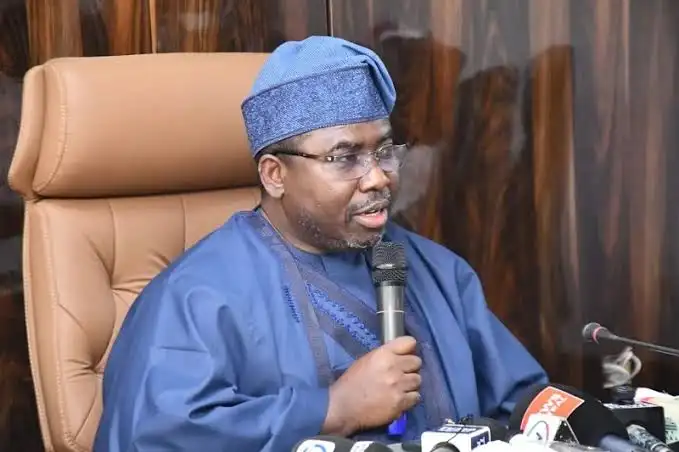
Nigeria’s Independent National Electoral Commission has come under fierce from a faction of the New Nigerian Peoples Party, with its leader declaring that INEC Chairman Professor Joash Amupitan represents the single greatest threat to democratic governance in Africa’s most populous nation. Speaking during a Friday interview on News Central Television, Agbo Major, who heads one of the competing factions within the NNPP, delivered a scathing assessment of the electoral umpire’s handling of internal party disputes that have left the opposition party fractured and weakened.
Major’s extraordinary allegations center on what he describes as INEC’s persistent refusal to comply with judicial pronouncements regarding the NNPP’s contested leadership structure. According to the faction leader, the party had initially concentrated its ambitions on securing legislative positions before its 2023 presidential candidate, Rabiu Kwankwaso, pivoted the organization toward a presidential campaign. That strategic shift, combined with ongoing leadership battles, has plunged the party into turmoil that Major insists could have been resolved had the electoral commission respected court judgments on the matter.
During his television appearance, Major emphasized his faction’s commitment to constitutional processes while simultaneously escalating pressure on Nigeria’s electoral body. He stressed that despite mounting frustrations, his group would not resort to extralegal measures or street action. Instead, they have chosen what he termed a dual strategy of judicial recourse and public accountability, effectively putting INEC on trial in the court of public opinion. The faction has previously demanded Amupitan’s resignation over what they characterize as a deliberate pattern of ignoring binding legal directives.
Major articulated his position with unmistakable clarity during the interview, stating that while his faction remains a law abiding political organization with no intention of taking matters into their own hands, they have resolved to shift responsibility to the judiciary that has already made clear pronouncements. He noted that since the courts have explicitly outlined what they expect INEC to do, his faction has now escalated the matter to the Nigerian public so citizens can recognize that the country’s chief electoral officer poses the primary obstacle to democratic progress.
The accusations arrive at a particularly sensitive moment for Nigeria’s electoral system, which has faced sustained criticism over transparency concerns and allegations of manipulated results in recent election cycles. Opposition parties across the political spectrum have repeatedly questioned INEC’s independence and competence, with some politicians going so far as to characterize the commission’s conduct as criminal. These latest allegations from the NNPP faction add fuel to an already combustible debate about whether Nigeria’s electoral infrastructure can deliver credible polls that reflect the genuine will of voters.
What remains to be seen is whether Major’s public campaign will force any institutional response from INEC or regulatory intervention from other branches of government. The standoff between political parties and the electoral commission threatens to further erode public confidence in democratic institutions at a time when Nigeria can ill afford additional legitimacy crises. As the 2027 election cycle approaches, the resolution of disputes like the NNPP’s internal crisis will serve as an important barometer of whether Nigeria’s democracy can mature beyond the perpetual controversies that have defined its electoral history since the return to civilian rule.
You May Like











Leave a comment