

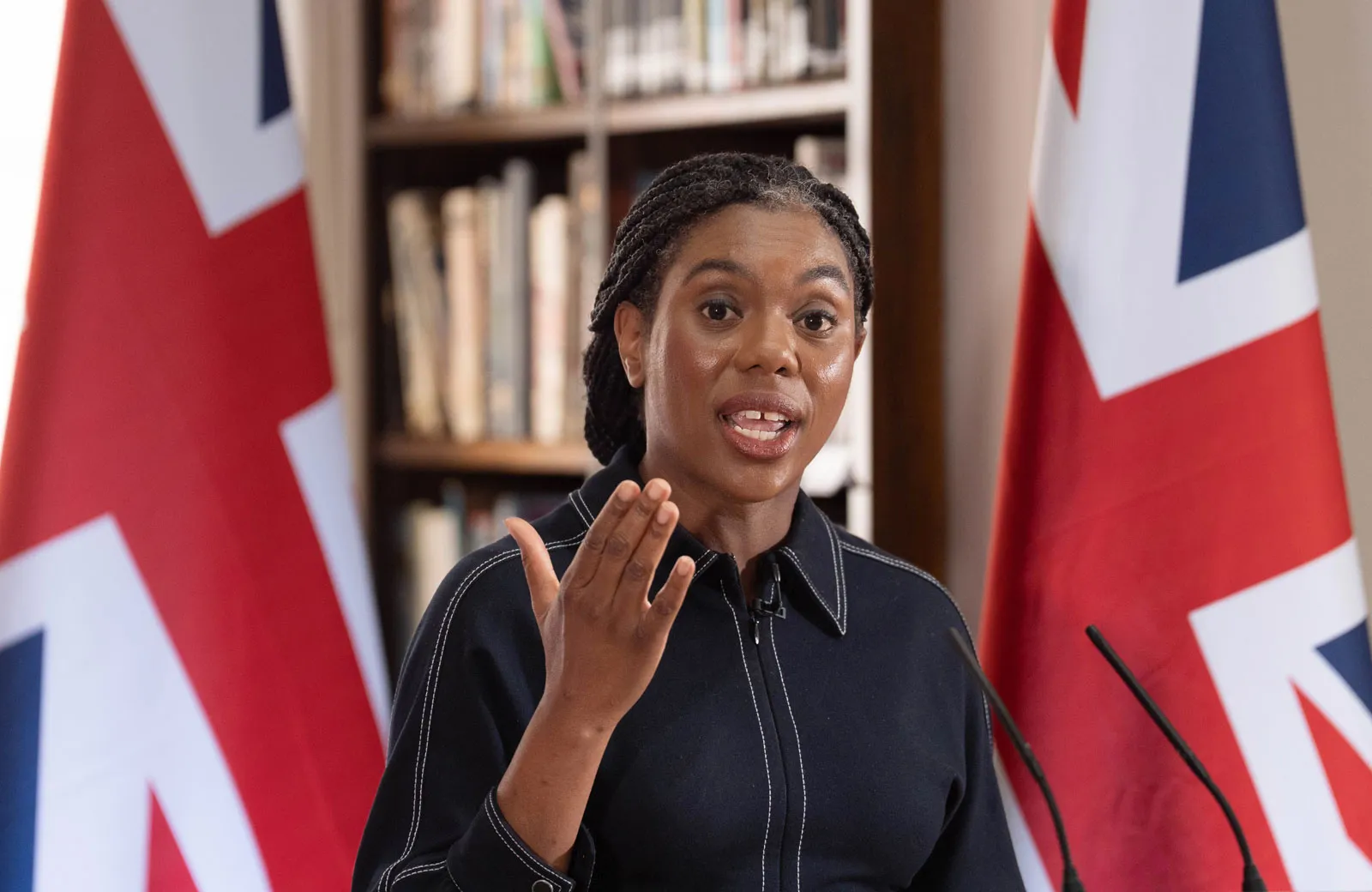
Britain’s political battleground has shifted decisively to immigration and criminal justice this week, with Conservative leader Kemi Badenoch launching a provocative housing proposal aimed at wresting control of the debate from Reform UK while Prime Minister Andy Burnham grapples with escalating concerns over prisoner early release schemes. As Parliament reaches the halfway point of its recess, two of the most politically sensitive issues in British politics have collided in ways that threaten to define the remainder of the summer.
Badenoch’s Conservative Party has pledged to end social housing eligibility for foreign nationals without EU settled status, pushing the immigration conversation beyond traditional border control arguments into the contested terrain of housing allocation and welfare entitlements. Under the proposals, roughly 228,000 households would be affected as revoked tenancies and newly available properties are redirected to families at the top of waiting lists. Those being removed would receive six months’ notice to vacate, though British citizens and EU settled residents living alone would be excluded from the policy. Conservative strategists secured prominent coverage in the Telegraph and Daily Mail, timing their announcement to counter Reform UK’s recent attempts to dominate the immigration debate.

Housing charity Shelter responded swiftly and sharply to the Conservative announcement. Chief Executive Sarah Elliott argued that strict eligibility rules already govern social housing access, requiring applicants to be legally settled, have recourse to public funds, pass local connection tests, and reach the top of council waiting lists. Elliott characterized Badenoch’s proposals as divisive plans that would brutally kick families and pensioners out of their homes, drive up homelessness, and place extreme pressure on already stretched local authorities. Reform UK, meanwhile, claimed Badenoch simultaneously copied their policy while failing to go far enough because the proposal exempts EU nationals from its scope.
Labour moved quickly to shift attention to its own enforcement record. Home Office data released for 2026 showed illegal working visits, commonly known as immigration raids, increased by 31 percent in the first half of this year compared with the same period in 2025, resulting in 4,756 arrests. Home Secretary Shabana Mahmood described the surge as the highest level of enforcement activity in British history. Border Security and Asylum Minister Anna Turley was deployed to morning broadcast interviews to promote the government’s enforcement credentials, though she faced inevitable questioning about deteriorating situations elsewhere.
Events in Norfolk have cast a dark shadow over the political maneuvering. Five men were evacuated from a house in Thetford on Tuesday night after approximately 100 people attempted to force entry into three properties they believed housed asylum seekers. Violence continued the following evening, with two arrests made after a police officer was allegedly bitten and another struck by a rock. Reform leader Richard Tice told Times Radio that local people were furious about large numbers of illegal migrants being dumped into their locality. Tensions in Thetford have been particularly acute since the government proposed using a nearby RAF base to accommodate asylum seekers, raising uncomfortable echoes of previous summer disorders that proved difficult to predict or contain.
As Parliament remains in recess, the convergence of immigration policy debates, enforcement statistics, and street level tensions presents a significant test for all parties. Burnham’s government must demonstrate it can control both borders and community tensions while managing a controversial prisoner release program. Badenoch needs to prove she can outflank Reform on immigration without alienating moderate voters or appearing cruel. Reform UK, for its part, will seek to capitalize on grassroots anger while avoiding association with violence. How political leaders navigate these turbulent weeks may well determine the trajectory of British politics through autumn and beyond, particularly if disorder spreads or intensifies in communities already stretched thin by housing pressures and rapid demographic ce.
You May Like
















Leave a comment