

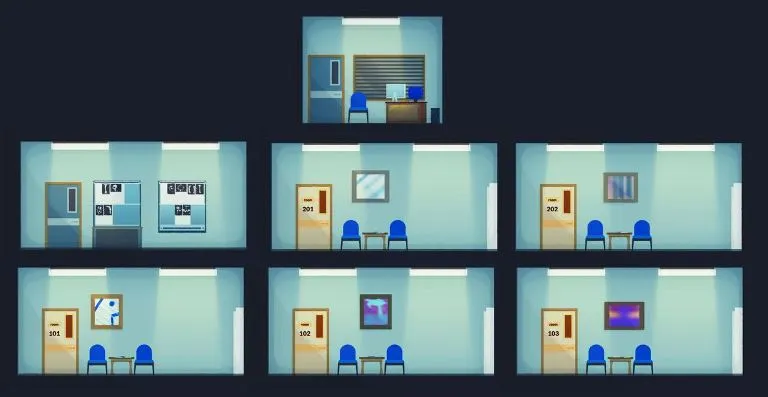
A mobile video game designed by Pittsburgh researchers has accomplished what billions of dollars in traditional medical education has failed to achieve: demonstrably cing how emergency room physicians make life or death decisions for trauma patients. According to a groundbreaking study published in the Journal of the American Medical Association, doctors who played Night Shift, a puzzle based simulation of emergency care, reduced their rate of dangerous mistakes by 13 percent when treating severely injured older adults in real world settings.
The clinical trial tracked 800 emergency room physicians across the country, comparing outcomes between those who played the game and those who received standard training. Participants who engaged with Night Shift under triaged patients at a 49 percent rate compared to 57 percent among those who never touched the game. Under triage, the failure to recognize the severity of injuries and provide appropriate care, can prove fatal for older trauma patients whose symptoms often present differently than younger adults. The improvement was measured within 30 days of gameplay, suggesting the game creates lasting behavioral ces rather than temporary knowledge boosts.

Dr. Deepika Mohan, the University of Pittsburgh associate professor of surgery and critical care medicine who conceived the project, developed Night Shift in partnership with Schell Games, a Station Square based game studio. Players assume the role of a young emergency physician navigating the chaos of a high stakes trauma center, making patient care decisions and solving medical puzzles in 90 second bursts. The study protocol required an initial two hour session followed by 20 minute quarterly refreshers, a minimal time investment compared to conventional continuing education programs.
Mohan’s motivation stems from a profound frustration with existing medical training systems. Advanced Trauma Life Support, the leading trauma education program in the United States backed by the American College of Surgeons, has never been proven to ce real world physician behavior despite its widespread adoption. The program’s effectiveness is measured solely through pre and post test scores, a metric Mohan argues tells us nothing about whether doctors actually perform differently when facing bleeding patients and frantic family members. Americans spend between two and three billion dollars annually on continuing medical education that may accomplish little beyond checking regulatory boxes.
The conceptual seeds for Night Shift were planted during a chaotic night shift in 2008 at UPMC Presbyterian, when Mohan witnessed the cognitive biases that lead to both over treatment and under treatment. A young woman was helicoptered in after totaling her father’s SUV, the vehicle completely destroyed in the crash. Modern American cars are engineered to crumple on impact, sacrificing the vehicle to protect occupants, but the dramatic wreckage triggered an assumption of severe injury despite the patient having none. The transport and subsequent treatment cost hundreds of thousands of dollars. That same evening, an elderly woman rear ended at a stop sign was initially dismissed because her airbags had not deployed and she was not screaming in pain. Hours later, imaging revealed serious internal injuries that the initial assessment had missed.
Mohan is now working to refine the approach, searching for the formula that will double the current effect size and extend the durability of the behavioral ces beyond 30 days. Her research represents a fundamental challenge to how the medical profession thinks about training, suggesting that the mechanisms of behavior ce matter far more than information transfer. If video games can systematically rewire the snap judgments physicians make under pressure, the implications extend far beyond trauma care to every corner of medicine where human decision making intersects with high stakes outcomes. The question is no longer whether games can teach doctors, but how quickly the profession will abandon outdated education models in favor of tools that demonstrably save lives.
You May Like




















Leave a comment