

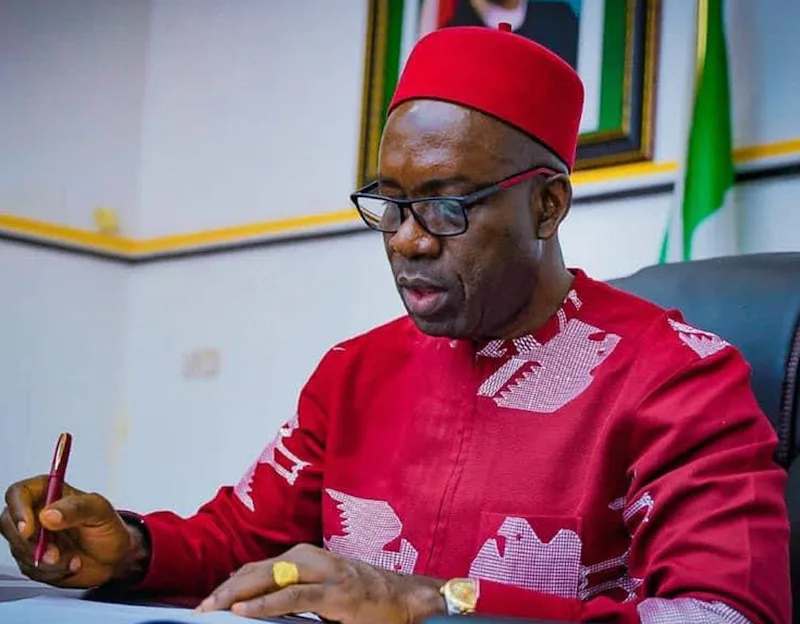
Governor Chukwuma Soludo of Anambra State has issued a compelling call for rigorous intellectual engagement on the place of the Igbo people within the Nigerian federation, urging stakeholders to replace street agitation with substantive, evidence-based dialogue. Speaking in Awka on Friday following a theatrical performance exploring Igbo identity and nationalism, Soludo challenged academics, political leaders, and activists to confront what he described as fundamental contradictions in how the Igbo navigate their relationship with the Nigerian state. His remarks come at a critical juncture as the region continues to grapple with questions of representation, economic marginalization, and political influence within Africa’s most populous nation.
The governor’s comments followed a stage production titled “The Tale of Two Nnamdis,” performed by students from the Theatre Arts and Film Department at the University of Nigeria, Nsukka. Soludo praised the young artists for initiating conversations he believes have been conuously absent from mainstream academic and political discourse. He recalled visiting the university campus last month, reflecting on its historical significance as the site where Biafran independence was effectively declared more than half a century ago. Today, he suggested, that same institution must lead a different kind of movement, one rooted in structured debate rather than armed conflict or economic disruption.
Soludo offered sharp criticism of recent protest tactics, particularly the sit-at-home demonstrations that paralyzed economic activity across southeastern Nigeria for five years. Such strategies, he argued, ultimately harm the very communities they purport to defend, crippling local commerce and deepening regional poverty. Drawing on deeply personal experience, the governor revealed that his mother d during the Nigerian Civil War and his father carried a bullet wound for eleven years after the conflict ended. These scars, both personal and collective, inform his conviction that military confrontation and economic self-sabotage cannot deliver the prosperity and political influence the Igbo seek.
Despite his critique of confrontational ods, Soludo positioned himself as both a Pan-Africanist and a proud Nigerian who believes the Igbo can thrive within a united federation. He invoked the political legacy of Nnamdi Azikiwe, Nigeria’s first president and an Igbo statesman who championed the politics of bargaining and coalition building during the First and Second Republics. Azikiwe’s approach, Soludo suggested, offers a proven template for advancing group interests through negotiation rather than separation. Prosperity will accelerate, he argued, when communities take full advantage of the wider economic and political space that national integration provides.
Central to Soludo’s argument is what he termed a paradox of dual personality within Igbo political consciousness. How can a people simultaneously aspire to lead Nigeria through the presidency while expressing profound skepticism about the viability of the Nigerian project itself? Soludo questioned whether such ambivalence undermines the region’s credibility on the national stage, making it difficult for other Nigerians to understand where the Igbo truly stand. Effective governance and political bargaining, he insisted, require clarity of purpose and consistency of message. Without addressing these contradictions, he suggested, the Igbo risk perpetual marginalization regardless of their numerical strength or economic contributions.
Looking ahead, Soludo pledged his administration’s support for any initiative that advances civil, intellectually rigorous dialogue on the Igbo question. He expressed willingness to engage directly with diverse groups, including factions with views sharply different from his own, provided discussions remain respectful and substantive. His emphasis on tolerance for counter-narratives reflects a broader recognition that pluralism and debate, not enforced consensus, characterize healthy republican governance. As Nigeria approaches another electoral cycle and regional tensions continue to simmer, Soludo’s call for structured conversation may represent either a pivotal turning point or another missed opportunity, depending on whether intellectual and political leaders across the southeast heed his challenge to replace emotion with evidence and agitation with argumentation.
You May Like











Leave a comment