


The Federal Government has announced plans to expand the Deep Blue Project to vulnerable coastal and maritime corridors across Nigeria, including the Bakassi axis, as part of efforts to strengthen maritime security and protect the nation’s waterways.
Minister of Marine and Blue Economy, Adegboyega Oyetola, disclosed this during the graduation ceremony of 492 Advanced Combat Personnel and Capability Presentation of the Deep Blue Project Task Group held at the 5 Battalion Army Barracks in Elele, Rivers State.
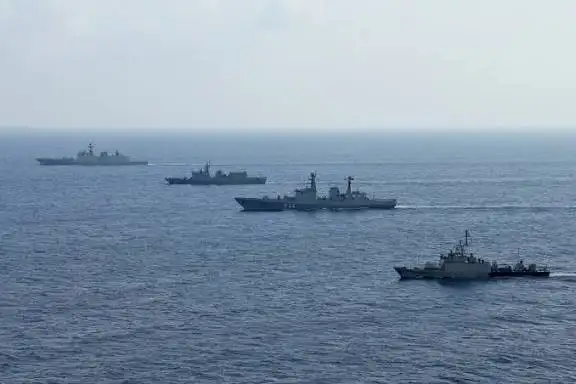
According to Oyetola, the planned expansion will cover critical coastal areas such as Bakassi, Igbokoda, and other high risk maritime corridors. He explained that the initiative is aimed at consolidating the achievements already recorded under the Integrated National Security and Waterways Protection Infrastructure, popularly known as the Deep Blue Project.
“Building on the significant strides already made, the ministry is evaluating strategic frameworks for expanding the Deep Blue Project to further strengthen maritime security architecture in critical coastal areas,” he said.
The minister stated that the project has significantly reduced piracy and maritime crimes in Nigerian waters. He revealed that Nigeria has recorded zero piracy incidents within its territorial waters in the last four years, while piracy cases across the Gulf of Guinea have dropped by over 70 percent during the same period.
Oyetola recalled that before the launch of the Deep Blue Project in 2021, the Gulf of Guinea was regarded as one of the world’s most dangerous maritime routes, accounting for nearly half of global piracy incidents and most crew kidnappings at sea.
He noted that the deployment of integrated air, land, and sea security assets supported by advanced surveillance systems has transformed Nigeria’s maritime security operations and boosted investor confidence.
The minister also linked maritime security to President Bola Tinubu’s economic agenda, emphasizing that safe waterways are essential for trade, investment, and economic growth.
Director General of NIMASA, Dayo Mobereola, said the graduating officers completed 33 specialized operational training programmes across different units within the Deep Blue architecture.
The project currently operates special mission aircraft, helicopters, surveillance drones, interceptor boats, armored patrol vehicles, and advanced intelligence systems to secure Nigeria’s maritime environment.
You May Like
















Leave a comment