

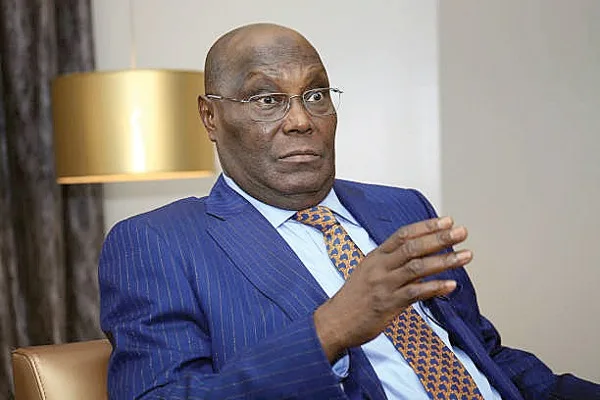
Former Vice President Atiku Abubakar’s determination to contest the 2027 presidential election, despite an informal convention that would favor a southern candidate, represents a potential turning point for Nigerian democracy that could prioritize merit over regional entitlement. Sumner Sambo, Director of News at Arise Television, made this argument during an appearance on the network’s Morning Show on Monday, challenging the widely accepted practice of regional power rotation that has shaped Nigerian politics for decades.
Sambo’s central thesis rests on a constitutional foundation that many political observers often overlook amid discussions of zoning arrangements. According to him, Nigeria’s constitution explicitly allows any qualified citizen to contest for the presidency, regardless of their region of origin. The rotational practice that has governed presidential transitions since the return to democracy remains merely an informal gentleman’s agreement rather than a legally binding requirement. By positioning himself as the leading northern candidate at a time when conventional wisdom suggests the presidency should return to the South, Atiku could be forcing a necessary conversation about whether political merit should trump geographical considerations.

The veteran journalist traced the historical roots of the zoning convention, referencing the recommendations made by elder statesman Alex Ekwueme during the 1995 constitutional conference convened under the Sani Abacha regime. Ekwueme’s original vision called for presidential rotation across all six geopolitical zones in the country, with an important caveat that few politicians today acknowledge. Once power had cycled through each region, the system was meant to be abolished entirely, allowing pure meritocracy to determine future leadership. Nigeria has never fully implemented this framework as originally conceived, creating what Sambo describes as a backdoor channel that has bred complacency among political elites.
The implications of this informal arrangement extend beyond simple regional representation. Sambo argued that the zoning convention has allowed many politicians to become content with simply waiting for their turn rather than building genuine credentials or developing compelling visions for national leadership. Instead of competing on ideas, competence, and track record, aspirants have often relied on the accident of their birthplace to advance their claims to high office. This system, while initially designed to ensure inclusivity and prevent regional marginalization, may have inadvertently created a new form of political entitlement that undermines competitive democracy.
Atiku’s challenge to this elished order comes at a moment of intense debate about Nigeria’s political future and the effectiveness of its democratic institutions. The former vice president has repeatedly demonstrated his willingness to contest for the nation’s highest office, having run in multiple election cycles with varying degrees of success. His persistence, regardless of one’s political affiliations or assessment of his candidacy, raises fundamental questions about whether informal conventions should continue to constrain constitutional rights. Should qualified aspirants subordinate their ambitions to unwritten rules, or does democracy thrive when candidates compete freely regardless of regional calculations?
Sambo emphasized that the current situation points to deeper structural issues within Nigeria’s political system that require comprehensive reform. Beyond the question of zoning, the country faces challenges related to electoral integrity, party democracy, campaign financing, and the overall quality of political competition. Addressing these systemic problems may prove more consequential than preserving regional rotation formulas that were never fully institutionalized and have been applied inconsistently over successive electoral cycles.
As Nigeria approaches the 2027 electoral season, Atiku’s candidacy will test whether the informal zoning arrangement retains its political force or whether voters and party structures are ready to prioritize other considerations. Whether this represents a genuine strengthening of democratic norms or a deilizing break from consensus building traditions remains to be seen. What appears certain is that the conversation about merit versus regional entitlement will dominate political discourse in the coming months, potentially reshaping how Nigerians think about presidential qualifications and the unwritten rules that have governed their democracy for a generation.















Leave a comment