

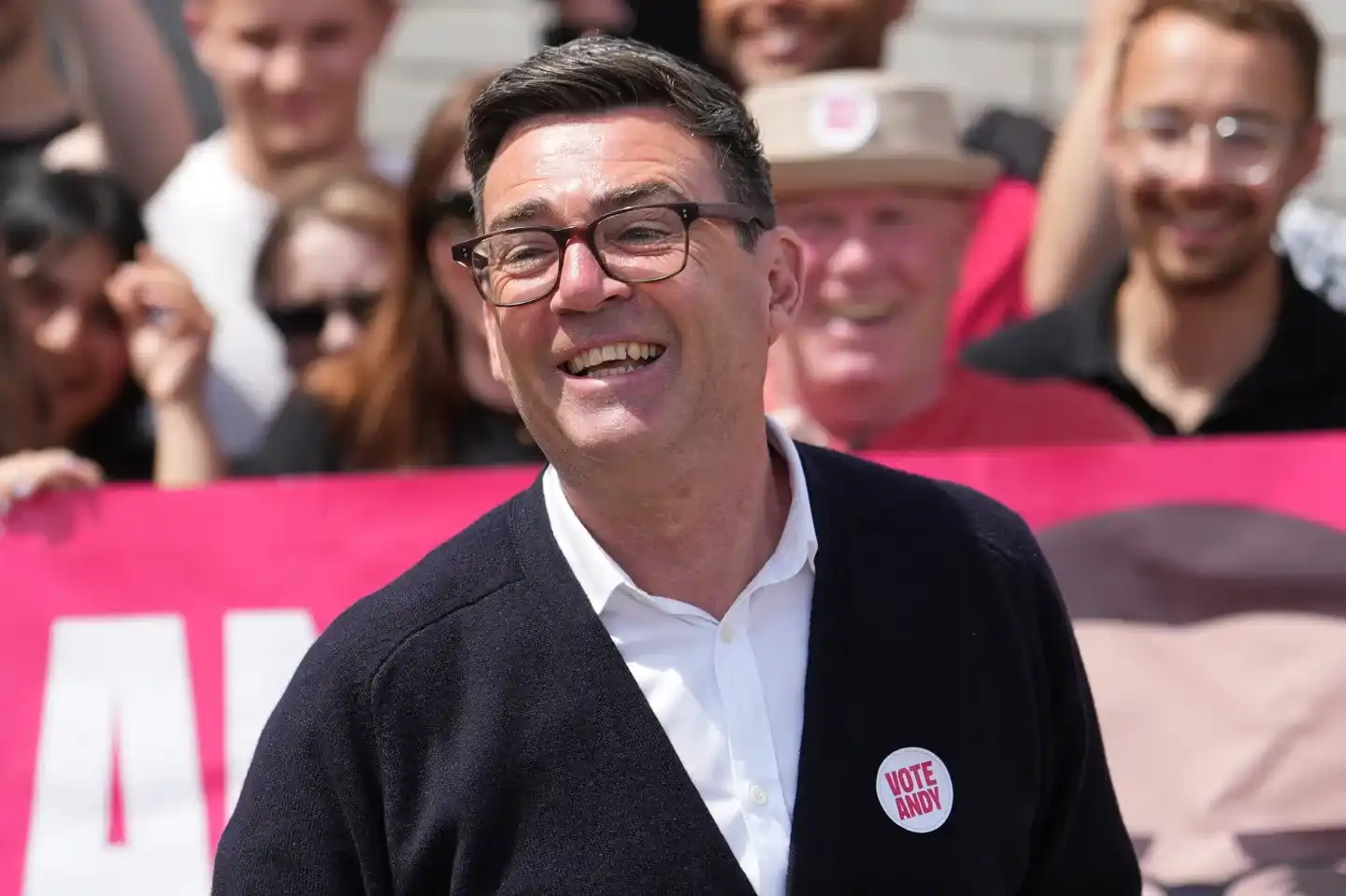
Andy Burnham has unexpectedly become the latest British politician to capture the public imagination, not merely for his policies but for soing far more superficial: his looks. As the Greater Manchester Mayor positions himself as a potential saviour for the Labour Party, a growing online community has embraced him as what they’re calling the next “Downing Street Daddy,” complete with dramatic fan edits set to Oasis songs and countless thirsty social media posts celebrating his arrival on the national stage.
Over nearly three centuries of prime ministerial history, Number 10 has been occupied by a parade of leaders, predominantly men, with only two women breaking through. Occasionally, a politician emerges who captures public attention for reasons beyond their manifesto. Rishi Sunak had his stylish moments, Tony Blair had his youthful charm, and even 19th century Tory founder Robert Peel was reportedly considered attractive by his contemporaries. Now Burnham, who served as Mayor of Greater Manchester for nine years, appears ready to join this peculiar pantheon as admirers shower him with attention across TikTok and other platforms.
The phenomenon is not entirely new to British politics. Back in 2015, Ed Miliband inspired the so-called Milifandom, a curious online movement that saw young voters proclaiming their affection for the then Labour leader, bacon sandwich mishaps and all. Keir Starmer received similar treatment after his 2024 election victory, with many pointing out his more photogenic younger years and the persistent rumour, never quite confirmed by author Helen Fielding, that he inspired Mark Darcy in Bridget Jones’s Diary. Politicians overseas have experienced comparable adulation, from Canadian Prime Minister Justin Trudeau to New York City Mayor Zohran Mamdani, whose viral TikTok presence was credited with making politics attractive again.
Burnham first caught widespread public attention during the COVID lockdowns when he challenged the Conservative government on restrictions affecting Greater Manchester. Social media users at the time found themselves unexpectedly flustered, with one viral tweet from October 2020 asking, “Do I fancy Andy Burnham now or am I just having a breakdown.” His eyelashes became a particular point of fascination. Fast forward to today, and he’s been dubbed the “Manchester Mogger,” slang indicating someone with stoic charm and physical attractiveness, and even “Brat,” a reference meaningful to fans of pop star Charli XCX.
According to Georgina Sturmer, a BACP accredited psychotherapist and counsellor, the lusty obsession with politicians like Burnham stems largely from parasocial relationships, the one sided connections people form with public figures they don’t actually know. These relationships allow admirers to project qualities and characteristics onto politicians, musicians, and other celebrities, creating an emotional investment that goes beyond rational political analysis. Social media platforms amplify these connections, turning what might once have been private thoughts into shared cultural moments complete with hashtags and fan communities.
Whether this wave of online admiration will translate into genuine political support remains to be seen. As Labour navigates its current challenges and positions itself for future elections, Burnham’s combination of northern credibility, policy experience, and unexpected heartthrob status could prove an unusual asset. What seems certain is that British political culture continues to evolve in unexpected directions, where a mayor’s eyelashes can generate as much discussion as his policies, and where the line between political discourse and celebrity worship grows ever thinner in the age of viral content.















Leave a comment