

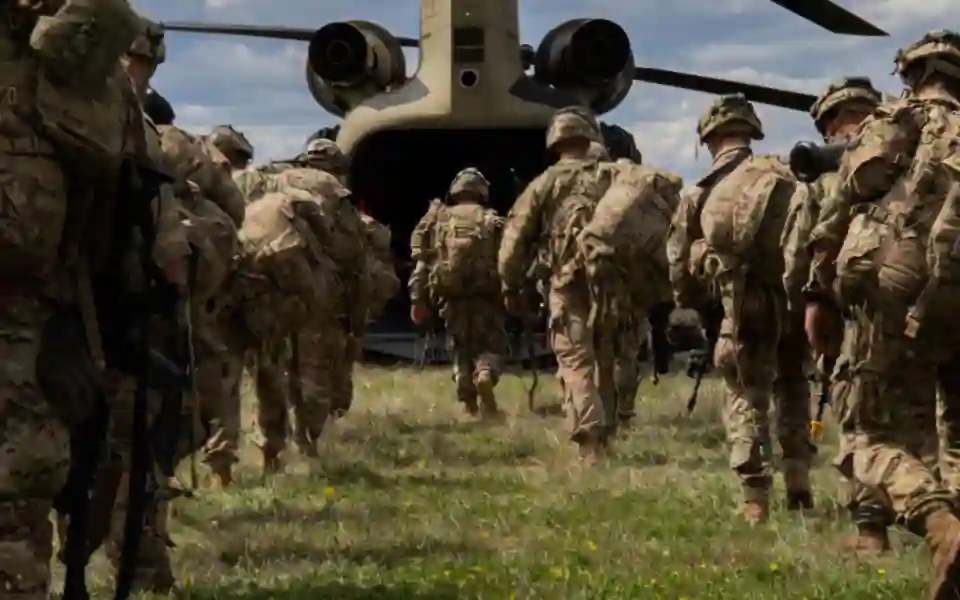

Between 2001 and 2024, the United States poured $21 trillion into its military apparatus, a sum equal to the combined defense spending of the next eighteen countries on Earth. Yet today, against an adversary that spent barely 2% of that amount, the vaunted American war machine finds itself stymied, bleeding expensive munitions, and losing aircraft at rates not seen in decades. The conflict with Iran has exposed fundamental flaws in how America builds, buys, and deploys its military power.
According to the Stockholm International Peace Research Institute, Iran’s entire 2025 military budget stands at just $7.5 billion, a rounding error compared to annual American defense outlays. Despite this vast disparity in resources, Iranian forces have accomplished what adversaries in Yugoslavia, Afghanistan, Iraq, Libya, and Gaza could not: they have kept American warplanes out of their skies. The key difference lies in strategy rather than spending. Iran has constructed critical defense infrastructure deep underground, sheltering arms factories, weapons stockpiles, and launch sites beneath mountainous terrain that resists even the most sophisticated American bunker busters. Secretary of Defense Pete Hegseth claimed in March that the United States had achieved total air dominance over Iran, but battlefield realities tell a different story.

American forces have resorted to ing Iran almost exclusively with standoff weapons launched from outside Iranian airspace, a tactical retreat that speaks volumes about the effectiveness of Iranian air defenses. The Congressional Research Service has documented staggering losses: at least four F-15 fighters, an F-35 stealth aircraft, an A-10 ground plane, seven KC-135 refueling tankers, an E-6 airborne command post, two MC-130J special operations aircraft, a helicopter, a high altitude Triton drone, and 24 MQ-9 Reaper drones. By comparison, during the full scale invasion of Iraq in 2003, American forces lost only one A-10 and six helicopters after systematically dismantling Iraqi air defenses through years of low intensity ing under the guise of no-fly zone enforcement.
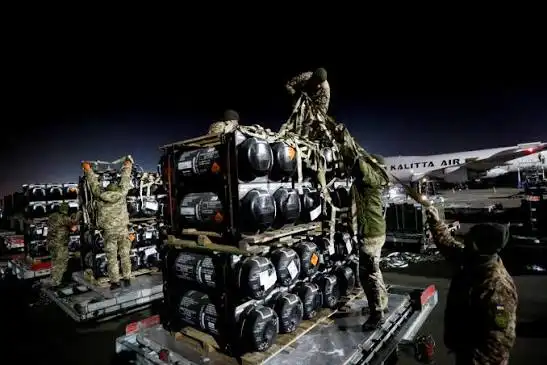
The economic mathematics of the current conflict borders on the absurd. American forces have already expended a third of their stockpiles of standoff and air defense weapons, including JASSM and Tomahawk cruise missiles, SM-2, SM-3, and SM-6 anti-aircraft missiles, half of all Patriot and THAAD interceptors, and substantial quantities of the new Precision Strike Missiles replacing the shorter range ATACMS systems. These weapons range in cost from $700,000 per JASSM to $12 million per THAAD interceptor. Many will require years to replace given production bottlenecks and supply chain constraints. Meanwhile, American forces frequently deploy these multi-million dollar missiles to intercept Iranian Shahed drones that cost between $20,000 and $50,000 each, a exce ratio that would bankrupt any military operating under normal fiscal constraints.

Contrast this with the 2003 Iraq invasion, when American forces dropped 13,000 tons of ordnance in the first 30 days of combat. Only 800 tons, roughly 6% of the total, consisted of cruise missiles and other standoff weapons. The remainder came from aircraft operating freely in Iraqi airspace, able to deliver cheaper gravity s and conduct close air support missions. American pilots flew with near impunity because years of preliminary operations had degraded Iraqi defenses to the point of irrelevance. No such luxury exists over Iran, where integrated air defense networks remain largely intact and lethal. The inability to elish air superiority, long considered a prerequisite for American military operations, represents a paradigm shift with implications extending far beyond the current conflict.
These revelations raise uncomfortable questions about decades of defense procurement decisions that prioritized expensive, high technology platforms over quantities sufficient to sustain prolonged conflict. Military analysts and budgetary watchdogs have long warned that American defense spending, while enormous in absolute terms, has produced a force structure simultaneously over-engineered and under-resourced. Exquisitely capable weapons systems exist in numbers too small to risk in contested environments, while munitions stockpiles prove inadequate for extended operations. As tensions with near peer competitors intensify and global inility spreads, the mismatch between American military costs and capabilities may represent one of the most significant strategic vulnerabilities facing the nation. Whether defense planners and political leaders will address these systemic failures, or continue down the path of ever more expensive solutions to problems that demand rethinking from first principles, remains an open question with profound consequences for national security.























Leave a comment