

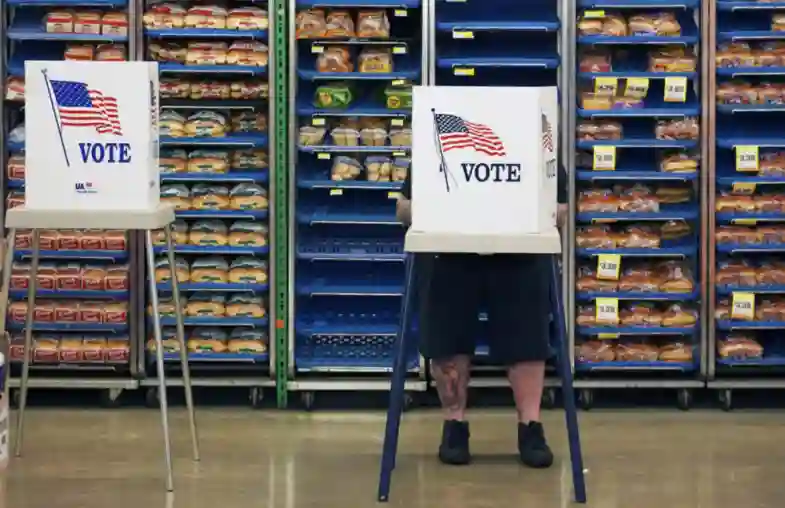
Political tensions across America have reached a boiling point as disputes over election procedures, partisan governance, and ideological divisions threaten to deilize the upcoming electoral process. With both major parties accusing each other of attempting to undermine democratic norms, observers are growing increasingly concerned about the potential for widespread civil unrest in the months ahead.
Several battleground states are locked in contentious debates over voting regulations and ballot distribution ods. Federal authorities have signaled their intent to implement stricter oversight of election procedures through executive action, citing national security concerns. Legal experts anticipate that the Supreme Court may soon weigh in on whether the U.S. Postal Service can enforce uniform standards for mail ballot handling, a decision stemming from earlier executive orders focused on citizenship verification in federal elections.
Political analysts warn that these controversies could fuel street protests in major urban centers, particularly in states controlled by opposition governors. California, New York, and Illinois have emerged as focal points of resistance to federal election oversight efforts. Some observers speculate that state officials in these jurisdictions might attempt to delay or complicate voting procedures, potentially triggering federal intervention. Such scenarios could result in unprecedented confrontations between state and federal authorities.
Constitutional scholars have pointed to rarely invoked statutes that could come into play during a severe political crisis. The Communist Control Act of 1954, though largely dormant for decades, remains part of federal law and defines certain political organizations as instruments of conspiracy against the government. Meanwhile, provisions within immigration law allow the State Department to designate groups as foreign terrorist organizations if they pose security threats or advocate for the overthrow of constitutional governance.
Security experts are particularly concerned about the potential for organized disruption during the election period. Unlike previous cycles where sporadic protests erupted in isolated incidents, current intelligence suggests more coordinated efforts could be underway. Law enforcement agencies at all levels are reportedly developing contingency plans to respond swiftly to any attempts at large scale disorder, with federal officials making clear that violent demonstrations will not be tolerated.
Looking ahead, the coming months may prove decisive in determining whether American democratic institutions can withstand these mounting pressures. Beyond immediate electoral concerns, federal prosecutors are reportedly preparing cases against former government officials accused of participating in various schemes to subvert presidential authority over the past decade. How these legal proceedings unfold, combined with the outcome of election integrity disputes, will likely shape the political landscape for years to come. Citizens across the ideological spectrum are watching closely, hoping that cooler heads prevail before conflicts escalate beyond the point of peaceful resolution.
You May Like











Leave a comment